Eladrin 5e – D&D 5th Edition Race
We all know Legolas from The Lord of the Rings. We’ve journeyed with Link from the Legend of Zelda. And, we’ve said “Dobby is a free elf” every time the scene comes on in Harry Potter and the Chamber of Secrets. Am I geeking out over some of the most awesome elves ever? I am! Elves are some of the coolest creatures in fantasy, and I can’t get enough of them, especially in Dungeons and Dragons 5th edition.
Well, I can’t get enough of anything about DnD. And because I think elves are cool, I keep letting Eladrin 5e influence my DnD choices. They make DnD campaigns more colorful, adventurous, and exciting. The Eladrin are elves who traveled to the Feywild after being banished from Arborea. Who are they, and should you let them join in your next campaign?
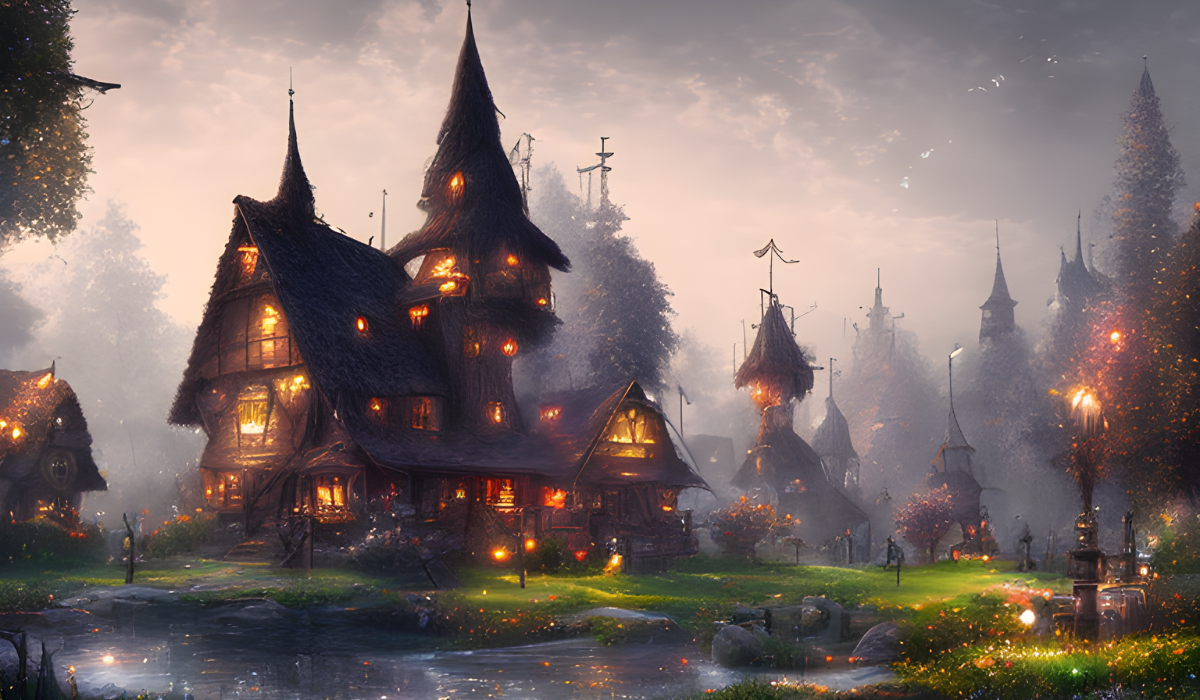
Before the fey forests of Lormuda fell, the half-human/ half-eladrin town of Bretelsenphar was a favorite stop among travelers.
Eladrin 5e Traits
Are the Eladrin 5e just moody, shapeshifting elves that join an adventure? While this idea seems fun, Eladrin gives more than that to the table. They have a range of traits and abilities that make them incredibly powerful in any given situation.
Like the Warforged 5e, the Eladrin are a very unique race in D&D. They're underplayed (in my opinion), and offer some really fun gameplay options.
In Mordenkainen Presents: Monsters of the Multiverse, Eladrin have the following traits:
Ability Score Increase
As an Eladrin 5e you get to increase your Charisma score by 1 and Dexterity by 2, which can be helpful for virtually every class. Also, since the Eladrin is a subrace of elves, the majority of the traits of elves are shared.
However, the eladrin do get some very special traits that make them quite powerful.
Eladrin 5e Fey Step
Playing an Eladrin is like enjoying a gift that keeps on giving, which starts with Fey Step (which is similar to Misty Step):
As a bonus action, you can magically teleport up to 30 feet to an unoccupied space you can see. You can use this trait a number of times equal to your proficiency bonus, and you regain all expended uses when you finish a long rest.
When you reach 3rd level, your Fey Step gains an additional effect based on your Eladrin season (mentioned immediately below); if the effect requires a saving throw, the DC equals 8+ your proficiency bonus + your Intelligence, Wisdom, or Charisma modifier.
Of course, the season comes into play here, too. Depending on the Eladrin’s season, they gain different abilities regarding Fey Step:
- Autumn Eladrin: Right after you use your Fey Step, up to two creatures of your choice (that you can see within 10 feet) must succeed on a Wisdom saving throw or be charmed by you for a minute or until you or your companions deal any damage to them.
- Winter Eladrin: One creature of your choice (that you can see within 5 feet) before you teleport must succeed on a Wisdom saving throw or be frightened of you until the end of your next turn.
- Spring Eladrin: You can touch one willing creature within 5 feet of you, and that creature teleports instead of you. They can appear in an unoccupied space of your choice that you can see within 30 feet.
- Summer Eladrin: Every creature of your choice (that you can see within 5 feet) takes fire damage equal to your Charisma modifier. The minimum is 1 damage.
Darkvision
You can see in dim light within 60 feet as if it were bright light and in darkness as if it were dim light. You discern colors in that darkness only as shades of gray.
Having darkvision in D&D 5e can be highly advantageous for a character. It provides a tactical advantage in combat, allows you to navigate, and of course, is particularly useful in stealth or ambush situations.
Additionally, it’s worth noting that the Eladrin darkvision trait also counteracts magical darkness effects.
Fey Ancestry
You have an advantage on saving throws you make to avoid or end the charmed condition on yourself.
Mind control and charm effects are quite common in DnD 5e, so being able to resist them is a great safeguard. Charm immunity can also benefit the entire party. An eladrin character can provide a reliable anchor within the group, as someone who cannot be charmed or manipulated by enemies or NPCs. This can help maintain cohesion, prevent internal conflicts, and ensure the party remains focused on their goals.
Oftentimes, the greatest adversary to the party is one of their own, who’s been persuaded or even controlled by some villain in the campaign.
Keen Senses
You have proficiency in the Perception skill.
Trance
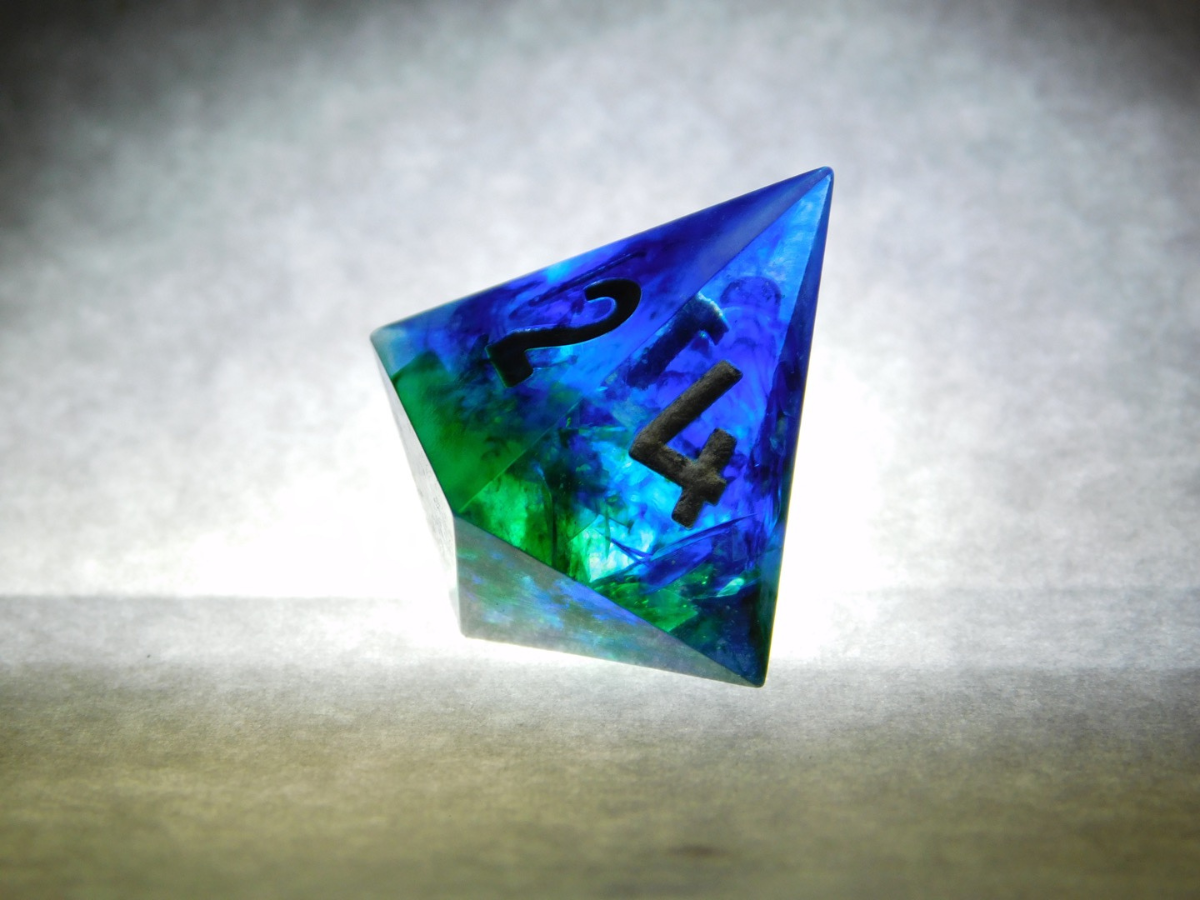
You don’t need to sleep; magic can’t put you to sleep. You can complete a long rest in four hours in trance-like meditation while retaining consciousness. After the trance, you can change your season and gain two proficiencies you don’t have, as well as a weapon or tool of your choice for each. You draw and acquire these proficiencies from shared elven memory and retain them until your next trance.




Best Classes for Eladrin 5e
The Eladrin in 5e are incredibly versatile, which makes for a great number of possible class choices which can be powerful.
When playing an Eladrin, I personally I always choose the Barbarian, Cleric, Druid, Fighter, Paladin, or Ranger classes. These classes make fantastic options, and are quite fun. However, I’d say that with the additional +2Dexterity, and racial trait to Fey Step, pretty much any class could be combined with Eladrin 5e.
Eladrin are the kind of race that makes playing a class-based RPG fun - especially because of the interesting ways you can play them, when factoring in their "seasonal" aspects.
Eladrin 5e Artificer
In D&D 5e, an Eladrin Artificer can be a strong and interesting character choice.
Eladrin have several racial traits that synergize well with the Artificer class. Their Ability Score Increase (+2 Dexterity, +1 Charisma) boosts key Artificer abilities, such as ranged attacks and spellcasting.
The Eladrin’s unique trait "Seasonal Benefits" grants benefits such as temporary hit points, charm resistance, teleportation, or bonus damage. This flexibility adds versatility and adaptability to an Eladrin Artificer's toolkit.
Eladrin Artificer Playstyles
When choosing a subclass for an Eladrin Artificer, two options stand out.
- Artillerist: The Artillerist subclass focuses on ranged damage and creating magical turrets. Eladrin Artificers can use their Fey Step ability to quickly reposition themselves and their turrets, gaining tactical advantage. The Artillerist's Enhanced Arcane Focus feature also complements the Eladrin's natural spellcasting abilities.
- Battle Smith: The Battle Smith subclass emphasizes melee combat and the bonding of a magical steel defender companion (by the way, use this to avoid a TPK). Eladrin Artificers can use their Fey Step ability to quickly engage or disengage from melee combat, providing mobility and positioning advantages. The Battle Smith's Extra Attack feature and Steel Defender's assistance make for a potent combination.
When choosing a subclass, consider whether you prefer ranged damage and control (Artillerist) or melee combat and support (Battle Smith).
Eladrin Barbarian
In D&D 5e, an Eladrin Barbarian can be a unique and powerful character choice.
The Eladrin racial traits benefit a Barbarian to some degree, though perhaps not optimally. The Ability Score Increases (+2 Dexterity, +1 Charisma) enhance a Barbarian's AC, initiative, and... social skills. So, yes, the Eladrin is a bit charming as far as barbarians normally go.
The Eladrin Fey Step ability providies both mobility and tactical advantage in combat and exploration. Obviously, barbarians like to be right next to their foes, and the Fey Step ability puts them right where they need to be, even if the enemy is atop a cliff, behind a wall, or even across a chasm.
Eladrin Barbarian Playstyles
When choosing a subclass for an Eladrin Barbarian, two options stand out:
- Path of the Berserker: The Path of the Berserker focuses on pure rage and relentless assault. Since the Eladrin's seasonal benefits can provide additional bonuses to damage or resistance, enhancing the Barbarian's already formidable combat abilities which emphasize both attack and defense, the path of the berserker makes for a truly stat-heavy barbarian build.
- Path of the Totem Warrior: The Path of the Totem Warrior allows Barbarians to tap into the spiritual power of animal totems. Eladrin Barbarians can choose to align their totem with their seasonal benefits, creating interesting thematic and mechanical combinations. For example, an Eladrin Barbarian with the Winter seasonal benefit could choose the Bear Totem, gaining resistance to all damage except psychic while raging.
If you enjoy relentless offense and dealing massive damage, the Path of the Berserker is a great choice. If you prefer a more versatile and durable approach, the Path of the Totem Warrior offers a range of options to suit different situations.

Eladrin Bard
In D&D, an eladrin 5e bard can be a very strong and versatile character. The Eladrin’s +2 bonus to Dexterity improves initiative and AC, while the +1 bonus to Charisma is excellent, as it is the primary ability score for bard spell casting. Not to mention that most bards, already having high charisma, tend to be the “face” of the party in social interactions, so the bonus is most welcome.
For Bards, the Fey Step is most beneficially used for escaping danger, or reaching allies in need to support them.
Eladrin Bard Playstyles
When it comes to choosing a bard subclass for an eladrin, it largely depends on your preferred playstyle and the role you want to fulfill within the party:
1. College of Lore: This subclass grants additional skills, more magical secrets, and the ability to use Cutting Words to hinder enemy attacks and abilities. It excels at versatility, knowledge, and support, taking advantage of the Eladrin’s great mobility.
2. College of Glamour: This subclass focuses on enchantment and charm magic, allowing you to manipulate emotions, inspire allies, and control crowds. It also provides unique abilities like Mantle of Inspiration, which grants temporary hit points and movement to your allies.
3. College of Whispers: This subclass emphasizes espionage, deception, and infiltration. It offers features like Psychic Blades, which allow you to deal extra damage with your weapon attacks, and the ability to steal the memories of your foes. The +2Dexterity bonus from Eladrin also help make use of the stealth-like traits of this subclass.
Eladrin Cleric
As with the bard, an Eladrin cleric enjoys some extra AC and initiative from their bonus to Dexterity. Additionally, the Fey Step ability, of course, can be used for offenses or defense. As a last-line-of-defense type class, having a cleric character who can escape enemies so that the party can continue to benefit from healing and concentration effects is very valuable.
The various domains available to clerics can make for interesting interactions with the Eladrin seasons. The more you enjoy roleplaying as part of your D&D game, probably the more you’d enjoy playing an Eladrin cleric.
Eladrin 5e Druid
As with all classes, the Eladrin druid benefits greatly from the Fey Step racial trait. Since druids can be played in so many different ways (spell caster, fighter-type, tank, etc.) this ability can be great for repositioning on the battlefield, whether it be to escape danger, reach allies in need, chase down enemies, or what have you.
As I’ve mentioned for other classes, bonus Dexterity is always welcome since it provides an initiative boost and AC increase. With the variety of ways that druids can play, it’s useful to have the increase to both defenses and speed of play.
Eladrin 5e Druid Playstyles
Here are a few subclass options to consider:
- Circle of the Land: This subclass focuses on deepening your connection to a specific terrain type, such as forests, deserts, or mountains. It grants additional spells and abilities related to your chosen terrain, enhancing your exploration and survival capabilities. All of these roleplay cues fit in perfectly with the Eladrin 5e of course, especially with their affinities with the seasons.
- Circle of the Moon: This subclass emphasizes shapeshifting and wild shape abilities. It allows you to transform into more powerful creatures earlier than other druids. Again, you can also customize how your creatures look and act, based on your Eladrin’s “season,” which provides another set of fun roleplay opportunities.
- Circle of Dreams: This subclass emphasizes healing, support, and manipulation of the Feywild. It offers features like Healing Spirit, which allows you to heal multiple creatures over time, and the ability to create a magical sanctuary for rest and recuperation. If you want to utilize Fey Step and your extra AC to provide support and healing to your party, then Circle of Dreams is a good choice to go with.
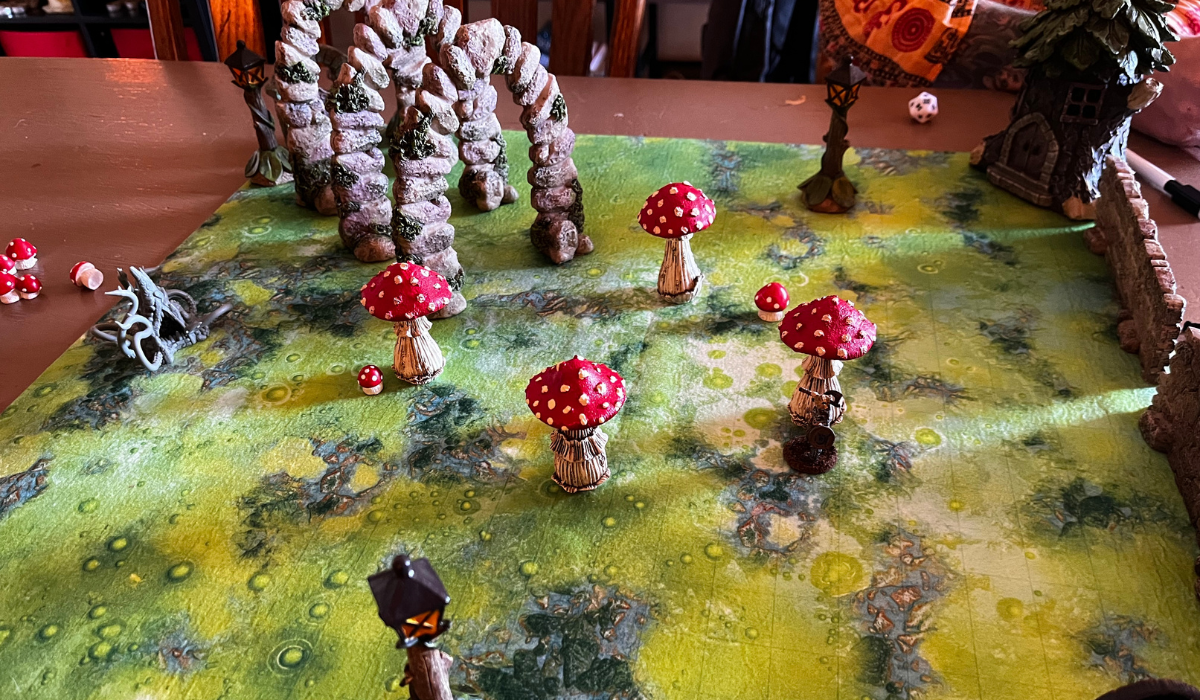
On the outskirts of Bretelsenphar was an Eladrin Druid's Grove, where mushrooms grew to the size of trees.
Eladrin Fighter
You’ll hear me mention this over and over again, but the Eladrin Fey Step ability is a real winner. Other than the ability for your Eladrin 5e Fighter to instantly teleport next to any enemies you’re trying to reach though, there isn’t anything particularly great about this race/ class combination.
Yes, the +2Dexterity bonus is helpful, but there are much better race combinations with Fighter than what Eladrin can provide.
If you really want to play an Eladrin Fighter though, you may consider specializing with a ranged weapon, such as a longbow. Then, you could use your Fey Step trait to escape enemies.
Eladrin Fighter Playstyles
Let’s take a look at the Fighter Subclass options you may want to play as an Eladrin:
- Battle Master: This subclass focuses on tactical combat maneuvers and versatility. It provides a variety of maneuvers that allow you to add extra damage, impose conditions, or protect allies. It is a good choice for those who enjoy strategic decision-making and flexibility in combat.
- Eldritch Knight: This subclass combines martial prowess with limited spellcasting abilities. It allows you to choose spells from the wizard spell list, enhancing your versatility and giving you access to utility or defensive spells. It is a good choice for those who want to add a touch of magic to their martial abilities, and of course fits well overall with the Eladrin “elf” theme.
- Samurai: This subclass emphasizes precision strikes, resilience, and self-discipline. It offers features like Fighting Spirit, which grants temporary hit points and advantage on weapon attack rolls, and the ability to regain hit points by meditating. It is a good choice for those who want to embody the disciplined warrior archetype. I often think of this class as being somewhat similar to what you see from the elves in Lord of the Rings – not culturally, of course, but in terms of their steadfastness and precise, coordinated fighting style.
Eladrin 5e Monk
A high Dexterity score is crucial for a monk's AC, attack rolls, damage, and ability to avoid damage. As a monk, you can use your Dexterity score in place of Strength when making unarmed strikes, or when using Monk weapons – and that goes for both attack rolls and damage rolls. So, Eladrin Monks have a big advantage.
I also feel like since Eladrin and elves don’t technically sleep, but rather go into a trance/ meditative state for 4-hours as their long rest, the monk aesthetic works rather well for them.
Eladrin 5e Monk Playstyles
Here are a few subclass options to consider:
- Way of the Open Hand: This subclass focuses on unarmed combat mastery and battlefield control. It offers features like Open Hand Technique, which allows you to impose various effects on your foes, such as knocking them prone or pushing them away. It is a good choice for those who want to excel in hand-to-hand combat and crowd control.
- Way of Shadow: This subclass emphasizes stealth, deception, and the manipulation of darkness. It provides features like Shadow Step, which allows you to teleport through shadows and gain advantage on your next attack. It is a good choice for those who want to embody the stealthy, ninja-like archetype that the monk class in 5e allows someone to play.
- Way of the Four Elements: This subclass grants access to elemental-themed abilities and spells. It allows you to channel the power of fire, water, earth, and air, which synergizes really well with the Eladrin “seasons,” and allows you to unleas devastating attacks and defensive maneuvers. It is a good choice for those who want to add a touch of elemental magic to their martial arts, and fits well for the naturally-magical Eladrin race.
Eladrin Paladin
In D&D 5e, an eladrin paladin can be a strong and compelling character choice. Since Eladrin receive a +1 bonus to their Charisma score, which is the primary ability score for paladins, they have mildly enhanced spellcasting ability. Also, their effectiveness in social interactions, and their ability to use their Divine Smite feature is improved.
Additionally, they receive a +2 bonus to their Dexterity score, which can improve their AC and initiative, and – wait for it – Fey Step is really good for repositioning on the battlefield, closing the gap with enemies, or escaping dangerous situations; it enhances the mobility and versatility of eladrin paladins.
Eladrin Paladin Playstyles
When it comes to choosing a paladin subclass for an eladrin, it largely depends on your preferred playstyle, the role you want to fulfill within the party, and the tenets of your character's oath. Here are a few subclass options to consider:
- Oath of Devotion: This subclass focuses on honor, justice, and protection. It offers features like Sacred Weapon, which allows you to enhance your weapon with radiant energy, and the ability to turn the undead. It is a good choice for those who want to embody the classic knightly archetype.
- Oath of the Ancients: This subclass emphasizes nature, preservation, and the defense of light against darkness. It provides features like Channel Divinity: Nature's Wrath, which allows you to ensnare enemies with grasping vines, and the ability to resist magical aging, though that shouldn’t really be a concern for an Eladrin. It is a good choice for those who want to embody a connection to the natural world and the forces of good, which could fit in with some very unique Eladrin backstory.
- Oath of Vengeance: This subclass focuses on retribution, righteous fury, and the pursuit of justice against evildoers. It offers features like Channel Divinity: Vow of Enmity, which grants advantage on attack rolls against a specific enemy, and the ability to move swiftly towards your foes. It is a good choice for those who want to play a paladin driven by a personal vendetta or a desire for justice. Most of the paladins that I see played are oath of vengeance, so it’s definitely a popular build, regardless of what race you’re playing.

Eladrin 5e Ranger
Eladrin 5e rangers are basically like saying you’re Legolas from Lord of the Rings. Eladrin Rangers fit in so naturally together, especially given the Eladrin “season” trait, that it’s practically a must to play at some point in your D&D gaming career.
The Eladrin +2Dexterity bonus is hugely valuable for the Ranger class, and imagine using the Fey Step trait to escape into dense forest foliage, or to suddenly ambush from an outcropping of rocks. You know – all elven ranger-like.
Eladrin 5e Ranger Playstyles
Here are a few subclass options to consider:
- Hunter: This subclass focuses on combat prowess and versatility. It offers features like Colossus Slayer, which allows you to deal extra damage to wounded foes, and the ability to choose additional hunter's prey options. It is a good choice for those who want to excel in combat and tracking. Choose this subclass if you want to emphasize the nature/ seasonal affinity side of your Eladrin Ranger.
- Beast Master: This subclass emphasizes a bond with an animal companion. It allows you to choose a beast companion that fights alongside you and gains its own unique abilities. It is a good choice for those who want to have a loyal animal partner and prefer a more pet-focused playstyle.
- Horizon Walker: This subclass focuses on planar travel and dealing with threats from other planes of existence. It provides features like Planar Warrior, which allows you to deal extra damage and bypass resistances, and the ability to teleport between planes. It is a good choice for those who want to explore the multiverse and have a unique connection to planar energies. Choose this subclass if you want to emphasize the magic side of your Eladrin Ranger.
Eladrin Rogue
Eladrin 5e rogues are actually amazing. Rogues need lots of Dexterity (check), Charisma for when they’re caught (check), and... Fey Step! To pass over traps, get through checkpoints undetected, ascend steep cliffs to attack ranged enemies, and naturally, to suddenly appear behind someone peacefully enjoying dinner (probably from the rafters), with a dagger in hand.
Just. Fey Step. Over and over. You’ll love it.
Eladrin Rogue Playstyles
Rogues have some interested subclass choices that all work pretty well with Eladrin:
- Arcane Trickster: As an eladrin, you already have a connection to the Feywild, making the Arcane Trickster subclass a flavorful choice. This subclass combines rogue abilities with spellcasting, allowing you to use enchantment and illusion spells to deceive, distract, and manipulate your enemies.
- Swashbuckler: If you enjoy being a charismatic and agile duelist, the Swashbuckler subclass can be a great fit. Eladrin's bonus to Charisma can enhance your social interactions, and the Swashbuckler's Fancy Footwork and Rakish Audacity features allow you to engage in one-on-one combat with finesse.
- Scout: The Scout subclass is well-suited for those who prefer a more mobile and survival-focused playstyle. With the Skirmisher ability, you can move away from enemies without provoking opportunity attacks, and the Superior Mobility feature grants you extra movement speed. Combine this with... Fey Step... have I mentioned this enough yet? ...to have better movement than probably anyone or anything in the entire campaign.
Eladrin Sorcerer
The Eladrin’s +1Charisma ability score increases is a perfect for a sorcerer, as Charisma is their primary spellcasting ability. Also, it’s nice as a spell caster to have bonus Dexterity to improve AC and help with the all-important Dexterity saving throws.
Aside from Fey Step, Eladrin have advantage on saving throws against being charmed, and they cannot be put to sleep by magic. This racial trait can provide valuable protection against certain spells and magical effects that could hinder a sorcerer, and though the effects are somewhat rare to be hit with, I do feel like having a spell caster that can charm others, but never be charmed, is a huge advantage for just about any campaign.
Eladrin Sorcerer Playstyles
Here are a few popular options for 5e Sorcerer subclasses:
- Divine Soul: The Divine Soul subclass allows you to tap into both your sorcerous magic and divine powers. As an eladrin, you already have a connection to the Feywild, and the Divine Soul can enhance this connection further. This subclass grants you access to a wider range of spells, including those from the cleric spell list, providing versatility and support options.
- Shadow Magic: If you want to embrace the mysterious and dark side of the Feywild, the Shadow Magic subclass can be a great choice. This subclass allows you to manipulate shadows and darkness, granting you abilities like Hound of Ill Omen and Shadow Walk (it feels just a little like having a second Fey Step). It can be a flavorful and powerful option for an eladrin sorcerer.
- Wild Magic: The Wild Magic subclass is known for its unpredictability and chaotic nature. If you want to embody the wild and ever-changing essence of the Feywild, this subclass can be a fun choice. It introduces a random element to your spellcasting, with the potential for wild surges that can have both positive and negative effects. It’s also a great way to emphasize your “seasonal” nature as an Eladrin.
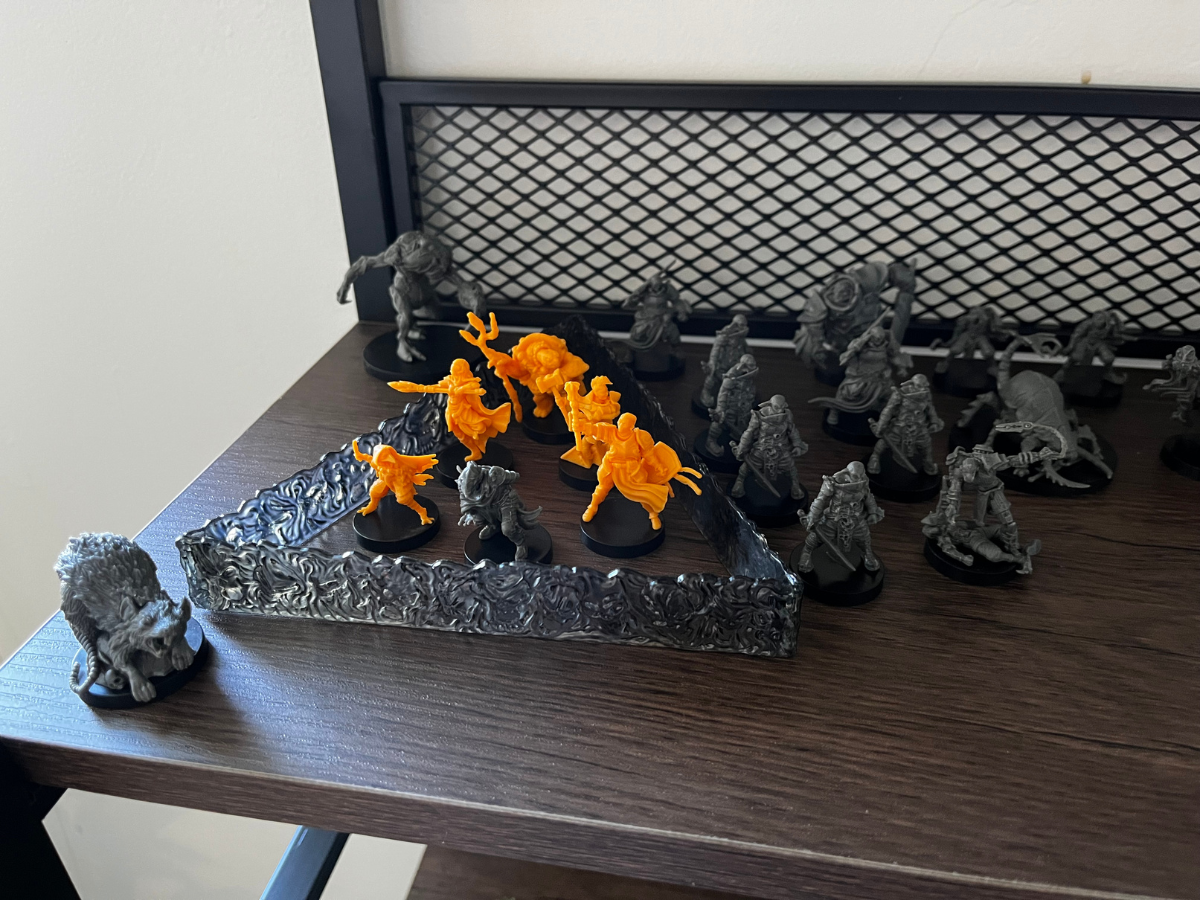
Some new minis we got for our game, ready to be painted. I think I see what will become an Eladrin (or two) in this batch.
Eladrin 5e Warlock
I don’t honestly have anything to share here that wasn’t the exact same for an Eladrin Sorcerer. Everything that makes an Eladrin sorcerer good are the same things that make an Eladrin Warlock good. The only difference is that an Eladrin Warlock may be a little more “Drow-like” with their dark pacts and evil vibes, but the actual style of play is very similar.
Maybe I will add in that warlocks tend to be a little tanky/ hard to kill, so as a fragile Eladrin spell casting character (“fragile” said with a little bit of sarcasm), it is helpful to have a caster class that adds some toughness back in to the mix.
Eladrin 5e Warlock Playstyles
More than anything, the Warlock subclasses are what can make an Eladrin Warlock character really come together:
- Archfey: The Archfey subclass aligns well with the eladrin's connection to the Feywild. This subclass focuses on enchantment and illusion magic, granting you access to spells that can charm and manipulate others. The Misty Escape (think of Fey Step again) and Beguiling Defenses features can provide additional survivability and control in combat.
- Celestial: If you want to tap into the celestial powers of the Feywild, the Celestial subclass can be an interesting choice. This subclass grants you healing abilities and radiant damage spells, allowing you to support your allies while still dealing damage. The Healing Light and Celestial Resilience features can provide additional survivability and utility.
- Hexblade: While not directly tied to the Feywild, the Hexblade subclass can still be a strong option for an eladrin warlock in general, though honestly, maybe not the best for an Eladrin. This subclass focuses on melee combat and weapon mastery, granting you the ability to bond with a powerful sentient weapon. The Hexblade's Curse and Accursed Specter features can enhance your damage output and provide additional battlefield control.
Eladrin Wizard
In D&D 5e, an eladrin wizard can be a strong and fascinating choice. I mean, we are talking about an elven wizard here, the peak of the peak spell casters. Add in the Eladrin’s +2Dexterity (for AC and initiative bonus), resistance to magical charm and sleep effects, and general feywild/ magic vibes, and you’ve got a winning combination that also makes a lot of sense from a roleplaying perspective.
Keep haste up and slap on some mage armor 5e, and your Eladrin Wizard will be a powerhouse.
Eladrin Wizard Playstyles
Pretty much any Wizard subclass makes sense for an Eladrin. Personally, I’d go for spells and a subclass that plays up the “seasonal” nature of my Eladrin character, and that emphasize which season I’m currently in:
- School of Enchantment: The School of Enchantment subclass aligns well with the eladrin's connection to the Feywild. This subclass focuses on enchantment magic, allowing you to charm and manipulate others. The Hypnotic Gaze and Alter Memories features can provide control and versatility in social and combat situations.
- School of Divination: If you enjoy manipulating fate and foreseeing the future, the School of Divination can be a great choice. This subclass grants you abilities to manipulate dice rolls and gain glimpses of future events. The Portent and Expert Divination features can provide additional utility and strategic advantage in various situations.
- School of Evocation: The School of Evocation is a classic choice for wizards who want to specialize in dealing damage with their spells. While not directly tied to the Feywild, eladrin's affinity for magic can enhance their destructive capabilities. The Evocation Savant and Sculpt Spells features can boost your damage output and provide control over area-of-effect spells.
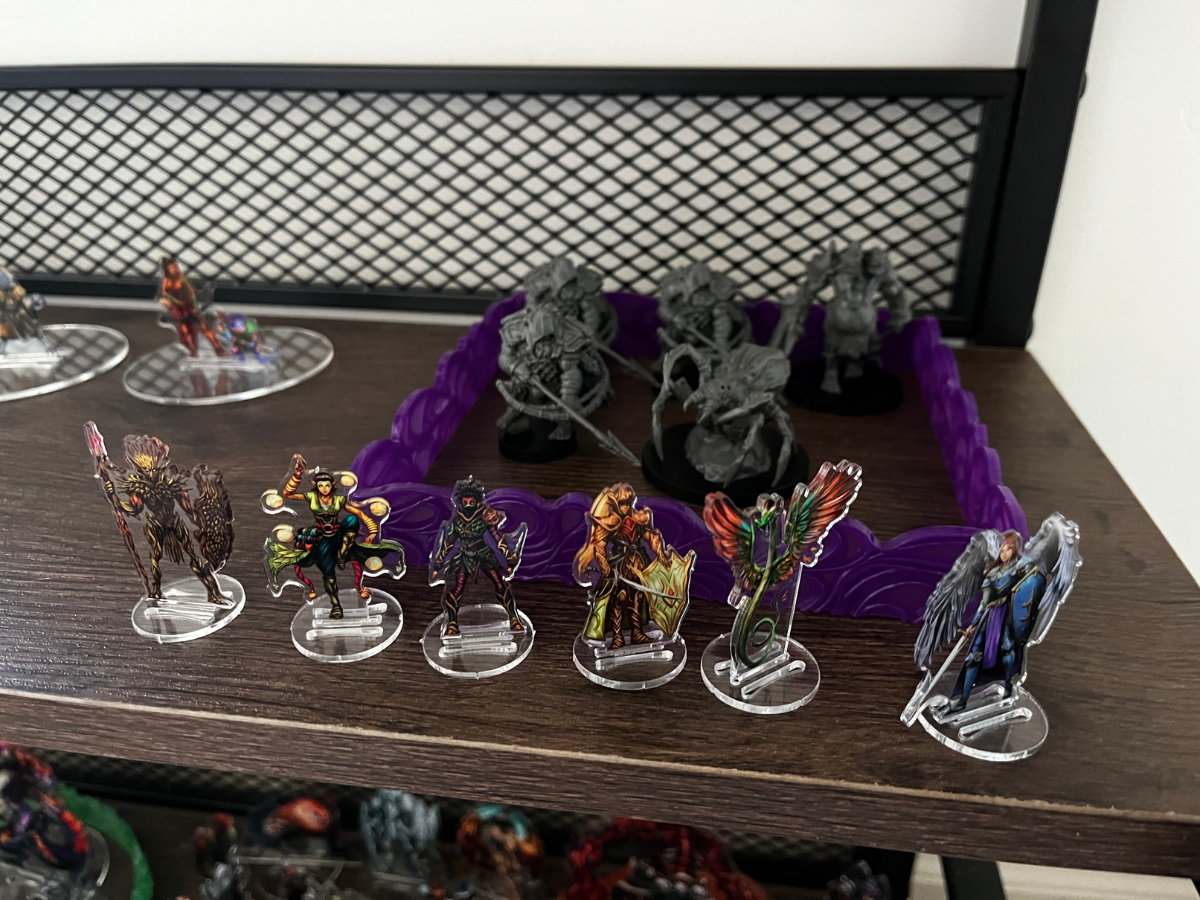
As a quick side note, we have tried the "Skinny Minis" available for games, which can be a great way to get high-quality art and save money. I personally prefer the "3D Models," but have found a couple of these 2D ones that I love.
Eladrin 5e Size and Other Characteristics
With the major parts of Eladrin specs and classes out of the way, we can cover some of the smaller, yet still important parts of playing an Eladrin - namely their creature type, size, speed, and alignment, etc.
Creature Type
Creature Type: You are a Humanoid and considered an elf for any prerequisite or effect that requires you to be one. No major surprises here, but it's worth covering.
Size
Size: You are medium. Again, nothing major to playing a medium-size character, and this is also to be expected for an elf-like being.
Speed
Speed: You walk at the speed of 30 feet. This is the standard movement speed in D&D 5e.
Eladrin 5e Alignment
Alignment: The Eladrin love freedom and self-expression. They value and protect each others’ freedom, loving variety as much as they do creativity. Below, I'll cover more about Eladrin personality, but as far as alignment goes, these are the major traits to remember when selecting alignment.
As with any character when you roleplay, I always recommend using alignment to help discover your character, but never to limit them. Whatever way you want to roleplay your Eladrin is the best way to go.
Of course, the Eladrin's emphasis as a race, upon freedom and self-expression lends itself to being "chaotic."
Age
In D&D 5e, there is no specific age limit mentioned for eladrin. However, it is generally understood that eladrin have lifespans similar to those of elves, which can extend for several centuries. Elves are known for their longevity, and eladrin, being a subrace of elves, likely share this trait.
The Dungeon Master's Guide suggests that elves typically live up to around 750 years, but this can vary depending on the campaign setting and the specific lore established by your DM. As such, the maximum age for eladrin would likely fall within this range or potentially even longer, depending on the DM's discretion and the specifics of the campaign world.
Languages
Languages: The Eladrin speak, read, and write common and elvish.
Eladrin 5e Appearance
Now, what do the Eladrin look like? They may have similarities with Legolas, Link, and Dobby, but they absolutely look more… Mystical. The Eladrin look like other elves in the multiverse but are more slender with sparkling eyes. Generally, their features are delicate and androgynous in some ways, but the seasons make them look different each time.
The seasons also change their appearance, from their skin and hair to their clothing!
For example, a Spring Eladrin’s skin may look like the colors of fresh leaves, while an Autumn Eladrin has golden and fiery orange hues. Anything you associate with the seasons also applies to the Eladrin appearance, which makes them different from their predecessors. If that’s not cool, then I don’t know what is…
Unique Eladrin Names
The Eladrin names come from the melodic elvish tongue, so they can be Uda, Haust, Wayra Pacha, or names like Kynyaf or Sierade.
Even more impressive is that Eladrin can also choose a surname derived from the season they are most commonly associated with! When you name an Eladrin, you have the creative freedom to choose from a range of unique names. If I were you, I’d spend more hours glued to the Eladrin naming books than in the actual adventure. Just kidding! Or not…
Eladrin and Seasons
I’ve already mentioned the seasons many times, so let me elaborate. The seasons play an essential role in the life of Eladrin because they manifest themselves in different ways. They influence their looks, behaviors, and actions, and these are how you can distinguish one from another.
Also, if you're ever in need of some great DnD Quest Ideas or even entire DnD Campaign Ideas, try brainstorming some topics around the Eladrin 5e "seasons" concept, and see what kinds of fantastical towns, battles, or even magical items you can come up with for your next game.
Autumn Eladrin
The Autumn Eladrin is all about peace and goodwill. You can say they’re the elves singing, “Make peace, not war,” at every opportunity. These Eladrin love to end conflicts and suffering with their magic. They heal and cure (need bless 5e or cure wounds, anyone?) those who comes to them with an ailment and never let violence happen in their presence. The Autumn Eladrin are very much committed to keeping the world peaceful!
Winter Eladrin
Of course, the Eladrin can feel sad, too. And when they do, they become the Winter Eladrin. You know how sorrowful winter can be; the world is cold and pale, and the chill of sadness comes to everyone’s heart. The Winter Eladrin are no different. They slip into a melancholic, bitter state, and frozen tears roll down their cheeks. Palpable sadness? Check. Bitter cold? Check. The Winter Eladrin are all about contemplation and dolor.
Spring Eladrin
When you think about spring, you think about renewal and the world coming alive again. And that’s exactly what the Spring Eladrin are about! They bring an aura of cheerfulness, joy, and celebration to the world around them. They truly embody the joy of springtime, with their songs and laughter taking over the world. The Spring Eladrin are playful creatures, which can be both good and bad. Their antics can either make you feel happy or put you in danger…
This has to be like the animal friendship 5e version of Eladrin, in my estimation.
Summer Eladrin
Lastly, the Summer Eladrin is the most powerful (or scariest…) of the four Eladrin subraces. They are known for their boldness and aggression, which makes sense, considering that summer is usually a time of heat, passion, and adventure. This Eladrin subrace is burning, tempestuous, and furious. They become warriors who will vent their wrath in every way they can. When you’re looking for fighting ability, trust the Summer Eladrin to strike with terrible force!
Just imagine an Eladrin 5e Warlock casting Hellish Rebuke 5e... Yeah, that's a Summer Eladrin, for sure.
Eyes On the Seasonal Advantage With Eladrin 5e
If you’ve never tried Eladrin 5e before, I suggest focusing on their seasonal advantage because this is what makes them different from others. The elves of the Feywild are all about boundless magic and perilous beauty. They use their magic to step from one place to another in the blink of an eye, and their ability to change makes every adventure even more supernatural.
The Eladrin 5e put some of those human emotions into the game. But, of course, I don’t have that magical ability to teleport to anywhere in the world. I also don’t abduct people to the Feywild. I live those adventures through the Eladrin instead.
Only some explore the Feywild. Many of us focus on the other factors of DnD, but Eladrin 5e brings a certain mystique to all our games. What better way to add a touch of fantasy and imagination, right? Get to know the Eladrin 5e, and you’ll experience some of the best magic in DnD.
And honestly, the Eladrin 5e seasonal aspect basically provides a built-in set of
Character Ideas you can work with for your campaign.
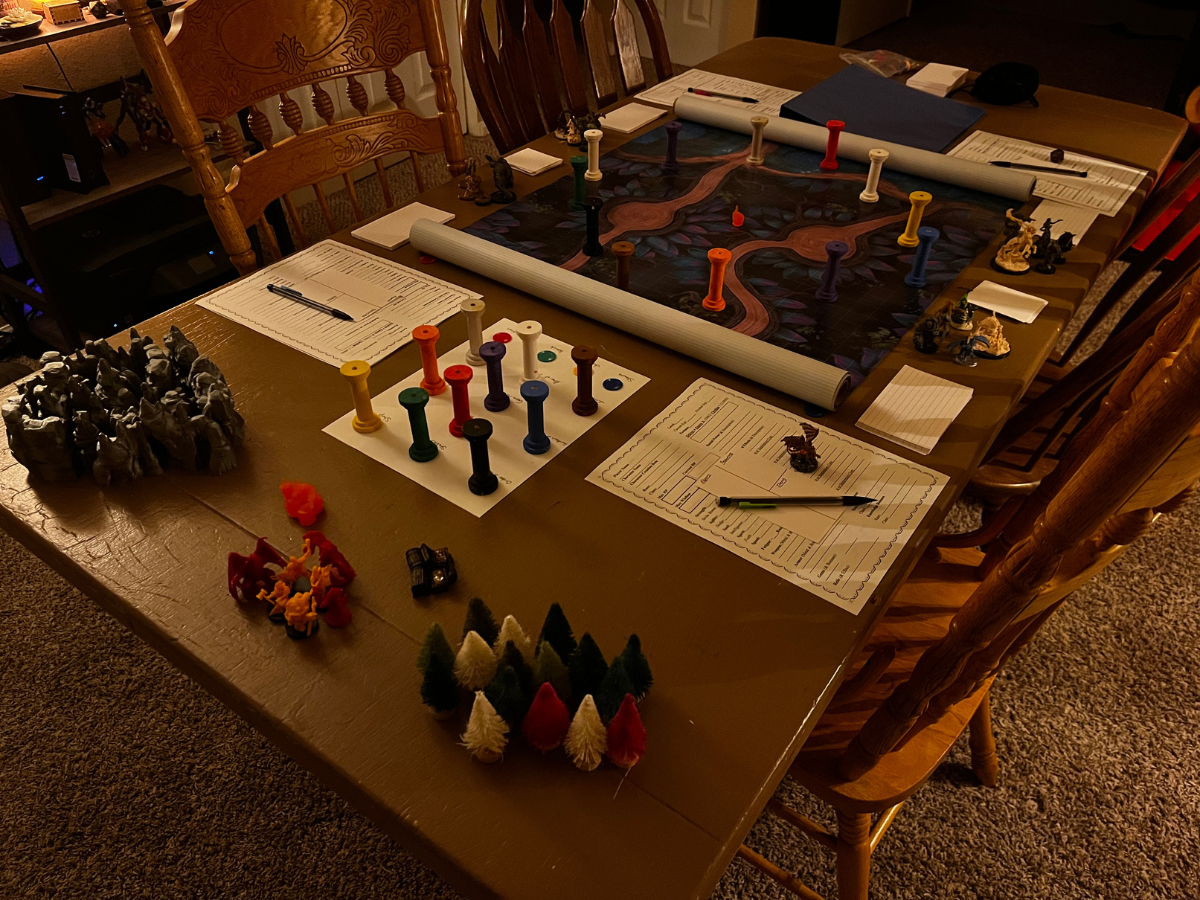
I created an Eladrin "Grove of the Seasons," where players could change the map's season by interacting with its various parts.
Eladrin 5e Personality
In D&D 5e, as mentioned, eladrin are known for their connection to the Feywild and their ever-changing moods and emotions. While specific personalities can vary greatly among individuals, there are a few common personality traits and themes associated with eladrin:
Emotional and Expressive
Eladrin are highly attuned to their emotions and tend to express them openly. They can be passionate, intense, and prone to mood swings. Their emotions can shift rapidly, reflecting the ever-changing nature of the Feywild.
Enigmatic and Mysterious
Eladrin often have an air of mystery and otherworldliness about them. They may have a reputation for being unpredictable or difficult to understand, as their fey nature can make it challenging for others to anticipate their actions or motivations.
Connection to Nature
Eladrin have a strong connection to nature, often embodying the beauty and wildness of the Feywild. They may possess a deep appreciation for natural beauty, be knowledgeable about plants and animals, and have a desire to protect the natural world.
Dualistic Nature
Eladrin can embody contrasting qualities simultaneously. They may be both joyful and melancholic, playful and serious, or serene and passionate. This duality reflects their connection to both the vibrant and tranquil aspects of the Feywild.
Love for Art and Beauty
Eladrin often have a deep appreciation for art, music, and beauty in all its forms. They may be skilled artists themselves or seek out experiences that evoke a sense of wonder and aesthetic pleasure.
Curiosity and Wanderlust
Eladrin are known for their curiosity and desire to explore. They may have a strong wanderlust, seeking new experiences and knowledge. This can lead them to be adventurous and open-minded, always eager to discover the secrets of the world.
It's important to note that these personality traits are not prescriptive or exhaustive, and individual eladrin characters can deviate from these generalizations. The specific personality of an eladrin character is ultimately up to the player's interpretation and the choices they make during character creation and roleplaying.
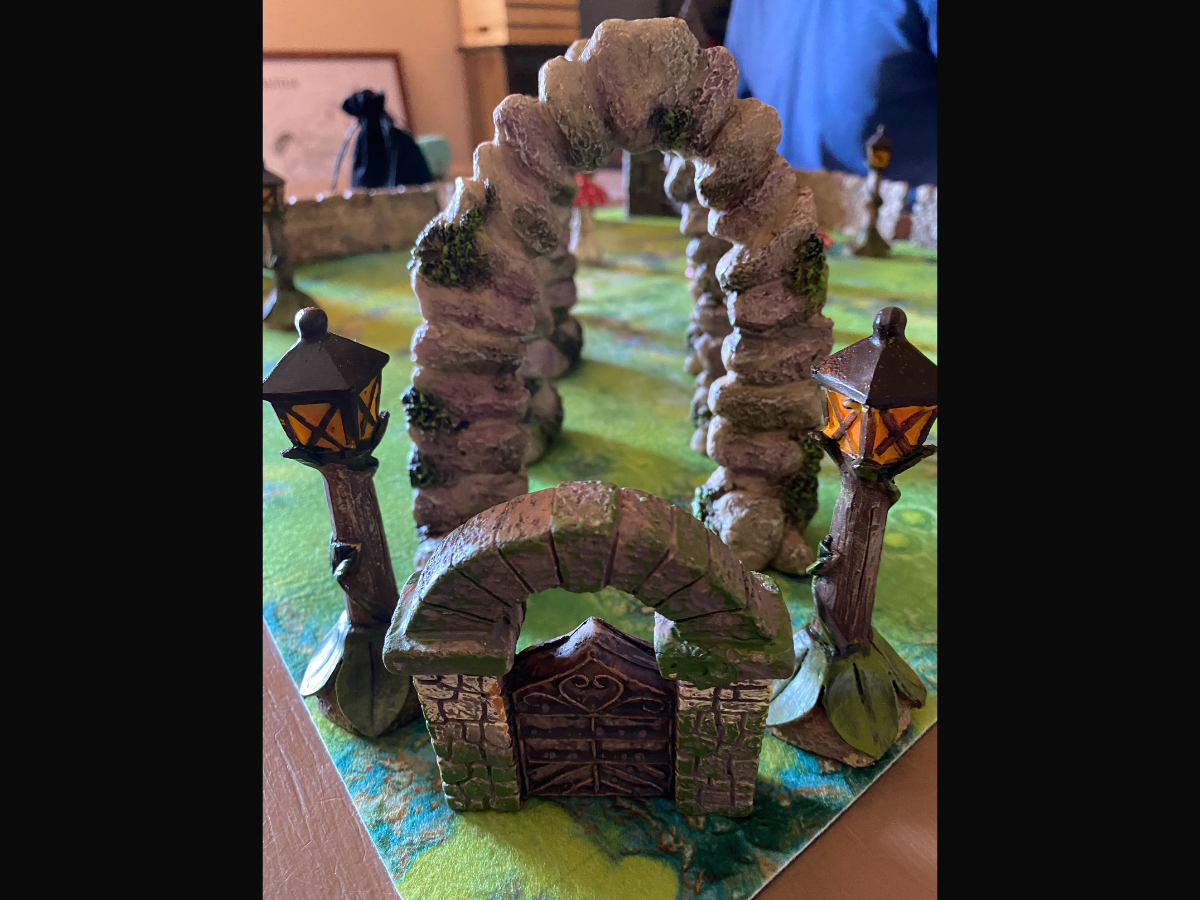
Enter here, through the "Eladrin Gateway," and see for yourself what adventures lie within!
Eladrin 5e Lore
Once upon a time, there was the oldest elven society in the multiverse called the Eladrin. But before they were “the Eladrin,” they were elves banished from their primordial home world called Arborea and settled in the Land of the Faerie.
The Feywild’s powerful and natural magic reminded them of their home. There, they found themselves in the realm of chaotic magic and took the elven culture and architecture to creative heights. They merged with Feywild magic and became more emotional and erratic than they used to be.
Does all this already sound compelling? Well, I’m not stopping there! The elves who settled in the Feywild lost their humanoid form and were elevated into powerful Eladrin. They decided that they were now entirely different creatures from their predecessors. The multiverse has never been so fascinating.
Read Up On the Eladrin
I love to read about the Eladrin from Mordenkainen’s Tome of Foes (page 195), which calls them the creatures who dwell in the verdant splendor of the Feywild.
“They are related to the elves found on the Material Plane, and resemble them in both their love of beauty and the value they place on personal freedom. But where other elves can temper their wild impulses, eladrin are creatures ruled by emotion—and because of their unique magical nature, they undergo physical changes to match their changes in temperament.”
Seasons and Manifestations
The Eladrin are creatures of passion, responding to their emotions by aligning themselves with a season. Their behaviors, capabilities, and forms change, and they become either the Autumn, Winter, Spring, or Summer Eladrin. Some stick with a season for years, while others go through different ones, adapting and changing like real-life seasons.
They’re also lovers of beauty. They surround themselves with everything lovely and try to possess anything they find beautiful. They may be drawn to music, art, and anything with a touch of loveliness. If you have paintings, statues, or glittering jewels, know that the Eladrin have their eyes on them. And if you’re someone with a luminous spirit, they might use their magic to delight (or abduct!) you.
Eladrin in Games Like D&D
Look, everyone loves D&D - whether that's 5e or one of the previous editions. I'm also interested to see how D&D 6e turns out (or whatever they're going to call it) as I've been a long-time D&D fan.
But, it's time to face that facts, which is that their are a literal boatload of Games Like DnD out there, and some of them are actually better than DnD. In reality, D&D is just the best-known game in its genre, and it has the biggest budget, which is why you haven't heard of the others.
So, let me not-so-humbly brag about Eternity TTRPG's Game System, which you can check out at the Eternity TTRPG Shop. Play with multiple Game Masters, try out tons of unique races and classes with great lore, and build a game world with more immersive capacity than you've ever played before.
Oh, and the "Eladrin"-like race in Eternity TTRPG? Yeah, that would be either the Ateri or Empyrean - check them out!
Dice, Dungeons, Games & More - Eternity TTRPG
Share This Article

Author - Jacob Tegtman
Dear reader, I hope you enjoyed this article. Tabletop gaming has been a passion of mine since I was 6 years old. I've played just about every game from Dungeons and Dragons to video games like Final Fantasy. These games have inspired me, made me laugh, made me cry, and brought me endless hours of enjoyment.
I started Eternity TTRPG - and the indie tabletop game that goes along with it (Eternity Shop) - to share my love of gaming with others. I believe that in our technology-driven age, tabletop games help bring a sense of magic and community back into our world.
If you love the site, please share it with others! I have lots of gaming-related material for you to peruse and use in your own gaming sessions. If you have any questions about the site or want to contribute, just send me a message using the "Contact" page, which you can find in the site's footer.