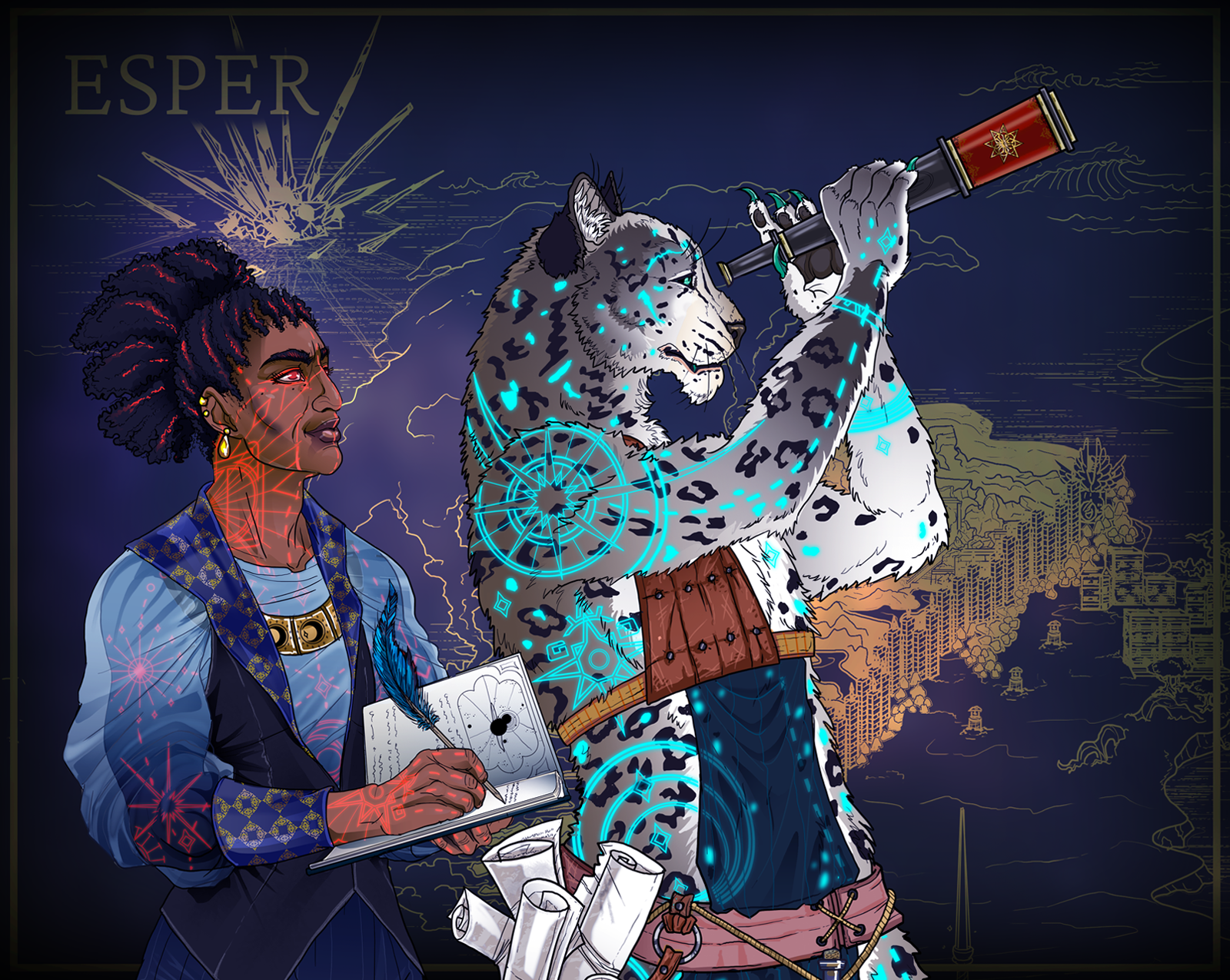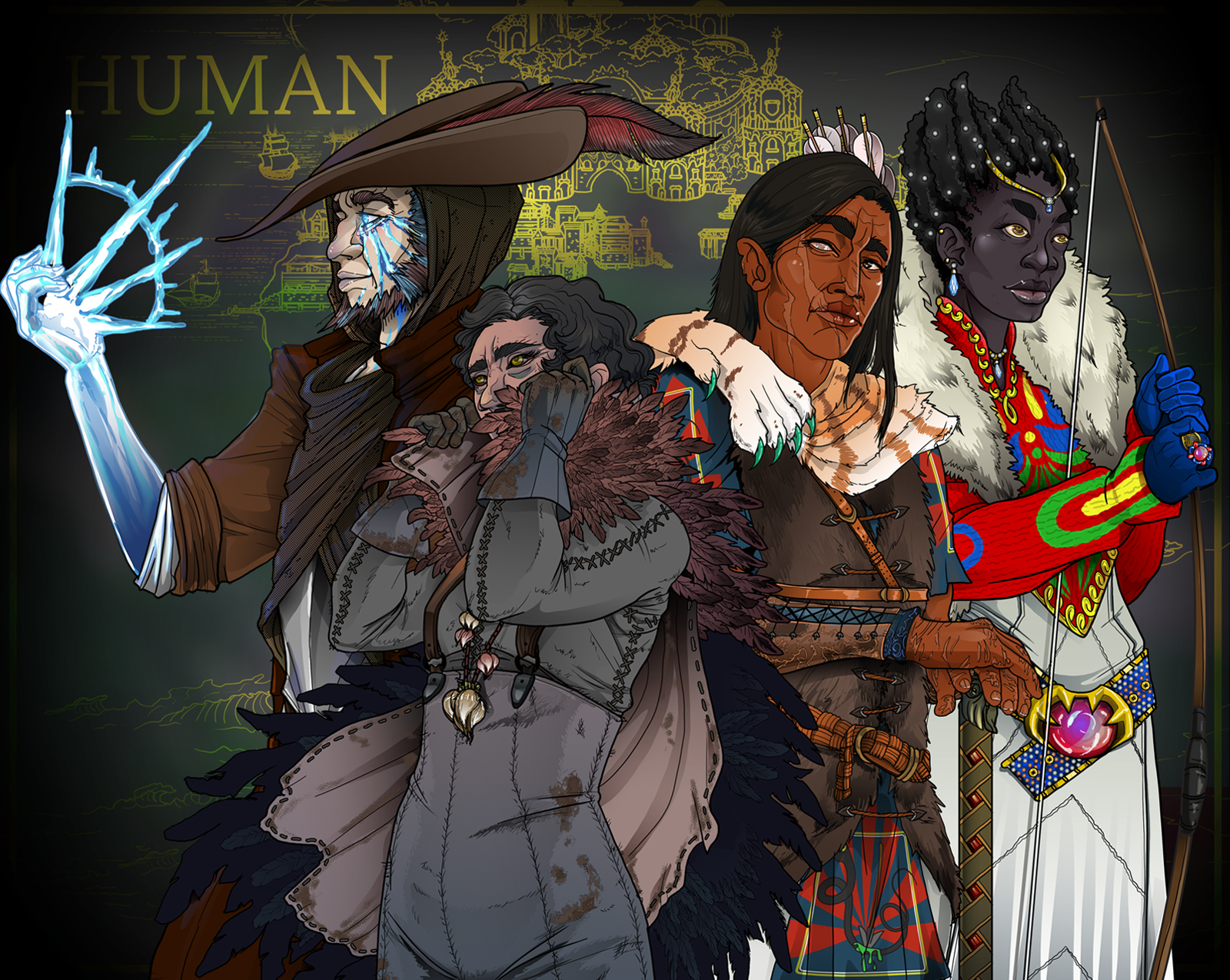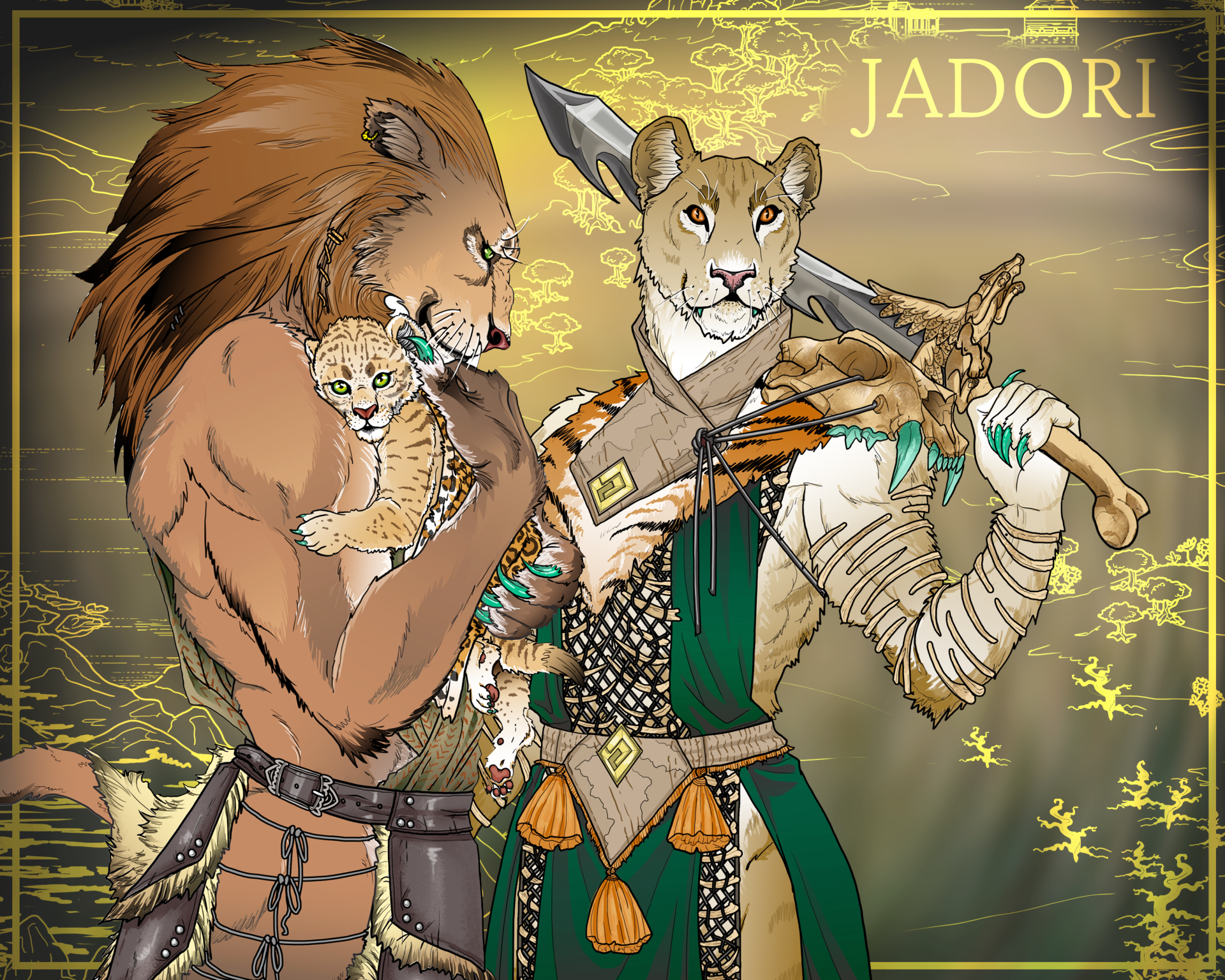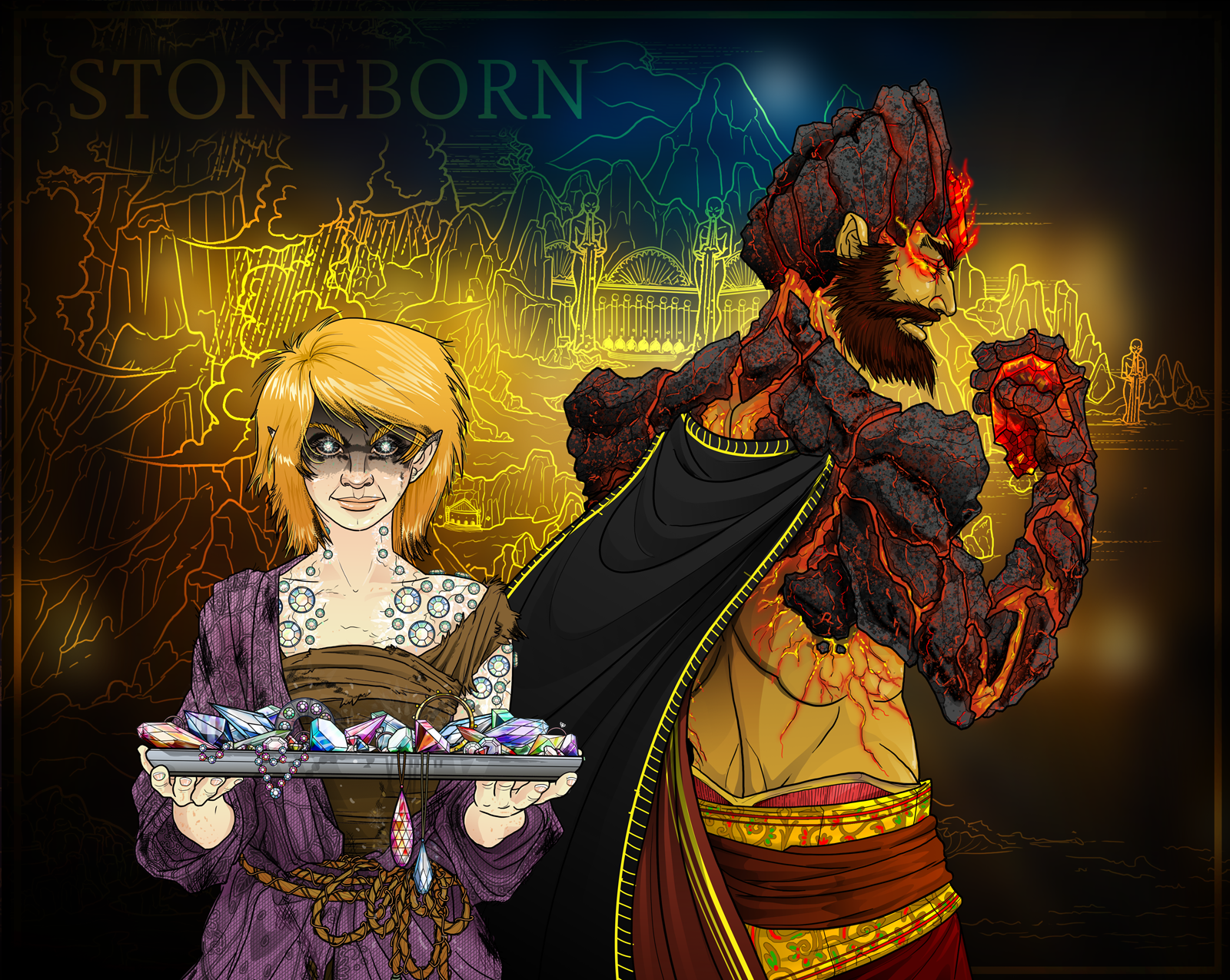

Banner with three circular icons and silhouetted figures with swords, in a dark and gold color scheme.

Eternity TTRPG


The best TTRPG resources. Eternity TTRPG is also its own independent tabletop roleplaying game.
Explore Eternity TTRPG
A glowing blue sword with energy wisps

The Web's Best TTRPG Resources


If you're a TTRPG enthusiast, Eternity TTRPG is for you. We've compiled some of the best available TTRPG resources to make your games more consistent, more fun, and full of magic.
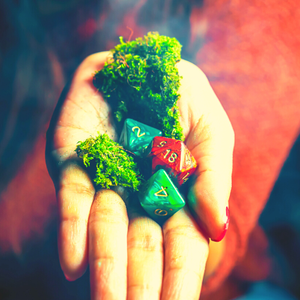
Hand holding green moss and colorful dice.

GM Tools


Check out our comprehensive hub page for items and ideas beneficial for your next adventure or campaign.

Close-up of a mystical scene with an aged book, potions, and rising smoke.

DnD Gifts


Our ultimate DnD Gifts guide covers everything from minis to game maps, and cookbooks to clothing.
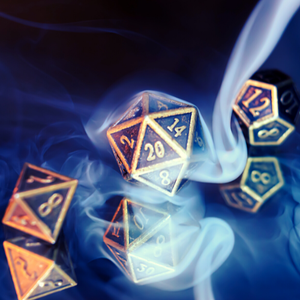
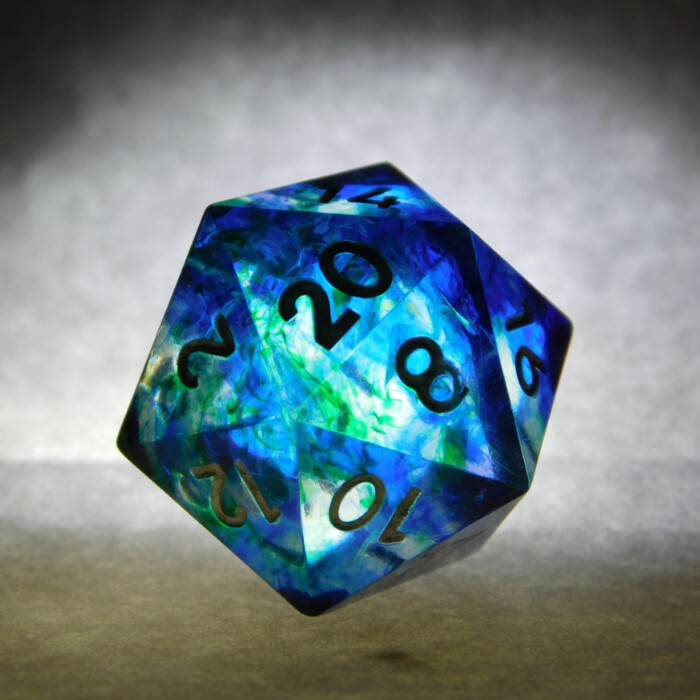
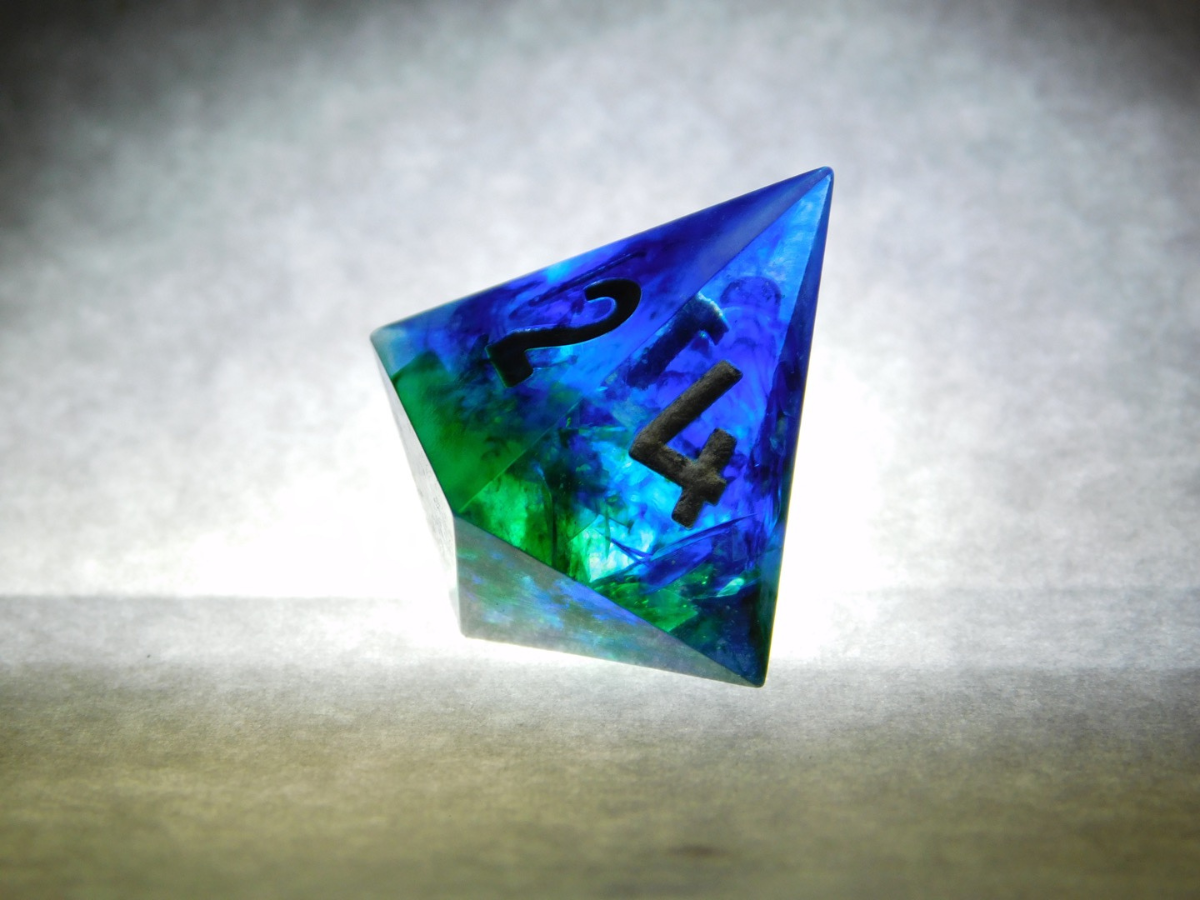
Dice set in blue smoke. 20-sided die prominent. Gold numbers on black dice.

DnD Dice


Haven't you always wanted THE best DnD dice out there? Well, of course they don't exist... Or do they?

Open book with glowing pages; colorful smoke-like figures emerge, set against a dark blue background.

TTRPG Reviews


Looking for a tabletop RPG to try out other than D&D? Good news - there are hundreds. And we've reviewed dozens of the best.

A character with swirling magic, wings, and a staff. Predominantly blue, white, and black colors.

What Is Eternity TTRPG?


Eternity TTRPG is the website that features both the tabletop RPG I’ve created (Eternity TTRPG), as well as articles and resources for other tabletop roleplaying games (TTRPGs).

Explore Eternity TTRPG
A character with swirling magic, wings, and a staff. Predominantly blue, white, and black colors.

Summoners are believed to derive their powers from 'Summoner's Trinkets,' artifacts passed on through their tribes. Espers - such as Nyxx - are particularly potent at summoning, given their connection to celestial pathways (as seen on their body's runes). Esper summoners are even known to go through the portals they create, sometimes never to be seen again.

Why Play Eternity TTRPG


Thinking about trying out a new TTRPG? You need a game that's fun, easy-to-learn, and has depth to it that'll keep you up at night exploring new options.

Learn as You Play


Don't worry about reading through a rulebook for hours on end before you can play. We've got you covered.
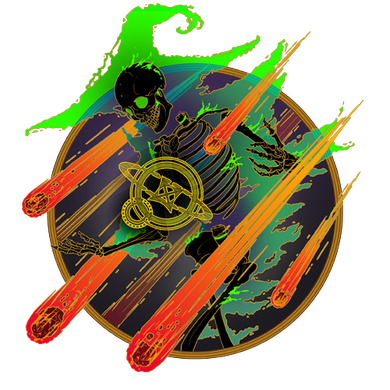
Skeleton figure inside a circular frame with falling meteors and green cosmic shapes.

Simplicity & Depth


The game is played with a single d20. However, there are thousands of options for how to play each character.
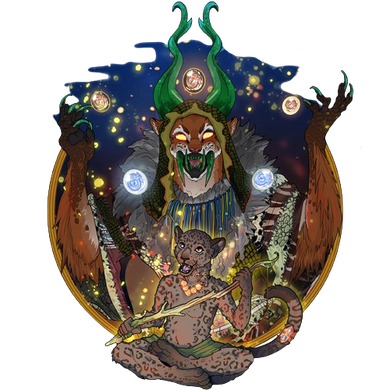
A celestial tiger-like deity with a jaguar playing a flute in a starry night scene. Golden orbs and glowing light.

GM & Roleplay


Try playing a tabletop RPG that doesn't require the roles of "game master," or "player." You can do both.
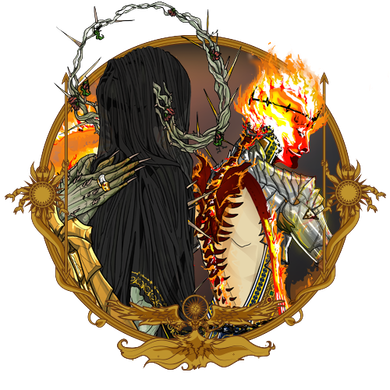
Two figures in a golden frame: one dark and hooded, the other fiery. Both wear thorny crowns.

Multiple GMs


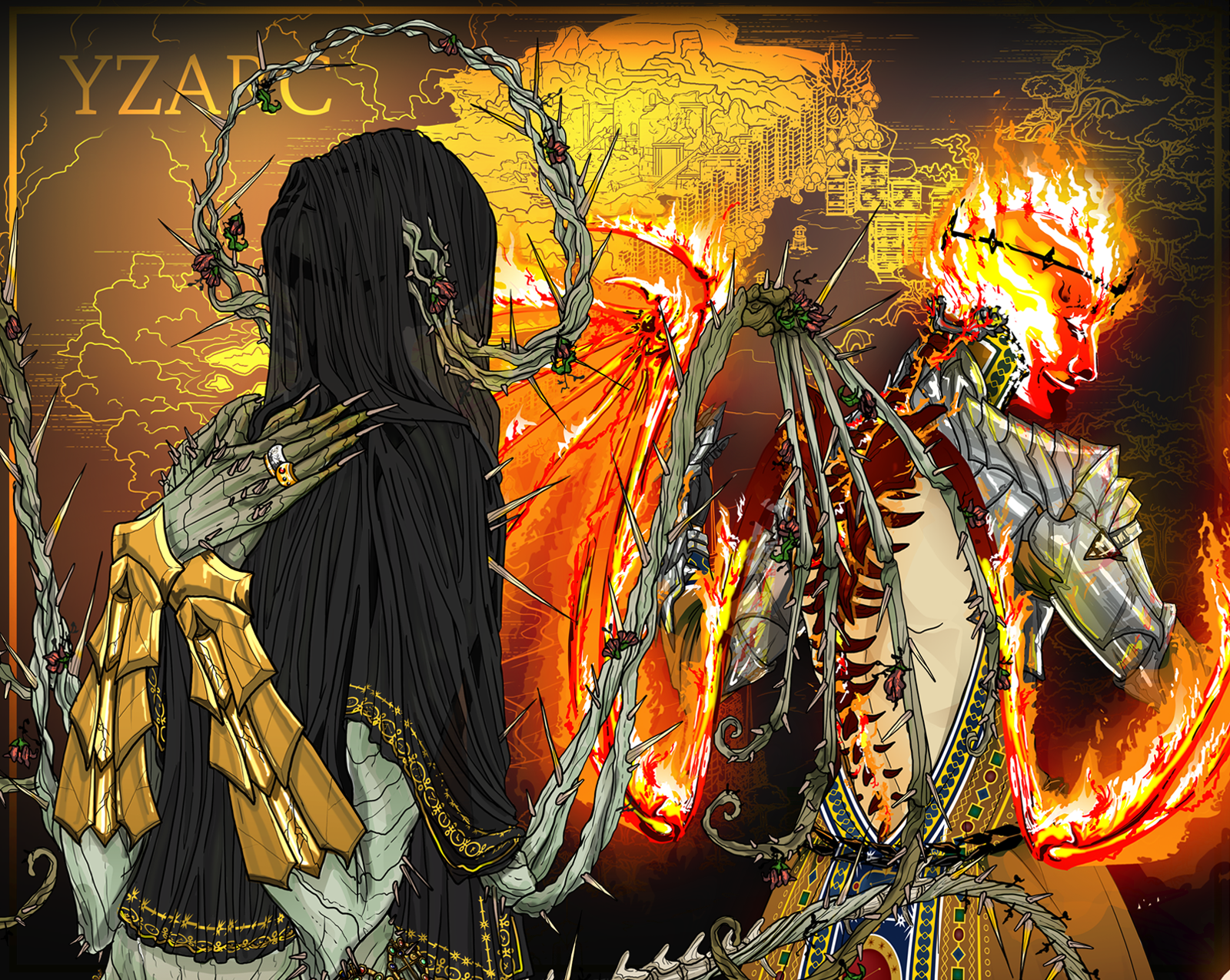
Groups that co-create game worlds and campaign arcs are more creative. Play a game that encourages this. 
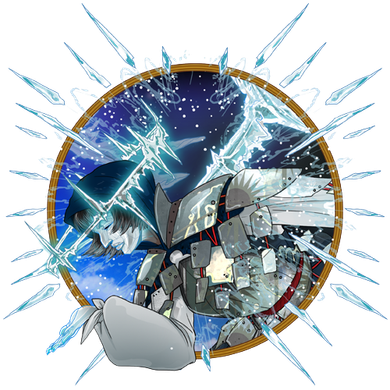
A character with a robotic arm punching with ice shards surrounding them, set against a starry background.

Tactics & Options


Experience 9-races and 16-classes in the core rulebook, with over 1,000-unique spell and ability effects.
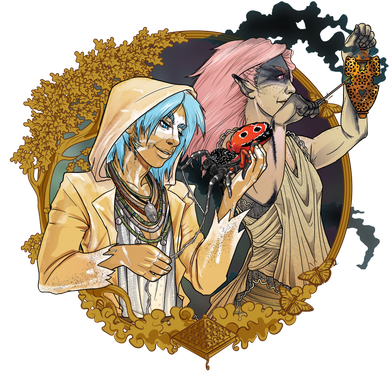
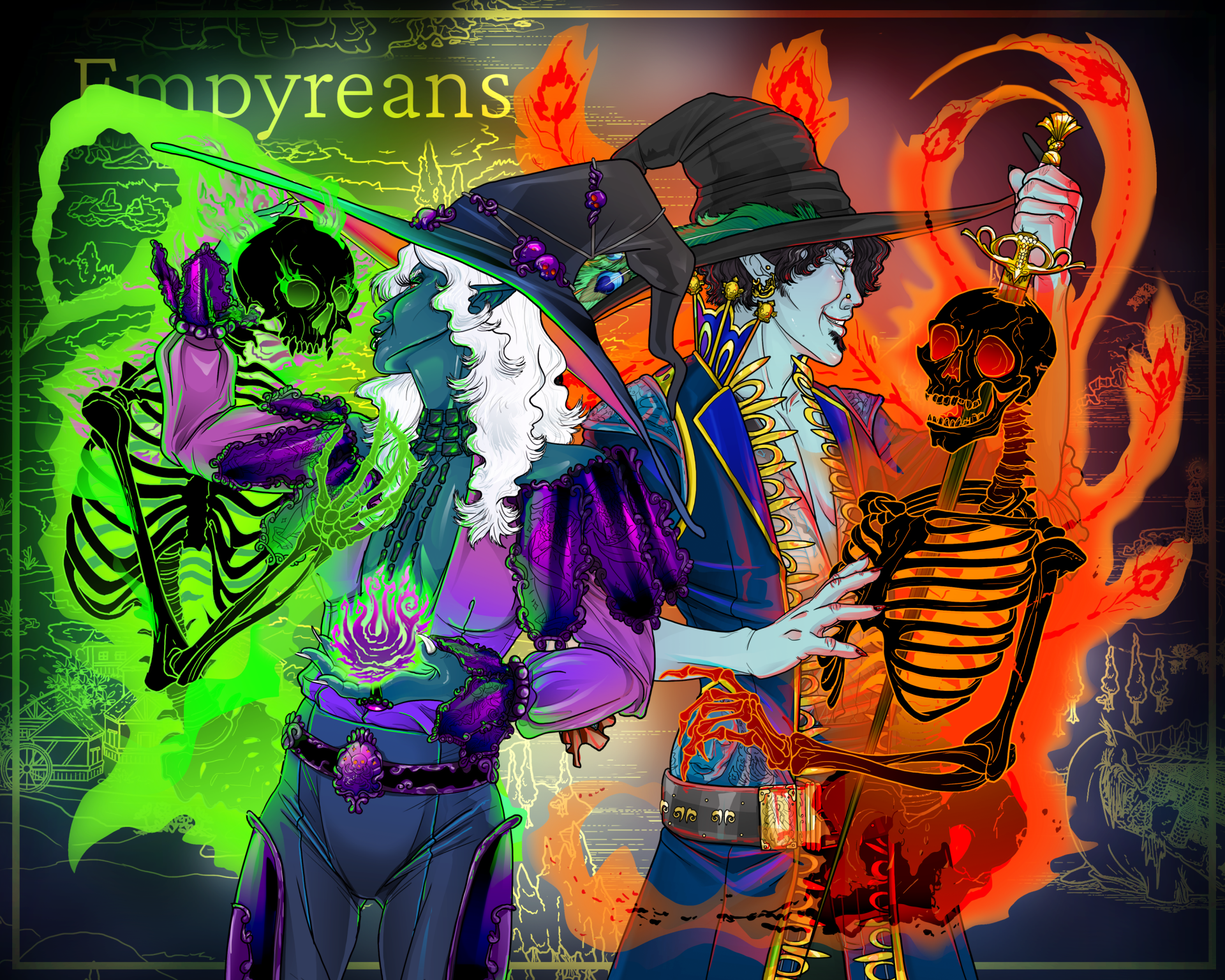
Two figures with pale skin, one blue-haired

Unique Lore


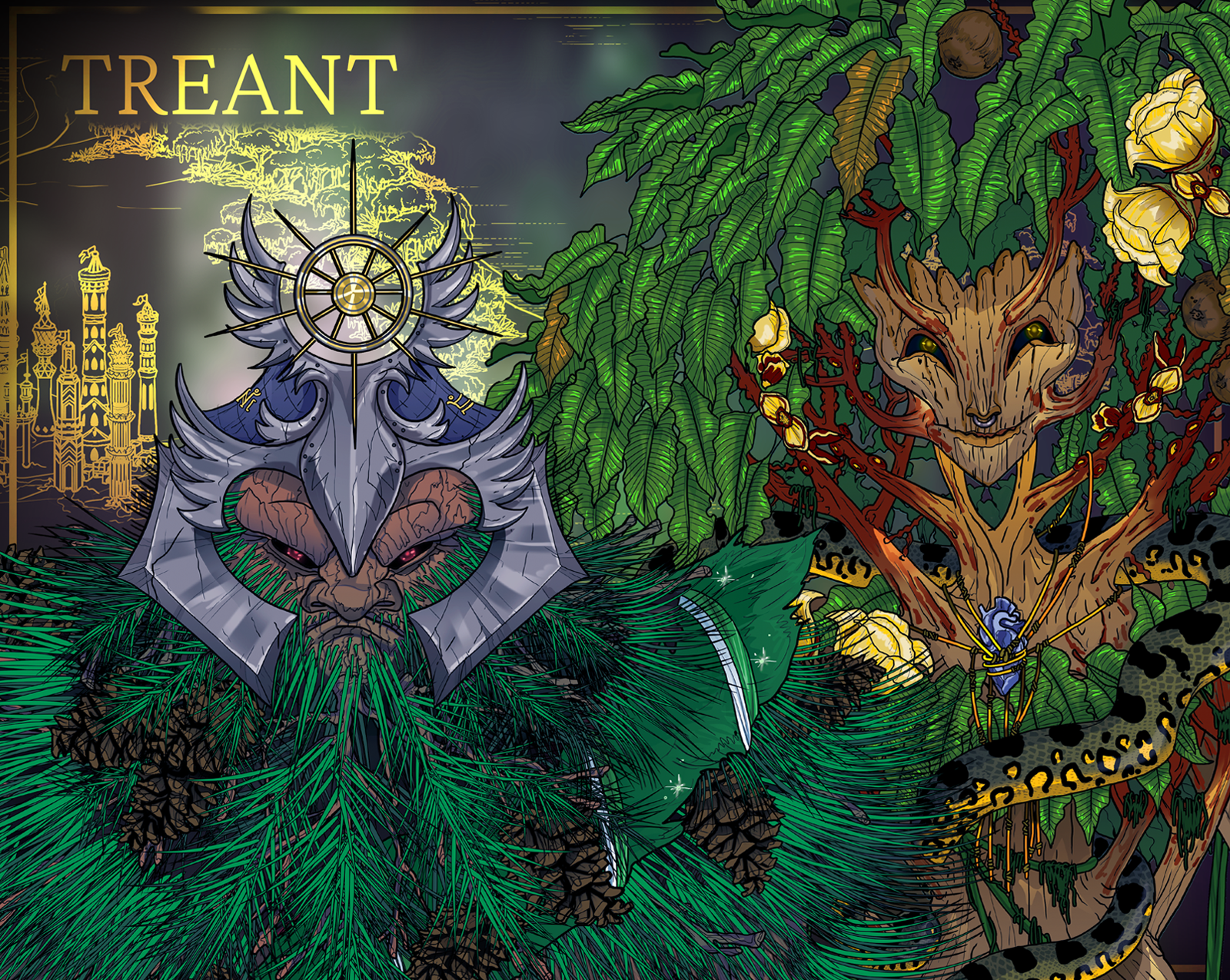
Eternity TTRPG comes complete with a rich and established world lore you can use in your campaigns.
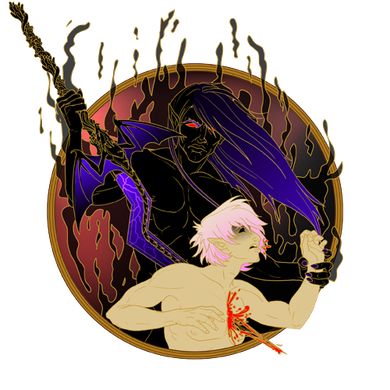
A figure with purple hair and a staff looms over a wounded person, blood on chest, surrounded by dark flames.

Explore Eternity TTRPG


You've been thinking about trying a new game for a long time. D&D isn't the only great tabletop RPG out there, after all. Go ahead, you're only one click away from exploring a brand new fantasy world.

Explore Eternity
Advertisement for a free printable DND reference card database. Includes combat, status & spell rules.

    Latest TTRPG Articles


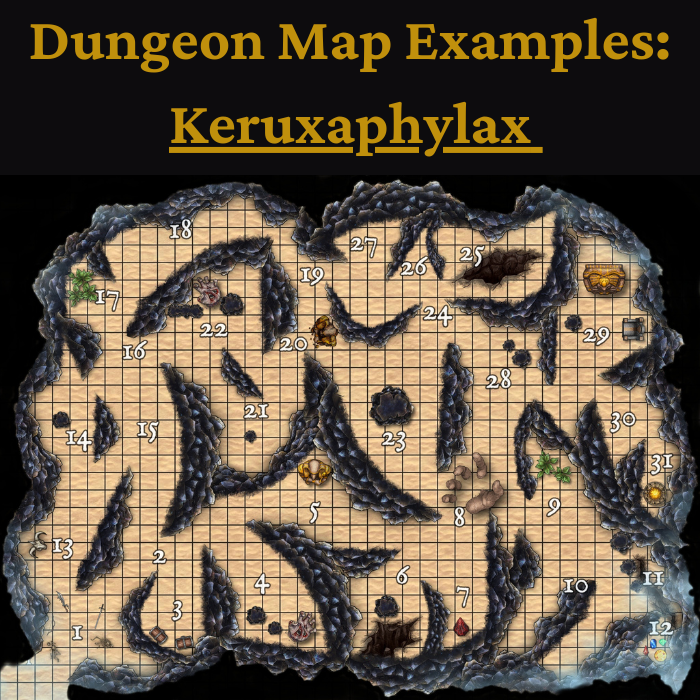
    Read the web's best TTRPG-related blog articles. Topics range from starting your first D&D campaign, to D&D spells, and even to sample dungeon rooms you can use in your next adventure or campaign.
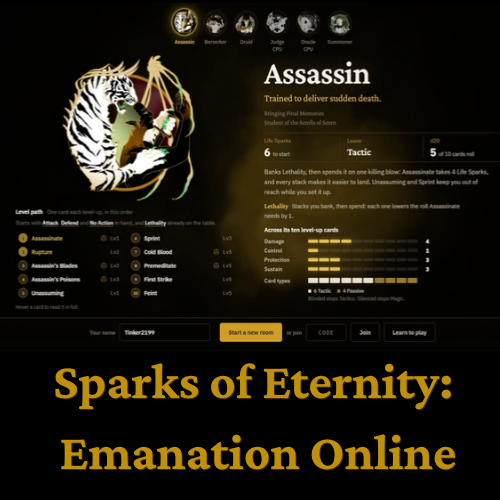
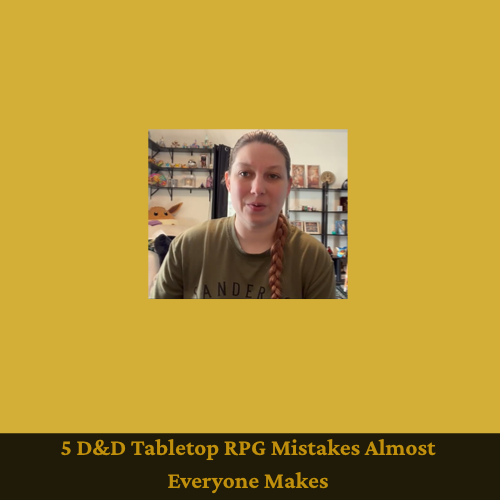
    Josiah Mork: Creator of Starset RPG and Pen RPG
    By Jacob Tegtman March 27, 2026
    Transcribed content from our recent YouTube video: https://www.youtube.com/watch?v=9In5gaz65s8 Transcription Jacob Tegtman (00:01.848) Hey everyone, welcome back to Eternity TTRPG, where we cover really everything tabletop gaming related, Dungeons and Dragons. Now we're finally jumping into some of my favorite topics, which is game design and getting to spend some time with great game designers up and coming, people who are established. And today we're interviewing Josiah Mork, who is the owner and lead designer for Hoodwink Gaming. So welcome to the show. Thanks for being part of the channel. Josiah (00:33.142) Thanks, it's my pleasure. Yeah, it's been great working with you on eternity and getting to swap ideas. So I'm really looking forward to being able to talk through some of that process with you. Jacob Tegtman (00:44.478) Awesome, Ben. Yeah, I've been looking forward to talking with you. We always have a lot of fun when we catch up. I think this will be a really good conversation. There's so many parts of your mini games that I've wanted to ask you about for really such a long time. And it always felt like we were working on some project or discussing something. But now I have a really good excuse to just nail you down for maybe about an hour-ish and hopefully die. Josiah (00:50.028) for sure. Josiah (01:04.972) There's always something. Jacob Tegtman (01:14.352) dive into what you've been doing and why you've made some of the decisions you've made, which I think are really interesting. I'm sure, yeah. So do you just want to maybe start by introducing yourself more, know, who you are, what you've done, and yeah, where you're going? Josiah (01:20.968) Yeah, well, hopefully I've got good answers for you. We'll see. Josiah (01:32.756) Yeah, absolutely. yeah, like you said, I'm Josiah. I'm from Michigan, living just out of DC now. I've been designing and playing board games since my early teen years, I guess I would say. I love creative writing and storytelling. That's just been an amazing way that I've found to connect with people. My actually my undergrad and my grad degrees were in communication and looking at how communication connects us and strategies and stuff behind it. And so I find a storytelling a really compelling way to do that. But before I had gotten into school and whatnot, you know, I was homeschooled. I was in late middle school and I was reading this cartoon. Maybe you are some of your viewers have seen it. Foxtrot comics. And there are some. Have you seen it? Highly recommend, highly recommend. It's really funny. But there are these two characters, they're really nerdy middle schoolers and they were playing Dungeons and Dragons in the comic. And I just thought that was the coolest thing. But my parents, know, I'm a Christian, my family's Christian, fairly conservative. And so my parents were more familiar with like the 80s, like D &D scare, very like Stranger Things season four. And so they were not really like, yeah, not really D &D fans. And so I was like, well, okay, I'll create my own. And that's how it all got started, you know? And then it was a great way to make friends in my Boy Scout troop. You know, we would play, would swap ideas, we would... Jacob Tegtman (02:51.202) Yeah. Jacob Tegtman (02:55.042) Not too far ahead. Sure. Yeah, that's awesome. Jacob Tegtman (03:08.12) time. Josiah (03:09.972) you know, go on crazy adventures with rules that didn't quite work. And then over time, you know, I just realized that there were all of these cool avenues to explore and storytelling that D &D didn't necessarily do. And so I just felt really passionate that this is my way to connect with people and connect people with each other is through writing games. Jacob Tegtman (03:30.508) That's amazing, man. Yeah, it's funny, like the ways that we get into gaming too. Like you mentioned those comics. you ever see Dexter's Lab? Okay. Okay. Yeah, was probably a little bit before. Yeah. There was like an episode that was kind of based on Dungeons and Dragons and I saw it when I was like six and that's what got me into it as well. yeah. Josiah (03:39.616) Yeah, well, I've heard of it. Yeah, I've seen clips from it, yeah. Josiah (03:52.972) It's so funny how it seems like every show, know, Community, Gravity Falls, like, there are all these shows of every different genre, and they all have like a D &D episode for some reason. And I love it, you know, but it's so random. Jacob Tegtman (03:58.679) Yeah. Jacob Tegtman (04:05.302) Yeah, like all of them. Me too. Yeah, it is. Yeah. I also like the takes that different shows have on like nerdy board games. I think was like Parks and Rec had, I forget what the game was called. Yeah, you remember it. Yeah. Yeah. That's so cool, man. Josiah (04:20.81) The Cones of Dunshire, yeah. Love that, love those episodes. Jacob Tegtman (04:29.646) So I want to dive into really all of those things more, but what games do you currently have available then? And your website will post it in the show notes as well, but it is hoodwinkgaming.com for anybody who's interested. But yeah, tell us about some of your games. And again, I feel like I want to go into all of these in more detail, but yeah, give us the summary version at least for now. Josiah (04:55.05) Yeah, so it's a little deceptive at the moment. My original titles and kind of most of the games that I do are under the pen brand. So play easily now is the acronym. We have war game and role playing game. But actually neither of those are on the market at the moment. If you go to my website. Yeah, we've got a landing page for the war game and we've got a preview for the RPG. And I've actually I've got. Jacob Tegtman (05:12.95) really? I was actually, yeah, I was checking it out like yesterday, so. Josiah (05:24.422) know, prototypes of both of those here. But they are still in development because of various different reasons of wanting to refine some ideas or just kind of ended up having to move to other projects. So they're almost launch ready. But those are the ones that they're working on for the longest, just the newest editions aren't quite together yet. Jacob Tegtman (05:29.506) Yeah. Jacob Tegtman (05:39.96) Yeah, nice. Jacob Tegtman (05:46.04) Very cool. Josiah (05:46.164) And then the one that I've been working on most recently, and that we actually have a new project launching next month for, is Star Set. So that's a grimdark survival-oriented tabletop role-playing game that we launched initially a couple years ago, and then just did a relaunch for the second edition for, which is much more crunchy, much more mechanical, and much more narrative-based. So really looking forward to building that out. Jacob Tegtman (06:14.542) That's exciting. Yeah, I can attest that game is great. I really enjoyed reading through it. Everything from the design of the book to the art to the way that you have, especially character building in that, I find super fascinating. You can just tell, yeah, the amount of attention to detail in there is like out of this world. It really feels like you guys... Josiah (06:27.148) Well, thank you. Josiah (06:34.966) haha Jacob Tegtman (06:38.478) You took the lore of the game and you baked it into every part of the game. Whereas I think a lot of games like, you know, we'll talk about D &D later. D &D is like the game that's everything. So it's like if it's in a fantasy book or movie or anything, like we'll just jam it into D &D somehow. And, you know, that kind of has its place, but for building characters and stuff, you know, like you don't, I don't know. It's supposed to be able to fit many different genres and you're Josiah (06:42.72) Mm-hmm. Jacob Tegtman (07:08.612) I think what's so cool about is that when you're playing Star set you're playing Star set Because from the very first thing you do with your character and their background and their skills even it's all based on the lore of this whole universe so Josiah (07:19.902) Mm-hmm. Well, I really appreciate that. mean, that's really the heart behind it when we were working on it is, we had a story that we wanted to tell and really created the universe to tell that story. And one of the things, you know, that I picked up studying communication is that, you know, we are attracted to details. And even if it's details that, we haven't necessarily experienced in our own lives. Jacob Tegtman (07:24.963) Yeah. Jacob Tegtman (07:33.324) Yeah. Josiah (07:45.324) hearing vivid details or strong emotions in other people's stories lead us to be more connected with them. And so that was something that we really trying to flesh out in Star Set. hopefully, from the sound of it, it hopefully worked pretty well. Jacob Tegtman (08:00.352) I think so, yeah, absolutely. So, what do we talk about first, man? Like, what do you want to talk about first? Josiah (08:01.452) Thank you. Josiah (08:11.672) man, I could talk about games for hours and hours, so I better let you guide that conversation. Jacob Tegtman (08:14.944) You Okay, I just want to make sure we cover like the big things before we dive into the nitty gritty here. Yeah. Yeah. Josiah (08:24.332) Oh yeah, I mean, I kind of touched on, I guess I'll throw it out there. I'll throw it out there because it's really important to me and kind of the company into my story. you know, I really do, we're about to, you know, dig into the nitty gritty, like you said, and Dungeons and Dragons and all the different games that are out there. And I just think, you know, before whether you're a designer or a player, whenever you kind of step into a game, I think the most important thing and what's in the mission kind of a hoodwink that we try and do differently is that Jacob Tegtman (08:33.379) Yeah. Josiah (08:53.446) The games are just kind of an excuse. Really, the games are just an excuse to get together with people and to have FaceTime with people. And if working in social media has taught me anything, it's that people need that more than anything. And that's why we call it Hoodwink Games, because we kind of have all these substitutions. get hoodwinked into thinking that socializing is something that it's not. And really, it's just fellowshipping with people and joining community and FaceTime with people. and talking about the things that matter with people. And the way to do that from going from stranger to best friend is in my experience games. And so that's kind of the heart behind it. Jacob Tegtman (09:30.658) That's been a cool one. Yeah. You know, it's interesting you bring that up too, because this is something I've been thinking a lot about recently, especially as everybody's been seeing more AI come into their work, into their lives. And I feel that more than ever, people are wanting that human, real human interaction. And so as good as video games are looking nowadays and as fun as MMOs are and stuff like that, and I like all of those, I don't think I've Josiah (09:43.628) Mm-hmm. Josiah (09:53.004) Mm-hmm. Jacob Tegtman (10:03.53) found anything that's as fun is sitting around playing a tabletop role-playing game, especially in person. mean, even, you over FaceTime like this is fun, but something in person about it just makes it one of the best experiences. Josiah (10:09.729) video. Josiah (10:13.142) Mm-hmm. Josiah (10:18.686) It really does. It's those shared memories and those shared jokes. And, you know, I work in politics, doing social media for politics. And the thing that just aggravates me the most about politics, but also religion, people say don't talk about politics or religion because people care about it so much. And it's like those are things that we care about the most. So we should be able to share those with people. But you can't because as soon as you bring them up, you know, there are all these walls. Jacob Tegtman (10:39.48) Sure. Josiah (10:48.062) and games when you've played for a couple hours with somebody and slayed the dragon and made a couple jokes, then it's like, well, okay, now your opinion isn't the thing that I'm defining you on. The thing I'm defining you on is that, you know, you're a half drunk elf paladin or something like, and it just makes it easier. Jacob Tegtman (10:48.416) I guess. Jacob Tegtman (11:04.014) Yeah, that's so true. That's so true. Yeah, it definitely does break down those walls and give you that sense of shared history, even if it's like a shared mental history, theater of the mind. So, yeah. Josiah (11:17.27) Mm-hmm. Mm-hmm. It's great. Jacob Tegtman (11:21.428) I agree, man. Especially when you're doing... So I haven't read through all of the lore of Starseq. There's just so much in there. I've read through a good deal of it. But I think one of the things that also stands out about at least that game, because I know Penn's still in the work in progress... Josiah (11:38.599) the Jacob Tegtman (11:39.446) that, you know, it does cover a lot of political things and it covers a lot of religious things and you aren't like pushing a view on anybody, but just inherent to human life is politics and religion. so games let you approach these topics like in ways that allow you to explore what could be, but in a safe way and have conversations about what could be without feeling like you're being attacked or told. Josiah (11:53.856) Mm-hmm. Josiah (12:01.6) Thank you. Josiah (12:05.836) Mm-hmm. Yeah, that's really the, again, I'm really glad that you feel that way about the game, because that was one of the number one priorities of it, is there are just really hard conversations that should be had. And that game kind of came out of COVID, where there were a ton of hard conversations people were having. And I think you could spend every day, every minute of every day with people. Jacob Tegtman (12:14.306) Yeah, for sure. Jacob Tegtman (12:23.394) That's right. That's right. Yeah. Josiah (12:33.664) but if they're not people that you feel like you can have hard conversations with, then you haven't really been in community at all. And so having a medium like that, where, like you said, I don't wanna tell anybody what they should believe. There are things that I believe are true about God and about the world and about politics and stuff, but those things have to exist relationally for them to mean anything to you. so... Jacob Tegtman (12:39.788) Yeah. Jacob Tegtman (12:50.542) Sure. Josiah (12:58.954) to have that space to kind of explore and talk and then role play through just makes it fun for one thing, but also makes it so much more personal and so much more impactful, I think. Jacob Tegtman (12:59.374) Yeah. Jacob Tegtman (13:10.772) I agree. So what is the next thing that you said you're working on with StarCert? I think I missed that when you mentioned earlier. Yeah. Josiah (13:16.436) Yeah, so my co-writer, Emily, and her husband Ryan, who did some of the art for Star Set, they have actually written and illustrated the first campaign for it. It's called Echoes on Mars, and that's going to be launching on Kickstarter next month. Jacob Tegtman (13:31.822) Okay. Okay, cool. That's exciting, man. So what number of Kickstarter will this be for you? Josiah (13:38.092) Thank Josiah (13:42.294) That's Josiah (13:46.806) seven maybe six or seven. I'm doing this one well I should say the plan is to do it on Kickstarter but changing a lot of things. I'm still talking to them. My wife is behind me. I still want to talk through some of them with her because it had a lot of very negative Kickstarter experiences and learned a lot. So we're to do this one if we end up doing it on Kickstarter very slim down and very different than some of the other ones. So it's a constant learning experience. Jacob Tegtman (13:48.43) Sort of. Yeah. Jacob Tegtman (13:54.094) Sure. Jacob Tegtman (14:16.43) Yeah, I just remember I feel like every year or so I feel like you're launching something on Kickstarter successfully. So at least from the outsider's view looking in, it's like man Josiah just knows what he's doing with selling games. Josiah (14:30.208) You Well, I know a little bit more than I did last time and that's the goal. Yeah.
    An anime-style character with long white hair
    By Jacob Tegtman March 25, 2026
    Transcribed content from our recent YouTube video: https://www.youtube.com/watch?v=si26EW5kj4Q Transcription Summary Final Fantasy Legend Edition TTRPG discussion covered the game's high customization and free distribution via mythos inspiration and iterative research. Final Fantasy Legend Edition Origin Legend Edition is a medium-complexity TTRPG developed over 4 years to emulate the entire Final Fantasy mythos, avoiding a focus only on the SNES era. The core goal was to create a neutral sandbox emphasizing high customization that supports high fantasy, steampunk, and futuristic settings. Design Philosophy and Research The game is distributed for free to continue the tradition of high-quality, free fan-created content within the TTRPG community. Extensive research was conducted on the IP, including cut content and Ultimania books, which led to the design pillars of iteration and experimentation. Customization and Unique Features Character creation allows hybrid archetypes via the selection of 3 classes from over 50 available options with variable progression speeds. Unique Legend Edition features include row-based combat and active defenses, creating a tactical risk-reward system. Details Introduction to Final Fantasy Legend Edition Project : Jacob Tegtman welcomed Mildra The Monk, the lead designer and spearhead of the Final Fantasy Legend Edition project, to the Eternity TTRPG channel for their first interview of this kind. Mildra The Monk expressed appreciation for being hosted and agreed to begin by discussing their background and the nature of the project (00:00:00). Mildra The Monk's Background and TTRPG Contributions : Mildra The Monk introduced themself as a content creator who has reviewed games, run playtests, and conducted over a thousand interviews in the last five years. They cover third-party D\&D material, indie games, and fan games such as Naruto 5e and Dungeons of the Dragoning, the latter of which started as an April Fool's joke that combined five different RPGs (00:01:03). Most recently, they served as the lead designer and project lead for the Final Fantasy Legend Edition TTRPG (00:02:26). Running a Final Fantasy Legend Edition One-Shot : Mildra The Monk mentioned they had been running a one-shot using the Legend Edition for the past few weeks with rotating party members and ran one for Jacob Tegtman as they were planning content on the game (00:02:26). They noted that a community member has been developing a work-in-progress Roll20 sheet for the game, which had recently received a significant update (00:03:26). Virtual Tabletop Support for Legend Edition : When addressing the question of virtual tabletop support, Mildra The Monk stated that they have not done any real coding in at least ten years and lack the skill set to build a custom sheet from scratch for platforms like Roll20 or Foundry. They acknowledged the community's support, noting that people are using their own time to support the game with tools like the Roll20 sheet (00:03:26). Summary of Final Fantasy Legend Edition : Legend Edition is a medium-complexity TTRPG that took about four years to create, aimed at emulating the Final Fantasy mythos. The project originated from Mildra The Monk's pet peeve that previous tabletop versions of Final Fantasy heavily skewed toward the SNES era (IV, V, and VI), neglecting entries like VII, XIV, and XVI which appeal to newer generations of fans (00:04:21). The goal of Legend Edition is to use the recurring Final Fantasy mythos as a neutral sandbox for tables to build campaigns in any direction, prioritizing customization (00:06:43). Game Design Flexibility and High Customization : The game was designed to be equally viable in high fantasy settings, like Final Fantasy III or IV, as it is in steampunk settings, such as Final Fantasy VI or XIV, and futuristic entries, such as Final Fantasy VIII or XIII. Jacob Tegtman noted that playing the game demonstrated that the number of classes and intricate character details allow players to create characters fitting any Final Fantasy experience they desire (00:06:43). Reasoning Behind Free Distribution of Legend Edition : Mildra The Monk explained that the game is available for free because they came up as a tabletop player seeing high-quality fan games that were just as good as paid games, and they wanted to pass along that torch to the community (00:09:44). They expressed the desire for someone to take their work, hack it, and put up their own version, continuing the chain of free content (00:11:02). Research and Design Philosophy for Legend Edition : A major focus of the project was capturing the soul of Final Fantasy, which involved extensive research, including reviewing existing games, cut content from games, behind-the-scenes interviews, and Ultimania books (00:11:02). The core philosophy derived from this research was "iteration and experimentation," which led to the game's foundational design pillars (00:12:16). The Inspiration to Focus on Final Fantasy : Mildra The Monk is a devoted Final Fantasy fan, but other factors drove the project, including a desire to carry on the lineage of prior Final Fantasy TTRPG fan projects like the mid-90s Returners project (00:12:16). A core motivation was bridging the gap between video games and tabletop gaming, using Final Fantasy because its consistent mythology allows for adaptation that goes beyond merely replicating the video games (00:14:29). Avoiding the Trap of Literal IP Adaptation : Mildra The Monk highlighted a common problem with tabletop adaptations of existing IPs, where designers attempt to adapt the source material wholesale, citing the early TSR run of Indiana Jones as an example where they only allowed players to play as movie characters. Instead, people generally prefer to create their own character within the world, such as being a student at Xavier Academy rather than playing as the X-Men (00:15:49). Emulating the Mythos Over One Game : Mildra The Monk emphasized that designers should emulate the overall mythos of a franchise rather than hyperfocusing on one game or one era (00:17:00). For Final Fantasy, this is supported by recurring elements such as job names, play styles, spell names, summons, and abilities that maintain a consistent theme (00:18:09). Classes, Character Creation, and Flexibility : The customization in Legend Edition is demonstrated by the character creation system where players select three classes with different progression speeds, allowing for a unique hybrid character from over 50 classes (00:21:27). This approach is a compromise that provides the strong thematic elements of the job system without restricting player choices, such as customizing weapon lists to be setting-agnostic and avoid favoring one style of fantasy (00:20:06) (00:22:24). Key Design Pillars of Final Fantasy Legend Edition : Mildra The Monk outlined the three major pillars of the game's design: "mythos not setting," "customization is king," and the **phase structure** (00:24:24). The phase structure involves four acts—preparation, exploration, encounter, and downtime—which is loosely inspired by the Asian four-act format (kishōtenketsu) and the Town-Field-Dungeon trinity pioneered by Dragon Quest (00:25:34). The Research Process as a Favorite Part of the Project : Mildra The Monk stated that the research phase was one of their favorite parts, which allowed them to discover early concepts for the video games that were eventually cut (00:27:50). Examples included the early name for Materia being "spheres," which was later revisited for Final Fantasy X, and a puzzle tattoo mechanic for Final Fantasy X's sphere grid, which was cut (00:28:33). Inspirations and Creative Liberties in Design : The research led to design inspirations such as an unused Chocobo Lancer concept art from Final Fantasy XI resulting in the Chocobo Knight class in Legend Edition, addressing the long-desired idea of Chocobo cavalry (00:29:32). The team took certain liberties, like creating the speed-based Dervish to serve as an answer to the Berserker class, and the Ravager as a spell-spamming class, drawing from inspirations like Final Fantasy XIII (00:31:48). Development of the Yo-kai Class : The Yo-kai class began as an idea for a controllable summon, similar to the Aeons in Final Fantasy X, but was changed to avoid replicating one game (00:31:48). The final concept for the Yo-kai, as avatars for Eidolons, was inspired by the design of Yoko in Bravely Second and the concept of the rider or shioal spiritualist in Voodoo (00:32:43). Impact of Extensive Research on Project Quality : Jacob Tegtman acknowledged that the depth of research, spanning Final Fantasy lore, mythology, and diverse concepts like Voodoo, enabled Mildra The Monk to create over 50 classes, each with up to seven tiers of abilities, amounting to hundreds of unique mechanics that synergize well (00:33:58). Mildra The Monk affirmed that this extensive research, modeled after the preparation of Star Trek producer Harve Bennett before producing *Wrath of Khan*, was a necessary baseline (00:36:10). Historical Context of Final Fantasy Combat System : Mildra The Monk highlighted Hiroyuki Itto, the pioneer of the job system and the Active Time Battle (ATB) system, noting that he cited American football and Formula 1 as inspirations for ATB (00:39:09). Mildra The Monk asserted that the shift toward action-based combat, seen in games like Final Fantasy XV and XVI, was an evolution building on foundations laid decades ago by Itto, not a radical shift (00:40:15). Snapshot of Unique Legend Edition Features : For those unfamiliar with Legend Edition, Mildra The Monk listed key differentiators, including high customizability in the job system, easy creation of hybrid archetypes, fewer but more impactful skills, and multiple character creation/advancement methods (00:41:59). Jacob Tegtman added the unique row-based combat and active defenses, such as parrying and evading, which create a tactical, risk-reward philosophy in the design (00:43:17). Future Vision and Upcoming Projects for Mildra The Monk : Immediate future plans include overseeing support elements like new Excel and HTML solo-play sheets, as well as writing world book guides, which are lighter books focused on emulating individual Final Fantasy entries like FFIII or FFVIII (00:45:13). They are also considering TTRPGs based on 2D fighting games, aiming for a defined setting like a fighting game version of Night City, and they intend to create a fantasy-themed mech game and a Wuxia-themed RPG (00:46:24). Ongoing Efforts to Promote the TTRPG Community : Mildra The Monk is continuing their mission to showcase the totality of tabletop role-playing games by highlighting the international scene, including content from Brazil, Germany, and Sweden (00:50:01) (00:52:17). They mentioned forthcoming streams covering the Spanish Anima Universe, Sword World, and *We's Blade*, a game compared to *Panzer Dragoon* (00:51:15). Availability and Support for Mildra The Monk : Mildra The Monk can be found streaming regularly on YouTube and Twitch, on Twitter where they highlight artists and indie games, and in their personal Discord (00:55:07). While Legend Edition remains free, they have set up support mechanisms like Ko-fi for those who wish to leave a tip (00:56:19).
    A gnarled, dark tree stands in a misty forest under a pale moon.
    By Jacob Tegtman March 22, 2026
    Transcribed content from our recent YouTube video: https://www.youtube.com/watch?v=AuryVcZdp4Y Transcription There are kind two ends of the spectrum for D&D races. There’s Story-specific races: These come with a strong, built-in narrative that fits specific campaign worlds or settings, that almost tells you how to play them. Then there’s more Flexible races. These are much easier to slot anywhere because they don’t necessarily come with an expected tone or backstory. You can sort of fit them into any campaign with ease – like playing a human. Some D&D player races feel like they’re built for a specific kind of story. Others feel flexible enough to drop into almost any campaign. Gnarlborn from Crooked Moon… sit somewhere in between—and that’s kind of what makes them interesting. They have strong flavor, but they aren’t restrictive for your campaign. They come with built-in lore that gives you instant roleplay direction, but they aren’t so specific that you can only play them in your Crooked Moon campaign. Welcome back to Eternity TTRPG.  As you can already tell, today we’re looking at a lesser-known player option for playable races, which is the Gnarlborn from Crooked Moon. If you’ve seen my other videos on the topic, Crooked Moon has become one of my favorite D&D settings of all-time. We’re going through each of the races presented in Crooked Moon, and today getting to the treant-like Gnarlborn. Starting with the basics, Gnarlborn are – well, born – from the soil of a region called Ardengloom, a forest that’s less “peaceful woodland,” and more “haunted, thinking ecosystem.” The forest itself is filled with these massive trees called Elderwoods—each one housing lingering Fey spirits. Gnarlborn commune with these spirts and Elderwoods, forming an intricate and well-connected forest community. So yeah, you’re playing basically “a tree person.” But you’re also playing something that exists in a constant, low-level conversation with ancient, possibly unreliable spirits. That alone gives you a strong roleplay hook without needing a complicated backstory, as your tie to those spirits, and who/ what they are could gain any level of depth that you’d like, over the course of a campaign – or even a few adventures. Visually, Gnarlborn are humanoid, but like the trees in your yard, everything about them is asymmetrical—branches, moss instead of clothing accents, glowing hollows where a face might be. No two look the same. Some might feel ancient and slow, while others might come across as curious or even a little disconnected—like they’re only partially focused on the present. And since they can live for hundreds—sometimes thousands—of years, you can decide how much that actually affects your character. Are they wise because of their age, or are they just... slow? Ok, when it comes to core mechanics, let’s talk about what you actually get—because this is where Gnarlborn become very usable. First, we have: Deep Roots You get advantage on checks and saves to avoid being moved or knocked prone. This is simple, but it can be very useful against certain enemies. Next is: Elderwood Whispers After every long rest, you can pick up a new skill, tool proficiency, or even a language. Temporarily. This is probably the most interesting trait the Gnarlborn have. It’s not flashy, but it gives you day-to-day adaptability, which can be nice. It rewards players who like planning ahead—or improvising, based on expected challenges for the day. Third, we have what may be the Gnarlborn’s most *potentially powerful effect, which is: Grasping Branches As a Bonus action, you restrain a creature if they fail a Strength save. Or slow them if they succeed. The main issue here is the saving DC isn’t very high (it’s 8, plus your Constitution modifier, plus your proficiency bonus). But! Even on a successful save, the creature has half speed for a turn. So, grasping branches can be decent battlefield control without requiring you to be a spellcaster. And because this effect recharges on a short rest, you may just actually use it. It’s not overwhelming—but it’s consistently useful. Root Sense gives you tremorsense out to 60 feet. So, the ability to find Invisible enemies, Creatures behind walls, etc. And lastly, you have: Towering Size Which gives you advantage to end being grappled, and – if your group actually tracks carrying capacity, you can in fact carry more stuff. Nothing flashy—but admittedly, very practical. Playing a Gnarlborn definitely isn’t for every player. They don’t provide anything to spike damage, or even do anything unpredictable, really. But you are resisting disruption, controlling space, and adapting between sessions. They fit really well in parties that need consistency rather than specialization. From the roleplaying side, Gnarlborn also work really well in campaigns that lean into: Fey themes, Haunted environments, or Long timelines with ancient histories since they naturally connect to all of those. Gnarlborn feel connected to something bigger: whether that’s the Elderwoods, nature, fey-touched spirits, or an ancient grove deep in the dark woods. So, if you were to play a Gnarlborn, what direction would you take your character? Would you pick them for their subtle combat control, or more to explore their connection with the wilds? Whether you’ve played them in a campaign already, or you have ideas for what you might like to try, let me know in the comments. Thanks for watching, and I’ll catch you in my next Crooked Moon race guide.
    Show More
    Josiah Mork: Creator of Starset RPG and Pen RPG
    By Jacob Tegtman March 27, 2026
    Transcribed content from our recent YouTube video: https://www.youtube.com/watch?v=9In5gaz65s8 Transcription Jacob Tegtman (00:01.848) Hey everyone, welcome back to Eternity TTRPG, where we cover really everything tabletop gaming related, Dungeons and Dragons. Now we're finally jumping into some of my favorite topics, which is game design and getting to spend some time with great game designers up and coming, people who are established. And today we're interviewing Josiah Mork, who is the owner and lead designer for Hoodwink Gaming. So welcome to the show. Thanks for being part of the channel. Josiah (00:33.142) Thanks, it's my pleasure. Yeah, it's been great working with you on eternity and getting to swap ideas. So I'm really looking forward to being able to talk through some of that process with you. Jacob Tegtman (00:44.478) Awesome, Ben. Yeah, I've been looking forward to talking with you. We always have a lot of fun when we catch up. I think this will be a really good conversation. There's so many parts of your mini games that I've wanted to ask you about for really such a long time. And it always felt like we were working on some project or discussing something. But now I have a really good excuse to just nail you down for maybe about an hour-ish and hopefully die. Josiah (00:50.028) for sure. Josiah (01:04.972) There's always something. Jacob Tegtman (01:14.352) dive into what you've been doing and why you've made some of the decisions you've made, which I think are really interesting. I'm sure, yeah. So do you just want to maybe start by introducing yourself more, know, who you are, what you've done, and yeah, where you're going? Josiah (01:20.968) Yeah, well, hopefully I've got good answers for you. We'll see. Josiah (01:32.756) Yeah, absolutely. yeah, like you said, I'm Josiah. I'm from Michigan, living just out of DC now. I've been designing and playing board games since my early teen years, I guess I would say. I love creative writing and storytelling. That's just been an amazing way that I've found to connect with people. My actually my undergrad and my grad degrees were in communication and looking at how communication connects us and strategies and stuff behind it. And so I find a storytelling a really compelling way to do that. But before I had gotten into school and whatnot, you know, I was homeschooled. I was in late middle school and I was reading this cartoon. Maybe you are some of your viewers have seen it. Foxtrot comics. And there are some. Have you seen it? Highly recommend, highly recommend. It's really funny. But there are these two characters, they're really nerdy middle schoolers and they were playing Dungeons and Dragons in the comic. And I just thought that was the coolest thing. But my parents, know, I'm a Christian, my family's Christian, fairly conservative. And so my parents were more familiar with like the 80s, like D &D scare, very like Stranger Things season four. And so they were not really like, yeah, not really D &D fans. And so I was like, well, okay, I'll create my own. And that's how it all got started, you know? And then it was a great way to make friends in my Boy Scout troop. You know, we would play, would swap ideas, we would... Jacob Tegtman (02:51.202) Yeah. Jacob Tegtman (02:55.042) Not too far ahead. Sure. Yeah, that's awesome. Jacob Tegtman (03:08.12) time. Josiah (03:09.972) you know, go on crazy adventures with rules that didn't quite work. And then over time, you know, I just realized that there were all of these cool avenues to explore and storytelling that D &D didn't necessarily do. And so I just felt really passionate that this is my way to connect with people and connect people with each other is through writing games. Jacob Tegtman (03:30.508) That's amazing, man. Yeah, it's funny, like the ways that we get into gaming too. Like you mentioned those comics. you ever see Dexter's Lab? Okay. Okay. Yeah, was probably a little bit before. Yeah. There was like an episode that was kind of based on Dungeons and Dragons and I saw it when I was like six and that's what got me into it as well. yeah. Josiah (03:39.616) Yeah, well, I've heard of it. Yeah, I've seen clips from it, yeah. Josiah (03:52.972) It's so funny how it seems like every show, know, Community, Gravity Falls, like, there are all these shows of every different genre, and they all have like a D &D episode for some reason. And I love it, you know, but it's so random. Jacob Tegtman (03:58.679) Yeah. Jacob Tegtman (04:05.302) Yeah, like all of them. Me too. Yeah, it is. Yeah. I also like the takes that different shows have on like nerdy board games. I think was like Parks and Rec had, I forget what the game was called. Yeah, you remember it. Yeah. Yeah. That's so cool, man. Josiah (04:20.81) The Cones of Dunshire, yeah. Love that, love those episodes. Jacob Tegtman (04:29.646) So I want to dive into really all of those things more, but what games do you currently have available then? And your website will post it in the show notes as well, but it is hoodwinkgaming.com for anybody who's interested. But yeah, tell us about some of your games. And again, I feel like I want to go into all of these in more detail, but yeah, give us the summary version at least for now. Josiah (04:55.05) Yeah, so it's a little deceptive at the moment. My original titles and kind of most of the games that I do are under the pen brand. So play easily now is the acronym. We have war game and role playing game. But actually neither of those are on the market at the moment. If you go to my website. Yeah, we've got a landing page for the war game and we've got a preview for the RPG. And I've actually I've got. Jacob Tegtman (05:12.95) really? I was actually, yeah, I was checking it out like yesterday, so. Josiah (05:24.422) know, prototypes of both of those here. But they are still in development because of various different reasons of wanting to refine some ideas or just kind of ended up having to move to other projects. So they're almost launch ready. But those are the ones that they're working on for the longest, just the newest editions aren't quite together yet. Jacob Tegtman (05:29.506) Yeah. Jacob Tegtman (05:39.96) Yeah, nice. Jacob Tegtman (05:46.04) Very cool. Josiah (05:46.164) And then the one that I've been working on most recently, and that we actually have a new project launching next month for, is Star Set. So that's a grimdark survival-oriented tabletop role-playing game that we launched initially a couple years ago, and then just did a relaunch for the second edition for, which is much more crunchy, much more mechanical, and much more narrative-based. So really looking forward to building that out. Jacob Tegtman (06:14.542) That's exciting. Yeah, I can attest that game is great. I really enjoyed reading through it. Everything from the design of the book to the art to the way that you have, especially character building in that, I find super fascinating. You can just tell, yeah, the amount of attention to detail in there is like out of this world. It really feels like you guys... Josiah (06:27.148) Well, thank you. Josiah (06:34.966) haha Jacob Tegtman (06:38.478) You took the lore of the game and you baked it into every part of the game. Whereas I think a lot of games like, you know, we'll talk about D &D later. D &D is like the game that's everything. So it's like if it's in a fantasy book or movie or anything, like we'll just jam it into D &D somehow. And, you know, that kind of has its place, but for building characters and stuff, you know, like you don't, I don't know. It's supposed to be able to fit many different genres and you're Josiah (06:42.72) Mm-hmm. Jacob Tegtman (07:08.612) I think what's so cool about is that when you're playing Star set you're playing Star set Because from the very first thing you do with your character and their background and their skills even it's all based on the lore of this whole universe so Josiah (07:19.902) Mm-hmm. Well, I really appreciate that. mean, that's really the heart behind it when we were working on it is, we had a story that we wanted to tell and really created the universe to tell that story. And one of the things, you know, that I picked up studying communication is that, you know, we are attracted to details. And even if it's details that, we haven't necessarily experienced in our own lives. Jacob Tegtman (07:24.963) Yeah. Jacob Tegtman (07:33.324) Yeah. Josiah (07:45.324) hearing vivid details or strong emotions in other people's stories lead us to be more connected with them. And so that was something that we really trying to flesh out in Star Set. hopefully, from the sound of it, it hopefully worked pretty well. Jacob Tegtman (08:00.352) I think so, yeah, absolutely. So, what do we talk about first, man? Like, what do you want to talk about first? Josiah (08:01.452) Thank you. Josiah (08:11.672) man, I could talk about games for hours and hours, so I better let you guide that conversation. Jacob Tegtman (08:14.944) You Okay, I just want to make sure we cover like the big things before we dive into the nitty gritty here. Yeah. Yeah. Josiah (08:24.332) Oh yeah, I mean, I kind of touched on, I guess I'll throw it out there. I'll throw it out there because it's really important to me and kind of the company into my story. you know, I really do, we're about to, you know, dig into the nitty gritty, like you said, and Dungeons and Dragons and all the different games that are out there. And I just think, you know, before whether you're a designer or a player, whenever you kind of step into a game, I think the most important thing and what's in the mission kind of a hoodwink that we try and do differently is that Jacob Tegtman (08:33.379) Yeah. Josiah (08:53.446) The games are just kind of an excuse. Really, the games are just an excuse to get together with people and to have FaceTime with people. And if working in social media has taught me anything, it's that people need that more than anything. And that's why we call it Hoodwink Games, because we kind of have all these substitutions. get hoodwinked into thinking that socializing is something that it's not. And really, it's just fellowshipping with people and joining community and FaceTime with people. and talking about the things that matter with people. And the way to do that from going from stranger to best friend is in my experience games. And so that's kind of the heart behind it. Jacob Tegtman (09:30.658) That's been a cool one. Yeah. You know, it's interesting you bring that up too, because this is something I've been thinking a lot about recently, especially as everybody's been seeing more AI come into their work, into their lives. And I feel that more than ever, people are wanting that human, real human interaction. And so as good as video games are looking nowadays and as fun as MMOs are and stuff like that, and I like all of those, I don't think I've Josiah (09:43.628) Mm-hmm. Josiah (09:53.004) Mm-hmm. Jacob Tegtman (10:03.53) found anything that's as fun is sitting around playing a tabletop role-playing game, especially in person. mean, even, you over FaceTime like this is fun, but something in person about it just makes it one of the best experiences. Josiah (10:09.729) video. Josiah (10:13.142) Mm-hmm. Josiah (10:18.686) It really does. It's those shared memories and those shared jokes. And, you know, I work in politics, doing social media for politics. And the thing that just aggravates me the most about politics, but also religion, people say don't talk about politics or religion because people care about it so much. And it's like those are things that we care about the most. So we should be able to share those with people. But you can't because as soon as you bring them up, you know, there are all these walls. Jacob Tegtman (10:39.48) Sure. Josiah (10:48.062) and games when you've played for a couple hours with somebody and slayed the dragon and made a couple jokes, then it's like, well, okay, now your opinion isn't the thing that I'm defining you on. The thing I'm defining you on is that, you know, you're a half drunk elf paladin or something like, and it just makes it easier. Jacob Tegtman (10:48.416) I guess. Jacob Tegtman (11:04.014) Yeah, that's so true. That's so true. Yeah, it definitely does break down those walls and give you that sense of shared history, even if it's like a shared mental history, theater of the mind. So, yeah. Josiah (11:17.27) Mm-hmm. Mm-hmm. It's great. Jacob Tegtman (11:21.428) I agree, man. Especially when you're doing... So I haven't read through all of the lore of Starseq. There's just so much in there. I've read through a good deal of it. But I think one of the things that also stands out about at least that game, because I know Penn's still in the work in progress... Josiah (11:38.599) the Jacob Tegtman (11:39.446) that, you know, it does cover a lot of political things and it covers a lot of religious things and you aren't like pushing a view on anybody, but just inherent to human life is politics and religion. so games let you approach these topics like in ways that allow you to explore what could be, but in a safe way and have conversations about what could be without feeling like you're being attacked or told. Josiah (11:53.856) Mm-hmm. Josiah (12:01.6) Thank you. Josiah (12:05.836) Mm-hmm. Yeah, that's really the, again, I'm really glad that you feel that way about the game, because that was one of the number one priorities of it, is there are just really hard conversations that should be had. And that game kind of came out of COVID, where there were a ton of hard conversations people were having. And I think you could spend every day, every minute of every day with people. Jacob Tegtman (12:14.306) Yeah, for sure. Jacob Tegtman (12:23.394) That's right. That's right. Yeah. Josiah (12:33.664) but if they're not people that you feel like you can have hard conversations with, then you haven't really been in community at all. And so having a medium like that, where, like you said, I don't wanna tell anybody what they should believe. There are things that I believe are true about God and about the world and about politics and stuff, but those things have to exist relationally for them to mean anything to you. so... Jacob Tegtman (12:39.788) Yeah. Jacob Tegtman (12:50.542) Sure. Josiah (12:58.954) to have that space to kind of explore and talk and then role play through just makes it fun for one thing, but also makes it so much more personal and so much more impactful, I think. Jacob Tegtman (12:59.374) Yeah. Jacob Tegtman (13:10.772) I agree. So what is the next thing that you said you're working on with StarCert? I think I missed that when you mentioned earlier. Yeah. Josiah (13:16.436) Yeah, so my co-writer, Emily, and her husband Ryan, who did some of the art for Star Set, they have actually written and illustrated the first campaign for it. It's called Echoes on Mars, and that's going to be launching on Kickstarter next month. Jacob Tegtman (13:31.822) Okay. Okay, cool. That's exciting, man. So what number of Kickstarter will this be for you? Josiah (13:38.092) Thank Josiah (13:42.294) That's Josiah (13:46.806) seven maybe six or seven. I'm doing this one well I should say the plan is to do it on Kickstarter but changing a lot of things. I'm still talking to them. My wife is behind me. I still want to talk through some of them with her because it had a lot of very negative Kickstarter experiences and learned a lot. So we're to do this one if we end up doing it on Kickstarter very slim down and very different than some of the other ones. So it's a constant learning experience. Jacob Tegtman (13:48.43) Sort of. Yeah. Jacob Tegtman (13:54.094) Sure. Jacob Tegtman (14:16.43) Yeah, I just remember I feel like every year or so I feel like you're launching something on Kickstarter successfully. So at least from the outsider's view looking in, it's like man Josiah just knows what he's doing with selling games. Josiah (14:30.208) You Well, I know a little bit more than I did last time and that's the goal. Yeah.
    An anime-style character with long white hair
    By Jacob Tegtman March 25, 2026
    Transcribed content from our recent YouTube video: https://www.youtube.com/watch?v=si26EW5kj4Q Transcription Summary Final Fantasy Legend Edition TTRPG discussion covered the game's high customization and free distribution via mythos inspiration and iterative research. Final Fantasy Legend Edition Origin Legend Edition is a medium-complexity TTRPG developed over 4 years to emulate the entire Final Fantasy mythos, avoiding a focus only on the SNES era. The core goal was to create a neutral sandbox emphasizing high customization that supports high fantasy, steampunk, and futuristic settings. Design Philosophy and Research The game is distributed for free to continue the tradition of high-quality, free fan-created content within the TTRPG community. Extensive research was conducted on the IP, including cut content and Ultimania books, which led to the design pillars of iteration and experimentation. Customization and Unique Features Character creation allows hybrid archetypes via the selection of 3 classes from over 50 available options with variable progression speeds. Unique Legend Edition features include row-based combat and active defenses, creating a tactical risk-reward system. Details Introduction to Final Fantasy Legend Edition Project : Jacob Tegtman welcomed Mildra The Monk, the lead designer and spearhead of the Final Fantasy Legend Edition project, to the Eternity TTRPG channel for their first interview of this kind. Mildra The Monk expressed appreciation for being hosted and agreed to begin by discussing their background and the nature of the project (00:00:00). Mildra The Monk's Background and TTRPG Contributions : Mildra The Monk introduced themself as a content creator who has reviewed games, run playtests, and conducted over a thousand interviews in the last five years. They cover third-party D\&D material, indie games, and fan games such as Naruto 5e and Dungeons of the Dragoning, the latter of which started as an April Fool's joke that combined five different RPGs (00:01:03). Most recently, they served as the lead designer and project lead for the Final Fantasy Legend Edition TTRPG (00:02:26). Running a Final Fantasy Legend Edition One-Shot : Mildra The Monk mentioned they had been running a one-shot using the Legend Edition for the past few weeks with rotating party members and ran one for Jacob Tegtman as they were planning content on the game (00:02:26). They noted that a community member has been developing a work-in-progress Roll20 sheet for the game, which had recently received a significant update (00:03:26). Virtual Tabletop Support for Legend Edition : When addressing the question of virtual tabletop support, Mildra The Monk stated that they have not done any real coding in at least ten years and lack the skill set to build a custom sheet from scratch for platforms like Roll20 or Foundry. They acknowledged the community's support, noting that people are using their own time to support the game with tools like the Roll20 sheet (00:03:26). Summary of Final Fantasy Legend Edition : Legend Edition is a medium-complexity TTRPG that took about four years to create, aimed at emulating the Final Fantasy mythos. The project originated from Mildra The Monk's pet peeve that previous tabletop versions of Final Fantasy heavily skewed toward the SNES era (IV, V, and VI), neglecting entries like VII, XIV, and XVI which appeal to newer generations of fans (00:04:21). The goal of Legend Edition is to use the recurring Final Fantasy mythos as a neutral sandbox for tables to build campaigns in any direction, prioritizing customization (00:06:43). Game Design Flexibility and High Customization : The game was designed to be equally viable in high fantasy settings, like Final Fantasy III or IV, as it is in steampunk settings, such as Final Fantasy VI or XIV, and futuristic entries, such as Final Fantasy VIII or XIII. Jacob Tegtman noted that playing the game demonstrated that the number of classes and intricate character details allow players to create characters fitting any Final Fantasy experience they desire (00:06:43). Reasoning Behind Free Distribution of Legend Edition : Mildra The Monk explained that the game is available for free because they came up as a tabletop player seeing high-quality fan games that were just as good as paid games, and they wanted to pass along that torch to the community (00:09:44). They expressed the desire for someone to take their work, hack it, and put up their own version, continuing the chain of free content (00:11:02). Research and Design Philosophy for Legend Edition : A major focus of the project was capturing the soul of Final Fantasy, which involved extensive research, including reviewing existing games, cut content from games, behind-the-scenes interviews, and Ultimania books (00:11:02). The core philosophy derived from this research was "iteration and experimentation," which led to the game's foundational design pillars (00:12:16). The Inspiration to Focus on Final Fantasy : Mildra The Monk is a devoted Final Fantasy fan, but other factors drove the project, including a desire to carry on the lineage of prior Final Fantasy TTRPG fan projects like the mid-90s Returners project (00:12:16). A core motivation was bridging the gap between video games and tabletop gaming, using Final Fantasy because its consistent mythology allows for adaptation that goes beyond merely replicating the video games (00:14:29). Avoiding the Trap of Literal IP Adaptation : Mildra The Monk highlighted a common problem with tabletop adaptations of existing IPs, where designers attempt to adapt the source material wholesale, citing the early TSR run of Indiana Jones as an example where they only allowed players to play as movie characters. Instead, people generally prefer to create their own character within the world, such as being a student at Xavier Academy rather than playing as the X-Men (00:15:49). Emulating the Mythos Over One Game : Mildra The Monk emphasized that designers should emulate the overall mythos of a franchise rather than hyperfocusing on one game or one era (00:17:00). For Final Fantasy, this is supported by recurring elements such as job names, play styles, spell names, summons, and abilities that maintain a consistent theme (00:18:09). Classes, Character Creation, and Flexibility : The customization in Legend Edition is demonstrated by the character creation system where players select three classes with different progression speeds, allowing for a unique hybrid character from over 50 classes (00:21:27). This approach is a compromise that provides the strong thematic elements of the job system without restricting player choices, such as customizing weapon lists to be setting-agnostic and avoid favoring one style of fantasy (00:20:06) (00:22:24). Key Design Pillars of Final Fantasy Legend Edition : Mildra The Monk outlined the three major pillars of the game's design: "mythos not setting," "customization is king," and the **phase structure** (00:24:24). The phase structure involves four acts—preparation, exploration, encounter, and downtime—which is loosely inspired by the Asian four-act format (kishōtenketsu) and the Town-Field-Dungeon trinity pioneered by Dragon Quest (00:25:34). The Research Process as a Favorite Part of the Project : Mildra The Monk stated that the research phase was one of their favorite parts, which allowed them to discover early concepts for the video games that were eventually cut (00:27:50). Examples included the early name for Materia being "spheres," which was later revisited for Final Fantasy X, and a puzzle tattoo mechanic for Final Fantasy X's sphere grid, which was cut (00:28:33). Inspirations and Creative Liberties in Design : The research led to design inspirations such as an unused Chocobo Lancer concept art from Final Fantasy XI resulting in the Chocobo Knight class in Legend Edition, addressing the long-desired idea of Chocobo cavalry (00:29:32). The team took certain liberties, like creating the speed-based Dervish to serve as an answer to the Berserker class, and the Ravager as a spell-spamming class, drawing from inspirations like Final Fantasy XIII (00:31:48). Development of the Yo-kai Class : The Yo-kai class began as an idea for a controllable summon, similar to the Aeons in Final Fantasy X, but was changed to avoid replicating one game (00:31:48). The final concept for the Yo-kai, as avatars for Eidolons, was inspired by the design of Yoko in Bravely Second and the concept of the rider or shioal spiritualist in Voodoo (00:32:43). Impact of Extensive Research on Project Quality : Jacob Tegtman acknowledged that the depth of research, spanning Final Fantasy lore, mythology, and diverse concepts like Voodoo, enabled Mildra The Monk to create over 50 classes, each with up to seven tiers of abilities, amounting to hundreds of unique mechanics that synergize well (00:33:58). Mildra The Monk affirmed that this extensive research, modeled after the preparation of Star Trek producer Harve Bennett before producing *Wrath of Khan*, was a necessary baseline (00:36:10). Historical Context of Final Fantasy Combat System : Mildra The Monk highlighted Hiroyuki Itto, the pioneer of the job system and the Active Time Battle (ATB) system, noting that he cited American football and Formula 1 as inspirations for ATB (00:39:09). Mildra The Monk asserted that the shift toward action-based combat, seen in games like Final Fantasy XV and XVI, was an evolution building on foundations laid decades ago by Itto, not a radical shift (00:40:15). Snapshot of Unique Legend Edition Features : For those unfamiliar with Legend Edition, Mildra The Monk listed key differentiators, including high customizability in the job system, easy creation of hybrid archetypes, fewer but more impactful skills, and multiple character creation/advancement methods (00:41:59). Jacob Tegtman added the unique row-based combat and active defenses, such as parrying and evading, which create a tactical, risk-reward philosophy in the design (00:43:17). Future Vision and Upcoming Projects for Mildra The Monk : Immediate future plans include overseeing support elements like new Excel and HTML solo-play sheets, as well as writing world book guides, which are lighter books focused on emulating individual Final Fantasy entries like FFIII or FFVIII (00:45:13). They are also considering TTRPGs based on 2D fighting games, aiming for a defined setting like a fighting game version of Night City, and they intend to create a fantasy-themed mech game and a Wuxia-themed RPG (00:46:24). Ongoing Efforts to Promote the TTRPG Community : Mildra The Monk is continuing their mission to showcase the totality of tabletop role-playing games by highlighting the international scene, including content from Brazil, Germany, and Sweden (00:50:01) (00:52:17). They mentioned forthcoming streams covering the Spanish Anima Universe, Sword World, and *We's Blade*, a game compared to *Panzer Dragoon* (00:51:15). Availability and Support for Mildra The Monk : Mildra The Monk can be found streaming regularly on YouTube and Twitch, on Twitter where they highlight artists and indie games, and in their personal Discord (00:55:07). While Legend Edition remains free, they have set up support mechanisms like Ko-fi for those who wish to leave a tip (00:56:19).
    A gnarled, dark tree stands in a misty forest under a pale moon.
    By Jacob Tegtman March 22, 2026
    Transcribed content from our recent YouTube video: https://www.youtube.com/watch?v=AuryVcZdp4Y Transcription There are kind two ends of the spectrum for D&D races. There’s Story-specific races: These come with a strong, built-in narrative that fits specific campaign worlds or settings, that almost tells you how to play them. Then there’s more Flexible races. These are much easier to slot anywhere because they don’t necessarily come with an expected tone or backstory. You can sort of fit them into any campaign with ease – like playing a human. Some D&D player races feel like they’re built for a specific kind of story. Others feel flexible enough to drop into almost any campaign. Gnarlborn from Crooked Moon… sit somewhere in between—and that’s kind of what makes them interesting. They have strong flavor, but they aren’t restrictive for your campaign. They come with built-in lore that gives you instant roleplay direction, but they aren’t so specific that you can only play them in your Crooked Moon campaign. Welcome back to Eternity TTRPG.  As you can already tell, today we’re looking at a lesser-known player option for playable races, which is the Gnarlborn from Crooked Moon. If you’ve seen my other videos on the topic, Crooked Moon has become one of my favorite D&D settings of all-time. We’re going through each of the races presented in Crooked Moon, and today getting to the treant-like Gnarlborn. Starting with the basics, Gnarlborn are – well, born – from the soil of a region called Ardengloom, a forest that’s less “peaceful woodland,” and more “haunted, thinking ecosystem.” The forest itself is filled with these massive trees called Elderwoods—each one housing lingering Fey spirits. Gnarlborn commune with these spirts and Elderwoods, forming an intricate and well-connected forest community. So yeah, you’re playing basically “a tree person.” But you’re also playing something that exists in a constant, low-level conversation with ancient, possibly unreliable spirits. That alone gives you a strong roleplay hook without needing a complicated backstory, as your tie to those spirits, and who/ what they are could gain any level of depth that you’d like, over the course of a campaign – or even a few adventures. Visually, Gnarlborn are humanoid, but like the trees in your yard, everything about them is asymmetrical—branches, moss instead of clothing accents, glowing hollows where a face might be. No two look the same. Some might feel ancient and slow, while others might come across as curious or even a little disconnected—like they’re only partially focused on the present. And since they can live for hundreds—sometimes thousands—of years, you can decide how much that actually affects your character. Are they wise because of their age, or are they just... slow? Ok, when it comes to core mechanics, let’s talk about what you actually get—because this is where Gnarlborn become very usable. First, we have: Deep Roots You get advantage on checks and saves to avoid being moved or knocked prone. This is simple, but it can be very useful against certain enemies. Next is: Elderwood Whispers After every long rest, you can pick up a new skill, tool proficiency, or even a language. Temporarily. This is probably the most interesting trait the Gnarlborn have. It’s not flashy, but it gives you day-to-day adaptability, which can be nice. It rewards players who like planning ahead—or improvising, based on expected challenges for the day. Third, we have what may be the Gnarlborn’s most *potentially powerful effect, which is: Grasping Branches As a Bonus action, you restrain a creature if they fail a Strength save. Or slow them if they succeed. The main issue here is the saving DC isn’t very high (it’s 8, plus your Constitution modifier, plus your proficiency bonus). But! Even on a successful save, the creature has half speed for a turn. So, grasping branches can be decent battlefield control without requiring you to be a spellcaster. And because this effect recharges on a short rest, you may just actually use it. It’s not overwhelming—but it’s consistently useful. Root Sense gives you tremorsense out to 60 feet. So, the ability to find Invisible enemies, Creatures behind walls, etc. And lastly, you have: Towering Size Which gives you advantage to end being grappled, and – if your group actually tracks carrying capacity, you can in fact carry more stuff. Nothing flashy—but admittedly, very practical. Playing a Gnarlborn definitely isn’t for every player. They don’t provide anything to spike damage, or even do anything unpredictable, really. But you are resisting disruption, controlling space, and adapting between sessions. They fit really well in parties that need consistency rather than specialization. From the roleplaying side, Gnarlborn also work really well in campaigns that lean into: Fey themes, Haunted environments, or Long timelines with ancient histories since they naturally connect to all of those. Gnarlborn feel connected to something bigger: whether that’s the Elderwoods, nature, fey-touched spirits, or an ancient grove deep in the dark woods. So, if you were to play a Gnarlborn, what direction would you take your character? Would you pick them for their subtle combat control, or more to explore their connection with the wilds? Whether you’ve played them in a campaign already, or you have ideas for what you might like to try, let me know in the comments. Thanks for watching, and I’ll catch you in my next Crooked Moon race guide.
    Show More

    Eternity TTRPG Resources


    If you're looking for a new tabletop game to play, Eternity TTRPG is more than just a website. You can actually play the game we've created. Whether you want to learn more about Eternity, or jump into one of our many online tools, we've got you covered.
    Logo for

    Explore Eternity

    Eternity TTRPG is more than just a tabletop RPG website. It's also the game we've created, and you can see what makes it unique.
    Explore Eternity TTRPG
    Two crossed swords, white outlines, against a glowing teal and green speckled background.
    Two crossed swords, white outlines, against a glowing teal and green speckled background.

    Initiative Tracker

    This online initiative tracker allows you to quickly and easily determine whose turn it is, when playing Eternity TTRPG.
    Roll for Initiative
    Decorative white emblem with foliage set against a forest with golden light. Birds fly.
    Decorative white emblem with foliage set against a forest with golden light. Birds fly.

    Character Builder

    This online character builder allows you to automatically calculate stats based on race, class, items, and more.
    Create Your Character
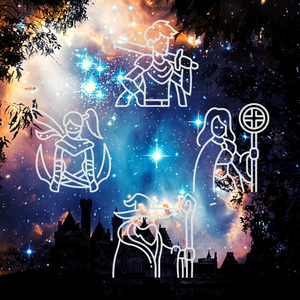
    Outlined figures of a knight, mage, cleric, and archer against a starry nebula background. Silhouetted castle below.

    Class Quiz

    Interested in playing Eternity TTRPG but not sure where to start? Take this online class quiz, and go from there!

    Discover Your Class

    Eternity TTRPG Top Sellers


    Visit our online store to see the Eternity TTRPG tabletop game, purchase downloadable maps for any online TTRPG client (such as Roll20), find artisan dice in numerous types and styles, and much more.

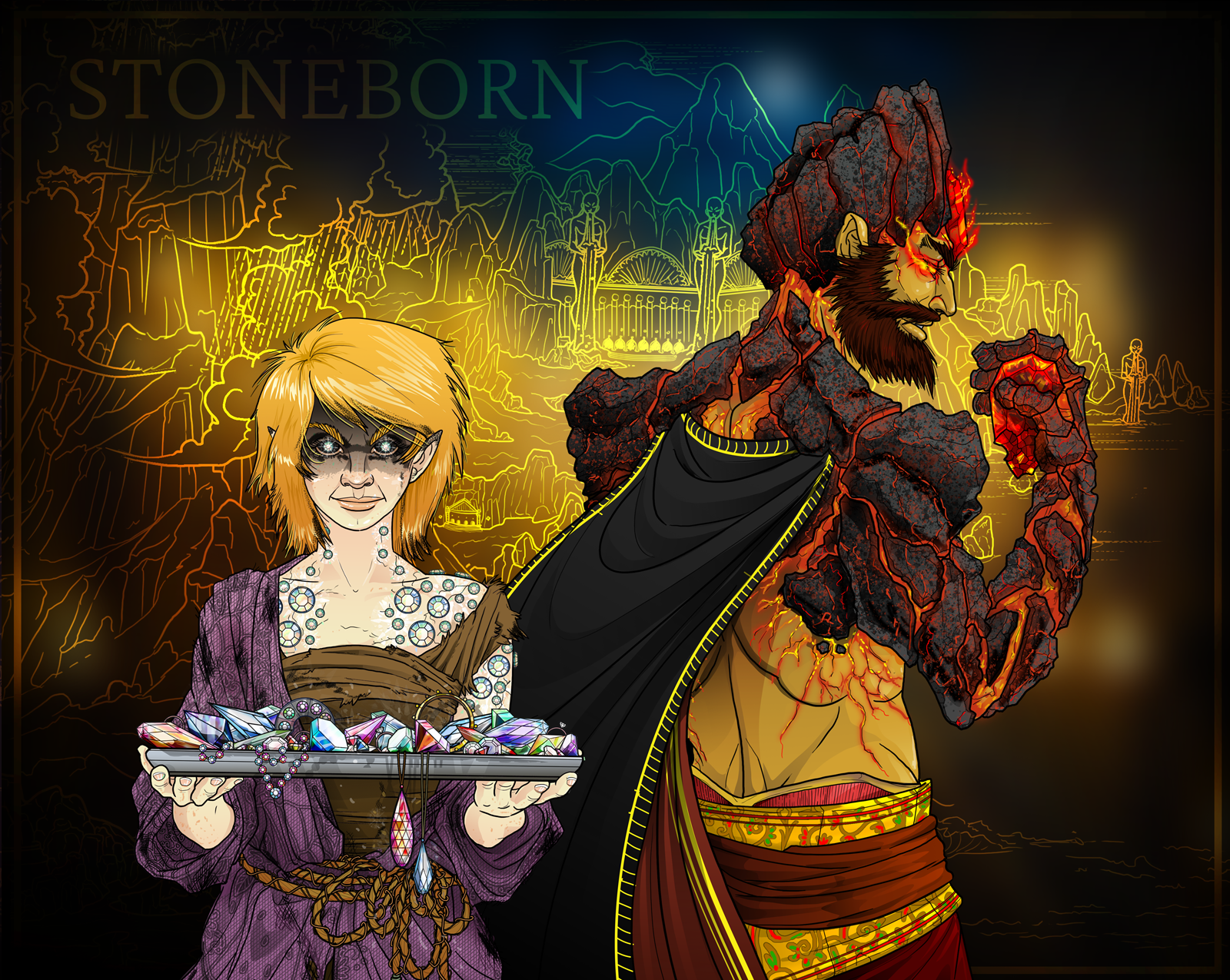
    Artwork from Eternity TTRPG


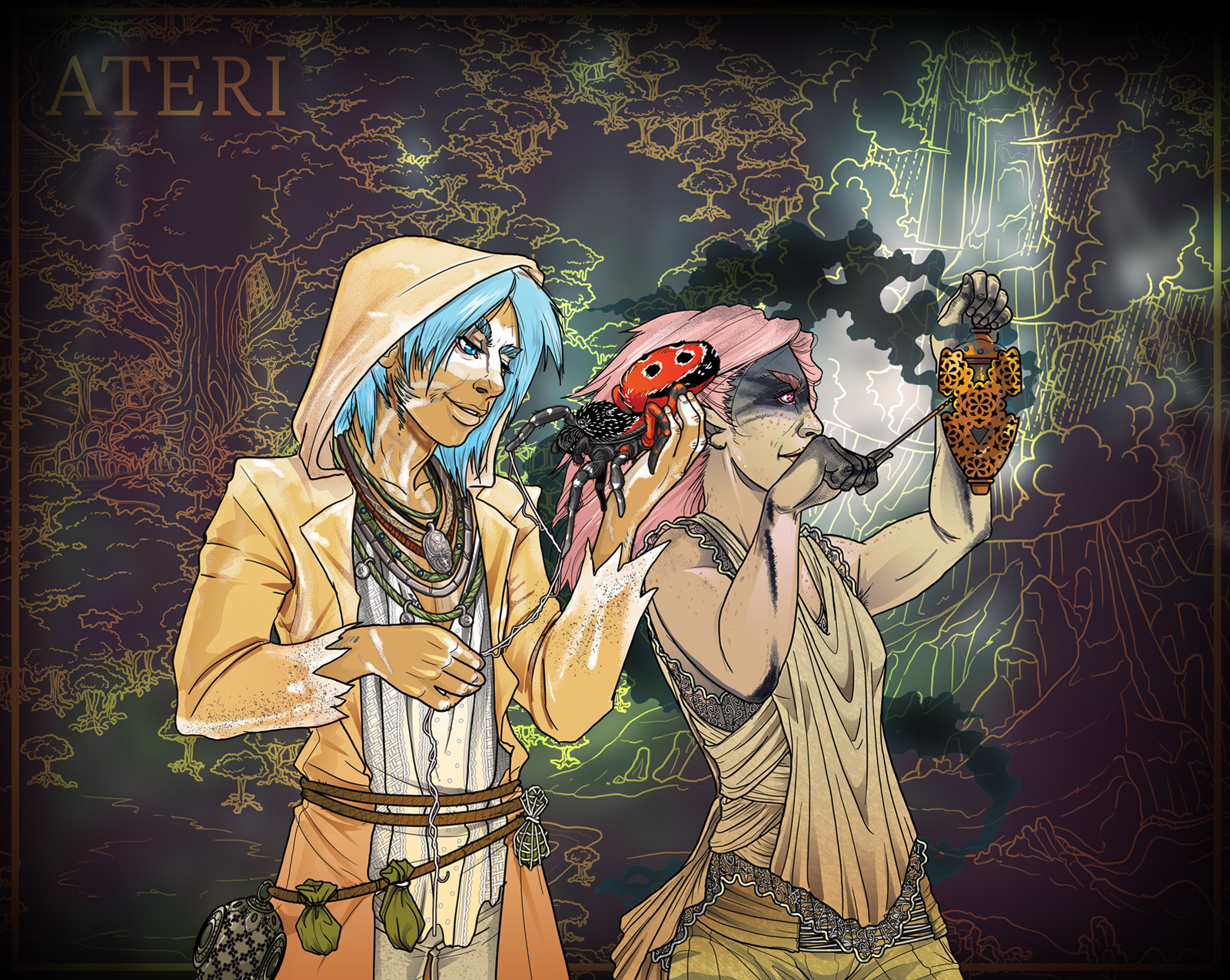
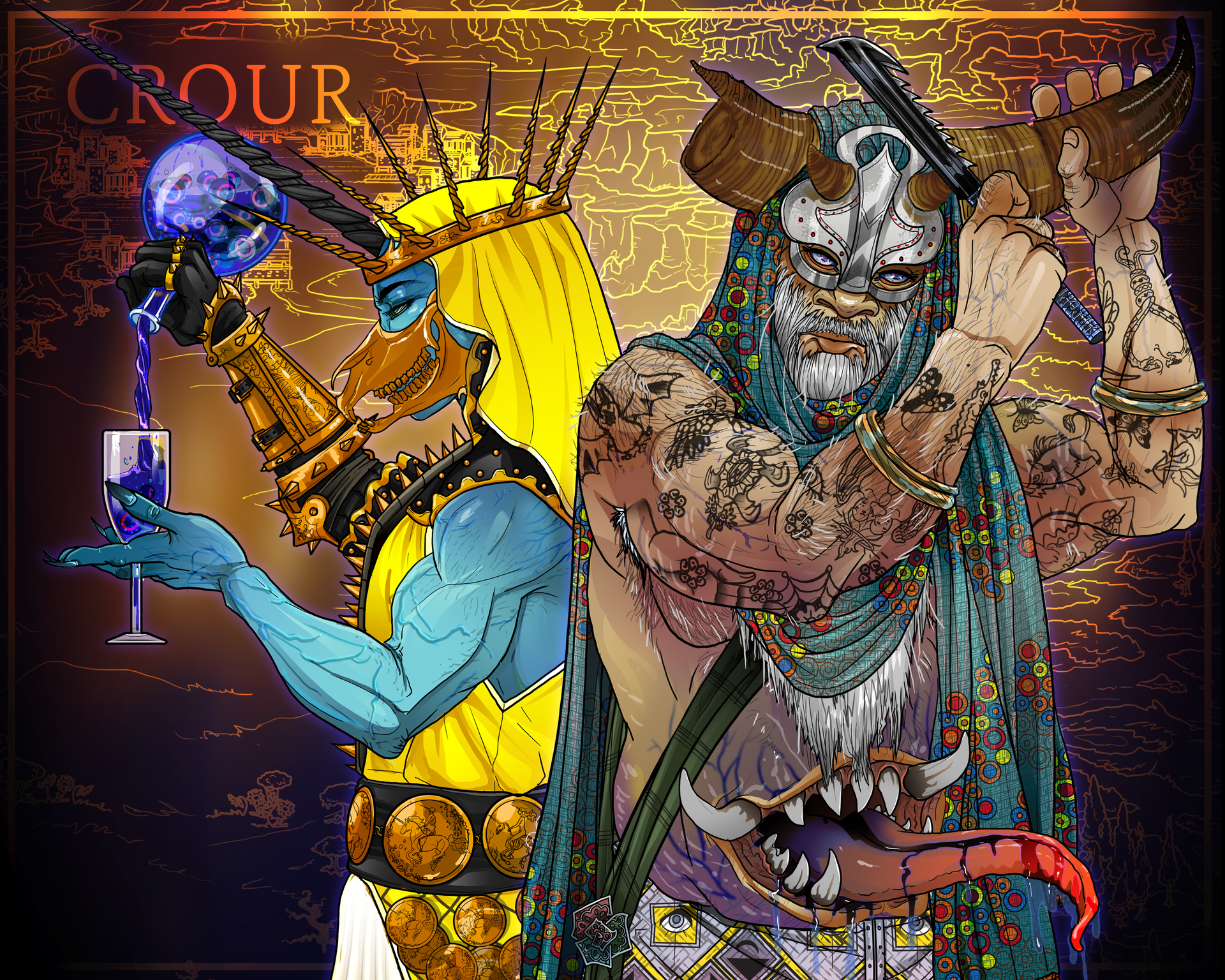
    See Katie Casetta's artwork from Eternity TTRPG. All of Katie's work is available for purchase from the Eternity TTRPG shop. Support real artists and non-AI art to keep unique and imaginative fantasy art alive. You can also see more of Katie's artwork throughout the Eternity site's main pages.
    A figure stands before a glowing pillar descending from a rocky mountain under a purple and pink sky.

    Dungeon A Day


    We are excited to share with you that the Eternity TTRPG site is now home to: Dungeon A Day.


    Need some fresh ideas to use with your ongoing campaign?  Dungeon A Day works with any tabletop RPG system.


    Check back each day for a brand new dungeon room. Over time, individual rooms add up, creating a massive, mega-dungeon.


    (Please note that Dungeon a Day is currently on hold as we redesign the Eternity TTRPG website.)