D&D Christmas Adventures and Gifts for Your Holiday Season

With Christmas coming up, what better way is there to celebrate than by adventuring in your favorite tabletop roleplaying game? Dungeons & Dragons (or any TTRPG of your choosing) is a perfect fit for the holiday season, with plenty of ways to get into the festive spirit. Let's make this this year a very merry D&D Christmas!

It’s always fun to add a festive twist to your D&D game, whether by "dressing up" your player characters in holiday-themed outfits, designing or playing an entire D&D Christmas adventure, or even by decorating the game table and gaming space with Christmas decorations. For bonus fun, you can always play your Christmas session in a D&D Christmas sweater (examples provided, below)...


As luck would have it, I know of several D&D Christmas adventures perfect for a holiday game night. These adventures range from humorous to heartwarming and can be easily modified to fit any party size and level. Use this guide and you’ll be ready to run a festive D&D Christmas gaming session that your players will never forget, and will be clamoring to play year after year.


You can also explore further down into the article to see some absolutely top-tier D&D Christmas sweaters, and other fun D&D-themed Christmas options you may consider giving as gifts this year to members of your favorite tabletop gaming group.

Christmas is an Opportunity for Amazing Game Sessions

The Christmas season is a great time to break out all of your favorite D&D books and run special DnD One Shots for your friends. It’s an opportunity to get together and have some fun, especially if you don’t usually have the time to commit to a longer RPG campaign. What could be more festive than slaying some winter goblins, or rescuing an elderly, jovial, gift-giver in distress?


Each year, I hold at least one all-day TTRPG event for my gaming group. Many times, this full-length adventure takes place in the days leading up to Christmas as a way to celebrate the season. People often have more downtime during December (or even early January) as well, so it's usually easier to get a full group to play.


There are many ways to make your D&D Christmas game special. You could set it during the Winter Solstice in the world of your campaign, have your characters celebrate Yuletide, or even have some in-game D&D Christmas gift-giving. You can also run a regular adventure with a few simple festive touches, and then give out real-life presents/ have a gift exchange for the party at the end of the session.
D&D Christmas

D&D Christmas Adventures: Prepared for You!

These one-shot D&D Christmas adventures are fun, holiday-themed, and ready for you to use. They can be completed in a single session, and are great for players of all levels. Careful though, some of these adventures may just end up causing a TPK DnD. If you want something more elaborate than what these adventures provide, you can always string a couple of them together into something like I do for my gaming group – an all-day D&D Christmas mega-dungeon. It's up to you what you want to do!


Note that each of these D&D Christmas quests can be used as a standalone adventure, or you can simply work them into your existing campaign:


1. The Nutcracker, a Retelling

If you've never seen the Nutcracker Suite, it's quite the story, and experience. Probably, you can find a Nutcracker ballet near you during the holiday season. Or, you can try out "The Nutcracker, a Retelling," which is a D&D-themed Nutcracker adventure. See the traditional Nutcracker tale but from the perspective of a hero in the story, seeking to rescue the Queen from the Evil Mouse King.


This D&D Christmas adventure comes as a PDF for under $6, and contains over 50 pages of material for you to use in a three- to four-hour gaming session for Lv.5 characters.


Really, there are few stories as iconic to the Christmas season as the Nutcracker suite. In the adventure, the Queen receives a carved nutcracker on Christmas Eve. She loves the gift, and fawns over its many details and beauties. During the festivities of the evening, the nutcracker breaks, and the Queen leaves the party early, devastated.


The adventure then truly begins when the heroes (and everyone else at the party) hears the Queen scream, as her voice echoes through the palace. Rat swarms attack the guests and staff, and the heroes seek after the missing Queen. They must enter the realm of the Evil Mouse King through the newly opened mouse hole that they find...


2. Solstice Shenanigans: A Wintry One Shot

This wondrous, wintry adventure is more like a series of D&D Christmas events. "Solstice Shenanigans" begins with the heroes waking up in the warm beds of an inn. The heroes aren't sure where they are actually, as this inn is definitely a different place from where they went to sleep. Basically, the heroes have been magically transported to a whimsical fey land of Christmas fun.


While in this new magical world, the heroes participate in a snowball battle, exchange in-game gifts (with magical boons and blessings), combat a giant gingerbread golem, and finally face a druid who isn't pleased with the festivities of chopping down trees for decorations.


The final confrontation finds the heroes fighting the druid, who summons the decorated solstice trees, a chestnuts-roasting-on-an-open-fire elemental, and all of his magical might.

Eternity TTRPG Top Sellers


3. In The Black Midwinter

"In The Black Midwinter" is a festive, $3 PDF adventure, designed for characters of levels two to four. The adventure can be played in one three- to four-hour session. In this module, characters battle an ancient evil threatening a remote village in the subarctic north. Honestly, very much the same as many D&D adventures, only this time it’s Christmas-themed! 


The adventure includes all the trimmings of a classic Dungeons and Dragons module: deadly traps, dastardly villains, and heroic NPCs. But, with a festive twist! So, if you’re looking for something different to play this holiday season, or want to add a little bit of holiday cheer to your regular game, grab a copy and try it out. I think you’ll find it’s just the thing to get you into the holiday spirit.


4. Saving Christmas

This is an adventure meant for four to six first-level players. Dream Realm Storytellers’ free PDF adventure "Saving Christmas" is a light-hearted adventure game perfect for the whole family. In it, players take control of a party of children tasked with defeating monstrous Christmas trees, cookies, and other holiday monsters. Although these creatures can be tough, they eventually return to their normal forms after taking enough non-lethal damage. As a result, Saving Christmas is a great game for players of all ages and skill levels. In addition, the game’s charming artwork will surely put a smile on everyone’s face.


You also use this adventure as a basis for a more lethal version, if you aren't gaming with a younger audience. For example, keep the monstrous Christmas trees, cookies, etc. but have them animated by a Christmas witch. No lethal damage, in this version, as the players will have to fight for their lives against ice cold magic and the witch's ice cold heart.


5. The Darkest Night

"The Darkest Night" is a "choose what you pay" holiday-themed adventure where players battle an ancient evil to save Kringlefest. This adventure can be used as an outline for any game system, but the specific details are for four first-level adventurers using the Dungeons and Dragons 5th edition rules.


This adventure is designed to provide a short one-shot adventure for inexperienced players, or for anyone who wants to get into the holiday spirit. The quest takes place in the fictional town of Frostford that’s been besieged by an ancient evil known as the Grinch. To save Frostford and Kringlefest, the players must venture into the Grinch’s lair and defeat him.


The adventure is structured around a series of fights with the Grinch and his minions, interspersed with opportunities for the players to roleplay, and explore Frostford. The finale of the adventure is a climactic battle with the Grinch himself. With a little Christmas cheer and teamwork, the players should be able to save Frostford, defeat the Grinch, and restore the joy of the Kringlefest season.


6. Additional DnD Adventure Options

If you want a few more options for your holiday adventures, check out these following resources of mine that I've created to help with DnD Adventures and ongoing campaigns. Any of these articles can be easily customized for holiday gaming:
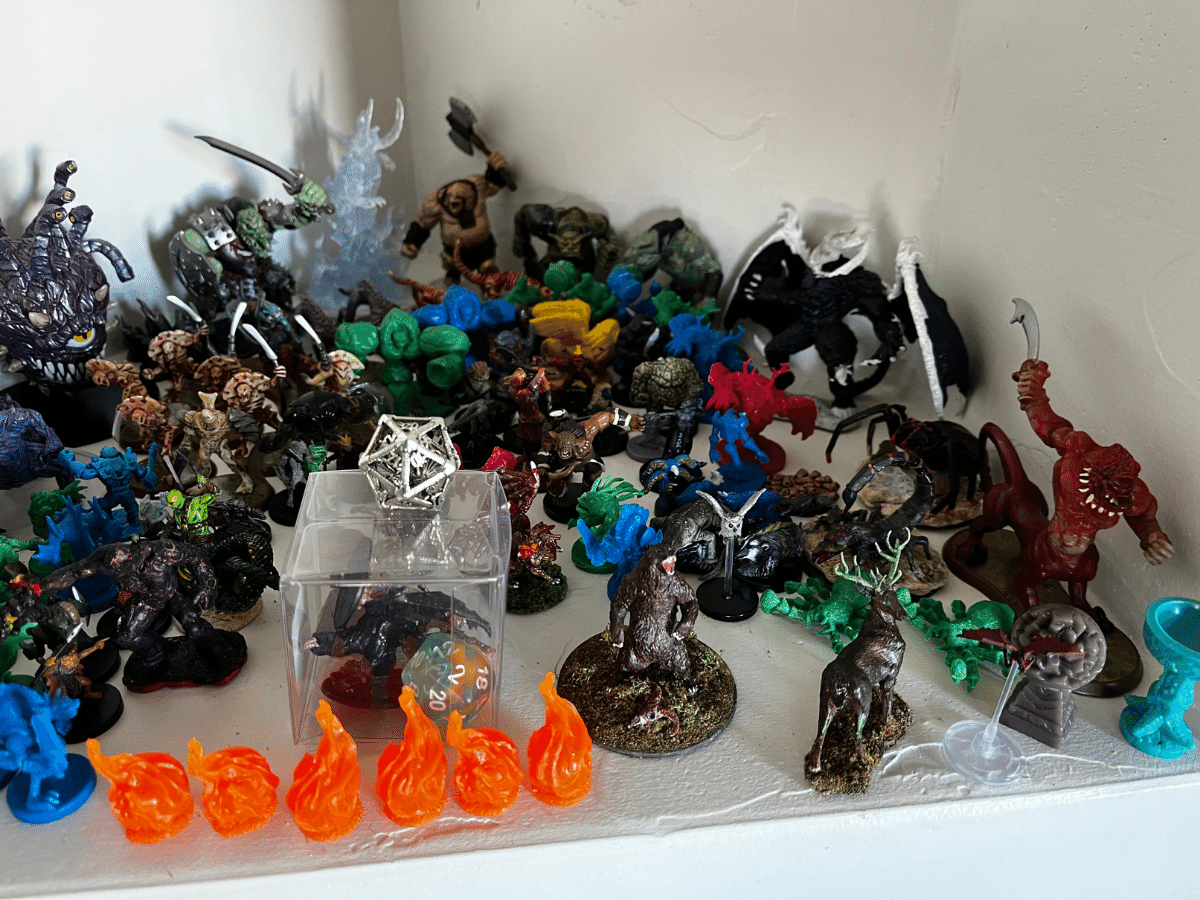
Merry Christmas DnD

Merry Christmas DnD! Fun Ways to Add to Your Season

Yes, tabletop games should be enjoyed all year long. But let’s face it: Christmas is the most wonderful time of the year. It’s the perfect time to get together with friends and family for a memorable gaming session. To make your D&D Christmas session even more festive, here's some ideas on how to have a very merry Christmas with D&D:


D&D Christmas Sweater

What’s more festive than a cozy sweater adorned with your favorite D&D characters? I have an entire section below for you to find the perfect D&D Christmas Sweater. You're probably going to an ugly Christmas sweater event this year anyways, so you may as well go in style. Plus, D&D Christmas sweaters bring more festive and D&D-themed cheer to your tabletop games for the season.

Eternity TTRPG Article Shop

Gift Exchange for Dice and Minis

I've mentioned a couple times that you may consider having a D&D-themed gift exchange at your next holiday gaming session. What better way to show your love for the game and your great friends that game with you than by exchanging gifts? Better yet, why not make this particular gift exchange based around dice and minis?


A white elephant gift exchange is one thing, but a themed gift exchange is on another level. If everyone in your gaming group knows that they're going to walk away with some sweet new dice and minis, the gift-giving event can't help but be a great event for everyone.


Not sure what dice and minis to get? I have a full article on the Best D&D Dice you can check out, and look at the section below for ideas on minis!


Go All-Out with Your Holiday Gaming Session

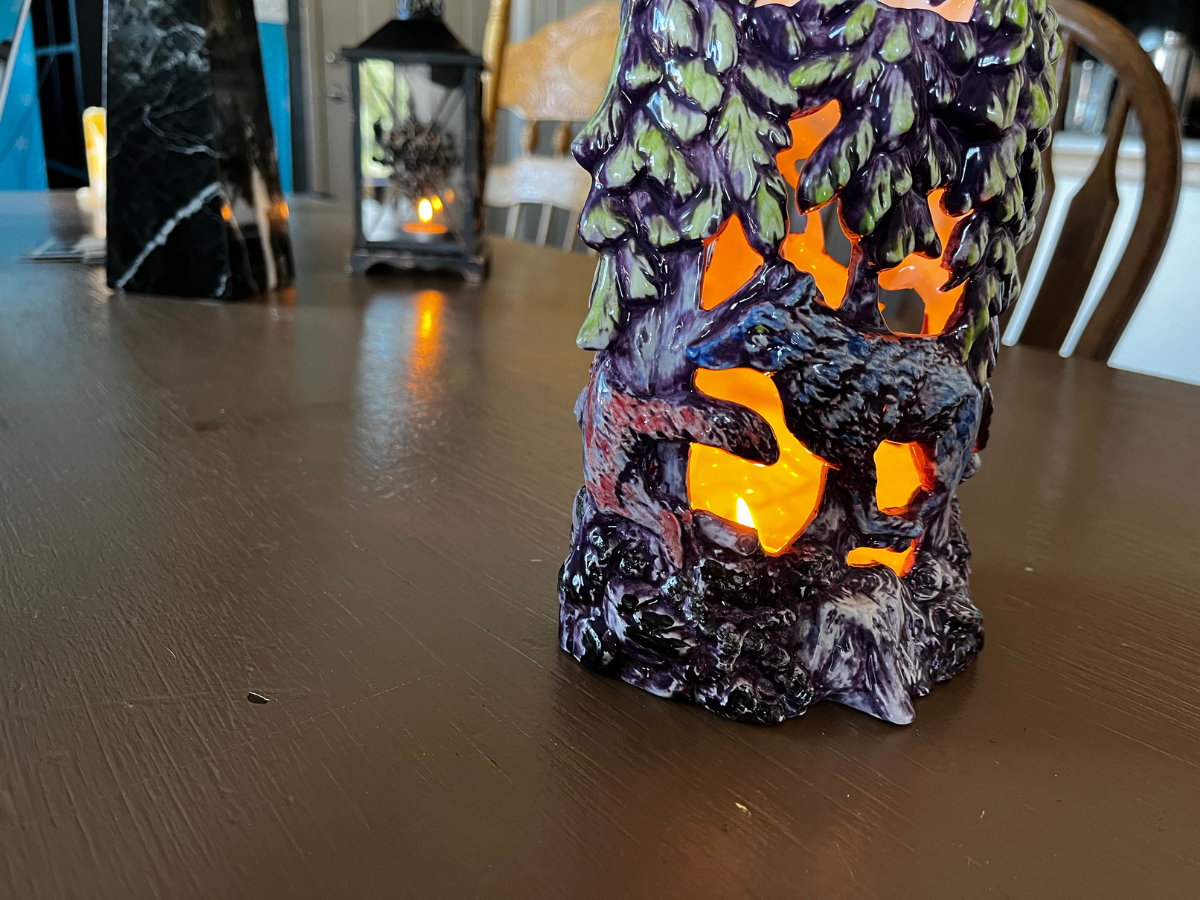
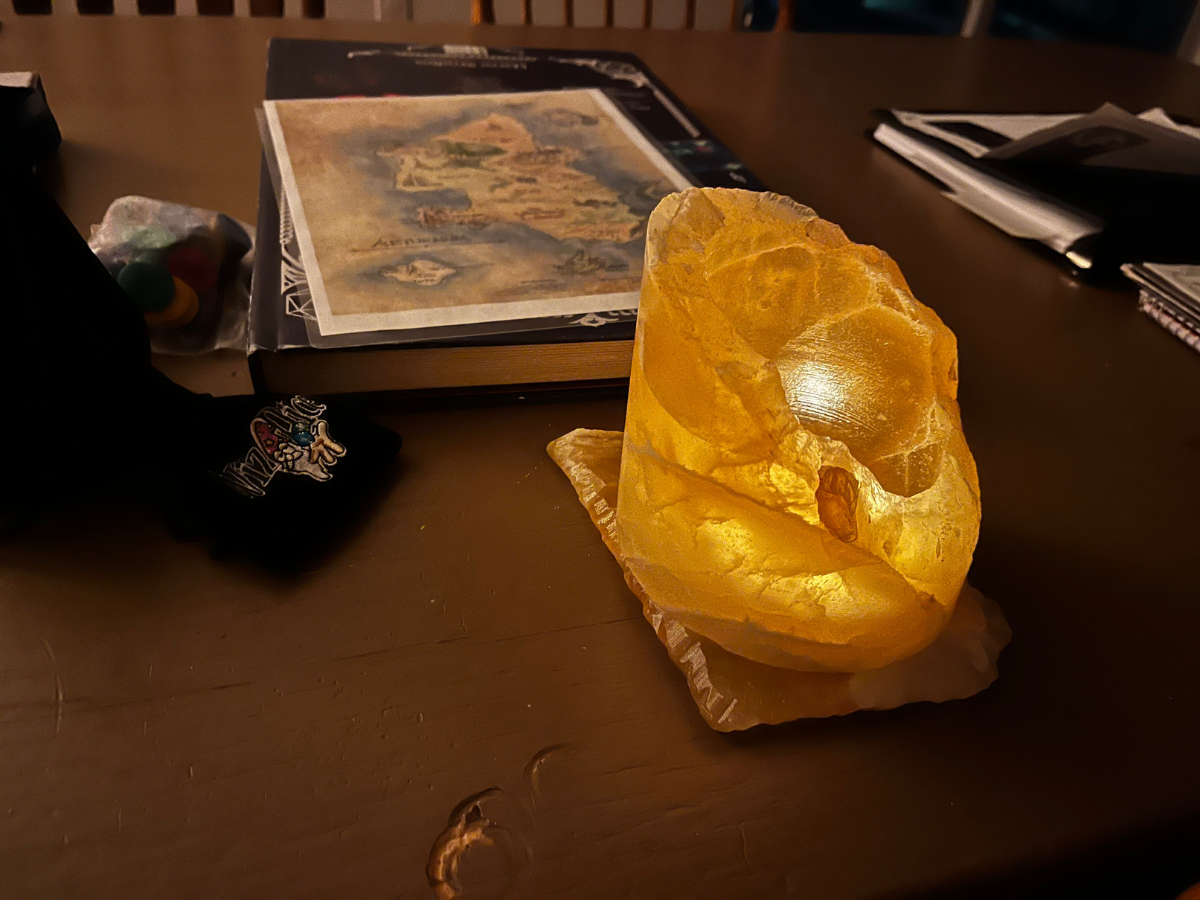
It can require some upfront effort, but if you go all-out for your holiday gaming session, you'll almost inevitably create an experience that your players will remember forever. For my holiday all-day gaming sessions, I decorate my gaming space (with major help from my girlfriend), make use of candle light for a unique glow, pick out specific minis, and most importantly of all: prepare, prepare, prepare the big adventure.


If you want something super lighthearted and fun, doing a huge holiday gaming event may not be for you. However, I can say with confidence – after hosting all-day events many times – that they are hands-down the best gaming experiences of the year. They are well-worth the effort involved. Your players will love you for them.

D&D Christmas Sweater and Events

Table and lighting setup from a Christmas-themed game. This was taken just after the incredible session was wrapping up.

D&D Christmas Sweater Selections

No D&D Christmas guide would be complete without a D&D Christmas sweater selection. I know, I know. These D&D Christmas sweaters are the ugliest. They're the worst. Therefore, they're the best. I hope you enjoy ever moment of purchasing them, waiting with eager anticipation for their arrival, and wearing them, full glory, in front of your gaming group. 


Also, if you happen to be looking for a D&D Christmas present for someone special in your life, I have one of the largest online collections of DnD Gifts available anywhere. If you happen to be looking for a Christmas present for your dungeon master, take a look at the Dungeon Master Gifts guide.

Merry Critmas: D&D Christmas Sweater

If you want to go for something that still says you love those Crits, but also shows some traditional colors and festive cheer, this sweater is a good in-between. The design is by Tronic Tees and looks great when you’re ready to score a critical hit during gameplay. The shirt matches your 20-sided dice and is available in a variety of colors.


This D&D Christmas sweater may not win any ugly sweater contests, but it is warm, fashionable for gaming, and may (unconfirmed) even increase your chances of rolling a 20 in-game.


Chaotic Naughty: D&D Christmas Sweater

For those more chaotic naughty of you, there's no shame in expressing who and what you are. Anyone who's ever played D&D will immediately pick up on the reference to being Chaotic Neutral, and will enjoy the humor. This sweater also comes in a variety of colors, and fits for any holiday-themed party, or D&D Christmas gaming event.
D&D Christmas Gifts

D&D Christmas Gifts

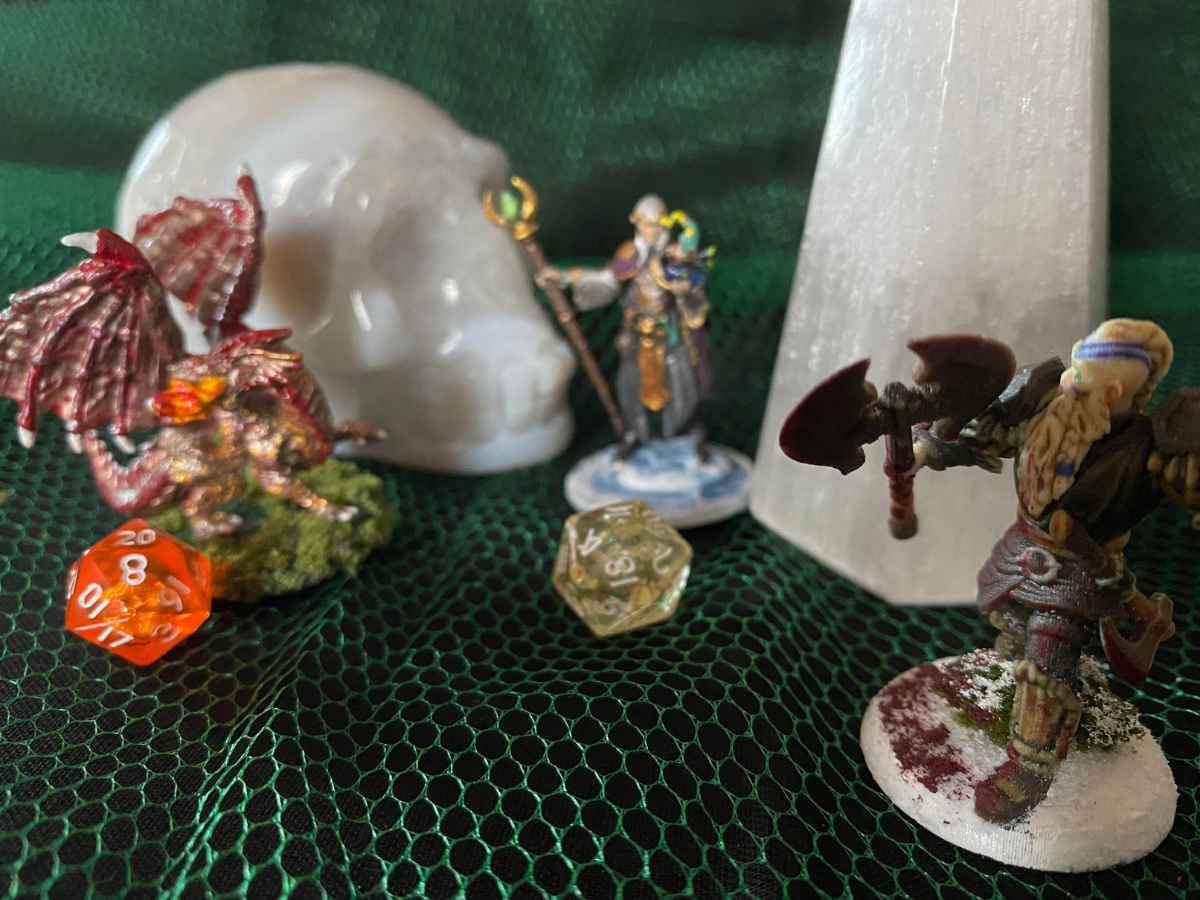
Just in case you're interested in some other great D&D Christmas gifts, here's a few other fun options that are great picks for any D&D enthusiast:

D&D Minis

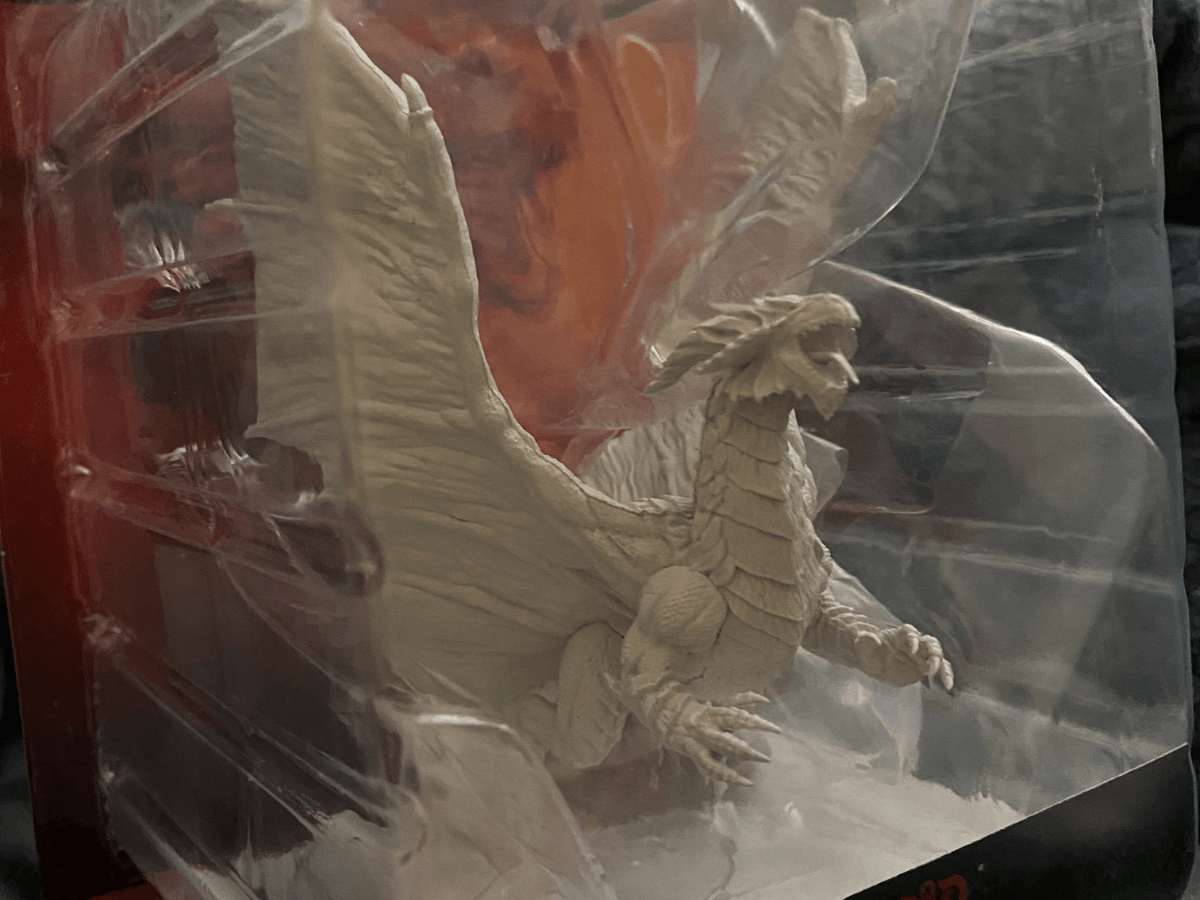
As I mentioned above with the idea to have a specifically dice and minis gift exchange for your D&D Christmas session, minis are always a welcome gift. Basically, no matter how many minis someone has, there's almost always room for something more. Especially if that mini is the dragon of doom, Tiamat.


Of course, you don't have to splurge a lot on minis in order to gift a great present. There are tons of less-expensive options available that still make for great gifts. However, if you want to splurge a little on someone special, something like this Tiamat figure is the way to go.


Dragon Dice Tower

Dice towers allow you to drop dice at the top, and then they "roll for you," into the bottom of the tower. They're great if you're only rolling one – or a couple – dice at a time. This particular dice tower is unique because 1) the way the dragon has been crafted looks terrifying, and 2) dice actually roll out from the dragon's maw. Very cool idea.


I actually like the look of this dice tower a lot more up-close (the main image of this does not do it justice). However, if you're looking for D&D Christmas gifts, this one I would definitely recommend.


Blue Fire Dragon Dice Tray

Dice are essential to any tabletop RPG, but they can be difficult to keep track of during a game. This octagon dice tray is a great option if you’re looking for a dice tray that will both prevent your dice from rolling off the table, and help you stay organized. Most dice trays do not also store dice, like this one does. In general, they only provide a rolling surface for dice, which is why I really like the combo provided with this tray.


The tray features a raised dice staging area that can accommodate up to five sets of dice. The padded walls to help keep your dice in place, and in good condition.
D&D Christmas Gift Options

Give the Gift of a New TTRPG

Christmas is a time for family, friends, and enjoyable downtime. What could be more fun than spending Christmas with your friends, diving into your favorite roleplaying game? TTRPGs provide hours of entertainment for players of all ages, and there are plenty of ways to enjoy the game during the holiday season.


If you know someone who doesn’t yet play tabletop RPGs, why not introduce them to the hobby this Christmas? It’s the perfect time to get them started, and they’ll be hooked. You can, of course, buy them Dungeons and Dragons, but for new players, why not get them a game that's easier to start playing right away?


Eternity TTRPG has our own tabletop roleplaying game which is very new-person-friendly, easy to get started playing, and features some (dare we say) terrific game mechanics. In Eternity TTRPG you can both play as a dungeon master and roleplay your own character: it's a game where everyone builds the gaming world and adds to its story.


No matter what game you play though, dive into some new adventures, pick up an ugly sweater, and have a very merry tabletop gaming Christmas!

Share This Article

Jacob Tegtman Eternity TTRPG Creator

Author - Jacob Tegtman

Dear reader, I hope you enjoyed this article. Tabletop gaming has been a passion of mine since I was 6 years old. I've played just about every game from Dungeons and Dragons to video games like Final Fantasy. These games have inspired me, made me laugh, made me cry, and brought me endless hours of enjoyment.


I started Eternity TTRPG - and the indie tabletop game that goes along with it (Eternity Shop) - to share my love of gaming with others. I believe that in our technology-driven age, tabletop games help bring a sense of magic and community back into our world.


If you love the site, please share it with others! I have lots of gaming-related material for you to peruse and use in your own gaming sessions. If you have any questions about the site or want to contribute, just send me a message using the "Contact" page, which you can find in the site's footer.
Final Fantasy TRPG layout: Mana grid graphic
By Jacob Tegtman January 20, 2026
Transcribed content from our recent YouTube video: https://www.youtube.com/watch?v=kPQfDB2cKSI Transcription Every Final Fantasy hero starts with a choice. Sword or spell. Raw power, or skill. But in Final Fantasy TRPG: Legend Edition, that choice doesn’t stop at your Class — it’s defined by the Jobs you choose from your class, the Circles you unlock, and the Limit Breaks that change the tide of battle. Today, we’re breaking down how Classes and Jobs actually work in Final Fantasy TRPG: Legend Edition — and how they shape your character from level one… to the final boss. Hey everyone, welcome back to Eternity TTRPG channel! If you caught one of my recent videos from before the holidays, we went deep into the Final Fantasy TRPG: Legend Edition core rulebook — and today we’re diving into one of the most iconic elements of any Final Fantasy system: Classes and Jobs ! Whether you’re planning your first character or optimizing a seasoned hero for this recently-released game, this guide has you covered. One of the longest-standing traditions in Final Fantasy is its Job system , and Legend Edition embraces this fully. Classes in this game are the framework or chassis of your character — they determine your character’s HP, MP, trained Skills, associated Jobs, and your Class Limit Break . Jobs are where the cool stuff really happens. Each Job is a set of abilities on a progression track, granting new Features at specific levels — these are called Circles . And you don’t just pick one — your character ends up with three Jobs (or four with optional full buy-in), each advancing at a different speed to give you abilities every level. There are four broad Classes you’ll choose from. Each class has what you could consider as subclasses – in Legend Edition, these are the “Jobs.” So, for example, some of the Warrior Jobs are berserker, dervish, dragoon, fighter, monk, samurai, and so on. So, let’s dive into the four classes: Number 1 - Warrior Masters of physical combat, Warriors excel in strength, endurance, and frontline fighting. Their Limit Break — Action Surge — lets them make extra attacks during an encounter, perfect for dealing burst damage. 2. Expert Battlefield manipulators and support roles go here. Experts rely on their wits and skill versatility, and their Limit Break — Savant — adds bonus dice to Skill rolls based on their level. 3. Mage If magic is your playstyle, Mages are your go-to. They lean into Spellcasting and area of effect mechanics. Their Turbo MP Limit Break doubles the effectiveness of MP spent on magical abilities during an encounter. And number four is Adept The hybrid class — versatile, adaptable, and capable of mixing physical and magical roles. Adepts don’t have a unique Limit Break; instead, they choose one from the other three classes, based on their job build. Now here’s where Legend Edition gets fun. Across the system are 50+ Jobs drawing inspiration from classic Final Fantasy favorites — think Black Mage , Dragoon , Thief , and more — giving you a huge palette of archetypes to mix and match. Each Job grants seven Features – called Circles – over its progression, spaced across levels based on whether the Job is on a Fast, Medium, or Slow advancement track — meaning strategic choices shape how your character evolves through the campaign. So, for example, you may choose the Warrior class because you like its HP, MP, and Skill point advancement numbers, you like its limit break, and you enjoy playing that overall archetype for your character. Then, you pick three Jobs to fill out your character. Say that you want a full warrior build, so you choose your three jobs to be: Dragoon, Knight, and Monk. From here, you’d decide which of those three jobs would be on your Fast advancement track, which should go on your Medium track, and which will be on your slow advancement. Important note here though: only one of your Jobs needs to be associated with your Class. That means the rest can actually be totally outside that box — so yes, you can be a Mage-warrior hybrid if it fits your concept! You could be a warrior class, with the Dragoon, Black Mage, and Chemist jobs. So, here’s the quick breakdown of Job progression: Fast Progression: Abilities at levels 1, 3, and every 3 levels thereafter Medium Progression: Abilities at levels 1, 4, and every 3 levels thereafter Slow Progression: Abilities at 2, 5, and every 3 levels thereafter This staggering system means every level feels like a growth moment. You get new Abilities (“Circles”) from all three of your jobs at the same cadence. But at the same time, you get Circles from the Jobs that are most important to you, at earlier levels. The rule book mentions this too, but if you do want to try out this awesome system, I’d recommend that you don’t stress too much about your first Job choices. There’s a ton of options here, which is great for replayability, and experimenting with side campaigns. But, there’s also too many Jobs to really nail down what you want to ideally play, the first time you try out this game. Probably instead, just pick classes that sound fun, and give it a whirl. To wrap up this video, I’m going to cover my personal favorite Job from each of the first three Classes. Since there’s over 50-jobs, there’s too many for me to dive into – at least today. But hopefully these quick snapshots give you a picture of how Jobs work, what kind of Abilities each provides, and some inspiration for your upcoming game: If I was to play a Warrior Job, I’d start with Dragoon: As you probably know, Dragoons are also often known as Dragon Knights . Dragoons are aerial combat specialists who use momentum for power. Originally trained to pierce the hides of massive foes like dragons, their style revolves around leaping high above the battlefield and crashing down with overwhelming force. Depending on the setting, Dragoons may hunt dragons, fight alongside them, or carry on their legacy after their extinction — but they’re almost always portrayed as guardians who stand against towering threats . In play, Dragoons are defined by the Jump and Blood of the Dragon Circles . Jump removes them from the battlefield for a round before returning with an automatic, high-impact strike. Meanwhile, critical hits generate Blood of the Dragon to fuel powerful Dragon Arts , which are the Dragoon’s situational combat techniques that modify your attacks, defenses, or Jump actions, for additional benefits. Next up, for the expert class, I’d probably start with Squire – I just have so many good memories from playing Final Fantasy Tactics: Instead of perfecting a single discipline, Squires develop adaptability through experience and improvisation. That flexibility makes Squires exceptional team players , able to step into gaps and support allies in many situation. Mechanically, the Squire revolves around Fundaments — where they grant short-term bonuses to allies based on that ally’s Class. Warriors hit harder, Experts perform better at skills, Mages cast more effectively, and Adepts can receive whichever boost fits the moment. As the Squire advances through their Circles, they can grant Fundaments to multiple allies at once, add secondary effects like increased damage or longer debuffs. I’m not always a team buffer kind of guy, but I do like the way Squires here make everyone else better , turning party coordination into a great strength. For my third Job, I’ll choose from the Mage class. This one’s really hard for me as I could see myself actually going like 3/3 mage, or maybe 2/3, at least. But, if I had to pick just one for my remaining Job slot, I’d go with Necromancer: Necromancers are reclusive magic-users whose art is inseparably tied to death and the Shadow. Often misunderstood or feared, they’re immediately recognizable by their Bone Commander — an undead construct that serves as both assistant and bodyguard. While some Necromancers lean into darker reputations, others act as shamans or intermediaries, communing with spirits to resolve unfinished business or bring peace to the dead. Their morality isn’t defined by their magic, but by how they choose to wield it. In play, Necromancers are spellcasters with access to the Necromancy spell list and a powerful Companion system . Their Bone Commander acts on their shared action economy, providing combat presence without needing its own stats or hit points. Their Limit Break, Friends on the Other Side , allows damage from the party to count as Shadow damage, supercharging Necromancer features and reinforcing their role as battlefield controllers who blur the line between ally and undead asset. So! There you have it. From adaptable Squires and sky-shattering Dragoons to shadow-touched Necromancers and beyond, Legend Edition’s Classes and Jobs are all about expression through choice . Your Class sets the foundation, but your Jobs — and how you progress them — define how your character actually plays at the table. Legend Edition feels... unmistakably Final Fantasy. What I really want to know is... from the 50+ jobs available in Legend Edition, what three Jobs would best define your Character? List your Jobs in the comments. Otherwise, thanks for watching! If you enjoyed this breakdown of Classes and Jobs in Final Fantasy TRPG: Legend Edition, hit that like button, subscribe for more content, and ring the bell so you don’t miss our next video.
By Jacob Tegtman January 15, 2026
Transcribed content from our recent YouTube video: https://www.youtube.com/watch?v=QQLN8bvlo-Q Transcription If you’re like me, you just watched Stranger Things Season 5, and it was amazing. Personally, I felt like it really hit similarly to the first season – they did a great job. But you're watching Stranger Things, getting hyped about seeing D&D represented in mainstream media, when suddenly Mike declares he's casting a spell, as a paladin... at first level. And you're sitting there thinking, "Wait, that's not how that works." Well, you're not alone. Today we're diving deep into three quick, but glaring D&D mistakes – or, perhaps intentional and fun D&D alternations – that Stranger Things has made throughout its run. I love Stranger Things, so this is by no means a criticism of the show. If anything, some of these mistakes just makes me like it more. Because, let’s get real – most D&D games fudge something in the rules anyways. It’s part of the fun. And no one really wants to be a rules lawyer all the time. What's up, dice rollers! Welcome back to Eternity TTRPG where we explore everything that makes tabletop RPGs amazing. I'm your host, and today we're taking a critical but loving look at how Stranger Things – arguably the biggest mainstream representation of D&D we've ever had – got some pretty fundamental (and sometimes funny) things wrong about our favorite hobby. Now, before we dive in, let me be clear: I absolutely love that Stranger Things brought D&D into the spotlight. The show has introduced countless people to our hobby, and that's incredible. As D&D enthusiasts, we can appreciate the show while also having some fun pointing out where the Duffer Brothers maybe should have consulted their Player's Handbook a bit more carefully. So grab your dice, settle in, and let's explore three quick strange things that Stranger Things got wrong about D&D. Mistake #1: The Demogorgon Campaign Confusion I’m gonna call this “Mistake #1,” by the way, and you’ll find out why in just a minute. But let's start with this big one from Season 1. In the very first episode, we see the boys playing D&D, and Will's character encounters the Demogorgon. Now, the show treats this like it's some kind of final boss encounter, but here's the problem: a Demogorgon in D&D is a CR 26 creature. Basically, a Lv.26 monster. That's endgame content for level 20 characters. These kids are clearly playing low-level characters – probably somewhere between levels 1-5 based on their abilities and the campaign Mike’s describing. A real Demogorgon would obliterate their entire party in a single round without breaking a sweat. It would be like sending a group of mall security guards to fight Godzilla. What the show probably meant to use was a lesser demon or maybe just called it a "demogorgon" as a generic monster name. But for D&D players, it's like watching someone try to drive a car with a boat steering wheel – technically it's transportation equipment, but it's completely wrong for the situation. Is this really a mistake though? I’d say yes, technically. But also, we all know how kids get when playing games. Mike was probably like, “hey, you know what would be cool for my party of Lv.5 adventurers? Give them something that inspires them. Like this CR26 literal god.” It’s the type of move that every DM has done at some point – just go way, wayyy overboard. And again, that’s part of the fun with games like D&D. Mistake #2: The Paladin Spell Situation This one is really funny to me because it happens multiple times throughout the series. Mike's primarily the dungeon master for his group. But when he plays, his character is consistently referred to as a paladin, and we see him attempting to cast spells at what appears to be first level. Here's the issue: in every edition of D&D that would have been available when Stranger Things is set – we're talking late 70s to early 80s – paladins don't get spells until much higher levels. In AD&D (Advanced dungeons and dragons), paladins don't get their first spell until 9th level. Even in modern 5th Edition, paladins don't get spells until 2nd level. But the show has Mike casting spells right from the start. It's a small detail, but it shows a fundamental misunderstanding of how the class works. It would be like showing a wizard swinging a two-handed sword as their primary weapon – technically possible in some circumstances, but it misses the point of the class – for that level, at least – entirely. It’s another “mistake” though that many groups would make, probably especially kids. You want to play a character who can do cool things, at any level. So maybe this was another intentional move on the Duffer brothers’ part, showing not just the rules for D&D, but how people actually play. Mistake #3: The Dice Rolling Drama This one’s more about dramatic license. Throughout the series, we see characters making single dice rolls for incredibly complex situations, and the entire outcome hinges on that one roll. Real D&D involves a lot more dice rolling and a lot more back-and-forth between players and the DM. Combat isn't usually resolved with a single dramatic roll – it's a series of attack rolls, damage rolls, saving throws, and tactical decisions. The show makes it look like D&D is just "roll a d20 and see what happens," when the reality, as we all know, is much more nuanced. The most egregious example is in Season 1 when Will's fate seems to hinge entirely on a single d20 roll. While dramatic moments like this can happen in D&D, they're usually the culmination of a longer sequence of events, not the entire encounter. Of course, filming four kids rolling dozens of dice over and over doesn’t make for great visual episodes, I assume. This one is really more to point out that anyone who isn’t familiar with D&D may be a bit surprised walking into a real gaming session at how many dice really do get rolled. On platforms like Reddit, the D&D community's reaction to these inaccuracies has been... interesting. Players have been discussing these since the show premiered. One user pointed out in a popular thread: "I love that Stranger Things brought D&D to the mainstream, but I wish they'd gotten a consultant who actually understood the game mechanics. It's like they researched D&D by reading about it rather than playing it." Another user noted: "The show gets the emotional core of D&D right – the friendship, the collaborative storytelling, the escapism. But the mechanical details are so wrong that it's distracting for anyone who actually plays." Now, do these mistakes matter? I would argue they don't – Stranger Things is a TV show, not a D&D tutorial. People may come into the hobby with incorrect assumptions on how things work. But, if more people are getting into the hobby, then that's positive. And D&D – or let’s at least say tabletop roleplay games – have experienced unprecedented growth partly thanks to Stranger Things, and that's amazing for our community. So here's what I want to know from you: is there anything else fun or silly that I missed from Stranger Thing’s D&D inaccuracies? I’m sure there has to be more than just these three, so please hit me up in the comments and let me know what you’ve found! And that wraps up our dive into Stranger Things, for today. Remember, this comes from a place of love – both for the show and for D&D. If you enjoyed this quick video, make sure to hit that like button and subscribe for more D&D content. Whether you're fighting demogorgons in the Upside Down or just trying to survive your first dungeon crawl, keep those dice rolling!
Dragonlance
By Jacob Tegtman December 17, 2025
Transcribed content from our recent YouTube video: https://www.youtube.com/watch?v=257fKzW8yzA Transcription Before there was Game of Thrones, Baldur’s Gate, and Critical Role.… there was Dragonlance .  A fantasy saga that defined an entire generation of D&D players — epic wars, tragic heroes, and dragons that actually felt like dragons. But if you aren’t familiar, what is Dragonlance — and why are we still talking about it in 2026? Well to answer that last question, the new “Legends Edition” which is the second Trilogy of Dragonlance is coming to Amazon in February. This is a big deal because getting new copies of the original Dragonlance Chronicles Trilogy, and now this second “Legends” Trilogy was becoming very difficult. I’m hoping these new prints rekindle the spark of one of the greatest D&D settings and novel series of all time, and introduce even more people to its magic. Welcome back to Eternity TTRPG, your home for D&D history, lore deep-dives, and the stories that shaped the game we play today. If you love tabletop RPGs, classic settings, and learning why D&D looks and plays the way it does today, you’re in the right place. So, let’s talk about one of my favorite fantasy settings – and fantasy book series of all times – Dragonlance . Dragonlance started as a bold idea from Tracy Hickman and Laura Hickman , later developed with Margaret Weis at TSR. To answer the burning question you may be having, right off the bat – yes, the Dragonlance adventures came before the book series. At the time, most D&D adventures were simple and modular. You’d kick in a dungeon door, fight some monsters, grab treasure, and move on. Dragonlance asked a very different question. What if Dungeons & Dragons could tell one long, epic story? Instead of disconnected adventures, the Dragonlance team wanted a campaign with a clear beginning, middle, and end. A single, continent-spanning war. A story that unfolded over time, not just session to session. To make that work, players wouldn’t create random characters. They’d play pre-generated heroes, each designed to fit directly into the narrative, with personal arcs baked into the plot. That idea became the original Dragonlance AD&D module series — eventually twelve linked adventures telling the story of the War of the Lance. On paper, it was revolutionary. At the table… it was complicated. The problem is simple. And honestly, you can probably pause the video here and tell me the problem, yourself, based on your own D&D games. It’s basically this: D&D games, and it’s players – are unpredictable. Dungeons & Dragons thrives on player choice, improvisation, and chaos. Dragonlance, on the other hand, needed players to be in very specific places, doing very specific things, at specific times. If the party ignored a hook, skipped a location, or made an unexpected choice, the entire story could fall apart. So the modules relied heavily on railroading — nudging, and sometimes outright forcing, players back onto the intended path. That tension made Dragonlance awkward to run as a campaign. The story was strong, but the format worked against the strengths of tabletop roleplaying. And that’s when Dragonlance found the form it was truly built for. To promote the modules, TSR (that is, the company founded by Gary Gygax and Don Kaye, to publish D&D) decided to release a trilogy of tie-in novels. That decision came late, the original author didn’t work out, and Margaret Weis and Tracy Hickman ended up writing the first book themselves — in roughly three months. The result was Dragons of Autumn Twilight, released in 1984. Which, even talking about almost brings a tear to my eye – the book was just that impactful to me in my teenage years. TSR expected modest sales. But instead, the book was a massive hit. For many readers, this wasn’t just their first Dragonlance novel — it was their first D&D novel. It introduced the idea that a D&D party could be the heart of a fantasy epic, with flawed characters, emotional arcs, and long-term consequences. This is basically why Dragonlance matters to D&D history. And not just a little bit. It matters – a LOT. Dragonlance proved that Dungeons & Dragons wasn’t just a game system — it was actually its own entire storytelling engine. If you haven’t read the novel series, I have some amazing news for you, shortly. But at its core, Dragonlance is about one idea: hope in darkness. The world of Krynn is broken. The gods are distant. War is everywhere. People are scared, tired, and cynical. But, the world of Dragonlance isn’t saved by a single chosen hero. Instead, this novel series tells you that the world can be saved when ordinary people choose to do the right thing, even when it’s hard, and even when it feels pointless. That philosophy shaped the tone of the setting. Dragonlance was darker than most TSR-era worlds, but it was never hopeless. Friendship mattered. Faith mattered. Sacrifice mattered. Umm, a lot. Those themes became incredibly influential, especially for party-focused storytelling in D&D campaigns. Dragonlance also changed how dragons were treated in D&D. Before this, dragons were often just very powerful monsters. Dangerous, sure — but still just another encounter. Dragonlance made dragons rare, mythical, and world-shaping. What becomes the mystical return of dragons isn’t just a side quest in this setting. It’s THE central event that changes the balance of power across the entire world. That idea — that dragons should feel legendary, and not just routine — stuck, and it still shapes how dragons are presented in modern D&D. After the success of the original trilogy, Weis and Hickman followed it with Dragonlance Legends, which is what I’ll be getting to more about in just a few minutes. Instead of escalating to an even bigger war, Legends zoomed in. It focused on the twins from the first trilogy: Raistlin and Caramon Majere, and on the topics of ambition, responsibility, and the cost of power. It introduced time travel – which to be honest, I don’t love – personal tragedy, and consequences that felt intimate. This trilogy, too, was a massive success, even hitting the New York Times bestseller list — a first for TSR. For a brief moment, Dragonlance wasn’t just a D&D setting. It actually became the face of D&D storytelling. But Dragonlance’s greatest strength eventually became its weakness. The setting was tightly bound to one story and one cast of characters. Once the War of the Lance was resolved, the world of Krynn felt… finished. New stories struggled to find the same weight. Bigger threats felt repetitive. New heroes had a hard time stepping out of the shadow of the originals. Unlike the Forgotten Realms, Krynn never felt like a neutral playground. It felt like a world where the most important story had already happened. And slowly, Dragonlance faded from the spotlight. Dragonlance went quiet after 2010. But in February 2026, we’re getting a new hardcover release of Dragonlance Legends — collecting the full trilogy with new behind-the-scenes material from Weis and Hickman. It’s not a full revival of the setting. It’s a reminder of an important moment in D&D history, when the game experimented with storytelling in a way that permanently changed how we think about campaigns. This trilogy about the twins: Raistlin and Caramon – is coming after the Chronicles trilogy was rereleased (I believe) just this last year – I got my copy from Margaret Weis at GenCon. These books haven’t been in print for some time. So, if you like what you’ve been hearing about Dragonlance, or you – like me – are a longtime fan, you may want to pick these up. You can get the original Chronicles Trilogy on Amazon now, and the second Trilogy – Legends – is coming out this February. Dragonlance asked a question that D&D is still trying to answer: Is this game about total freedom… or about telling powerful stories? Most tables today try to balance both. And whether you loved Dragonlance or bounced hard off its railroads, its influence is still baked into how D&D is played, written, and remembered. So I want to know — have you read Dragonlance, or played in a campaign set in Krynn? Would you run a Dragonlance campaign today, or does it feel too tied to its story? Let me know in the comments, like the video if you enjoyed it,subscribe for more D&D deep dives, and I’ll see you next time.
Show More