Three Quick Strange Things that Stranger Things Got Wrong About D&D
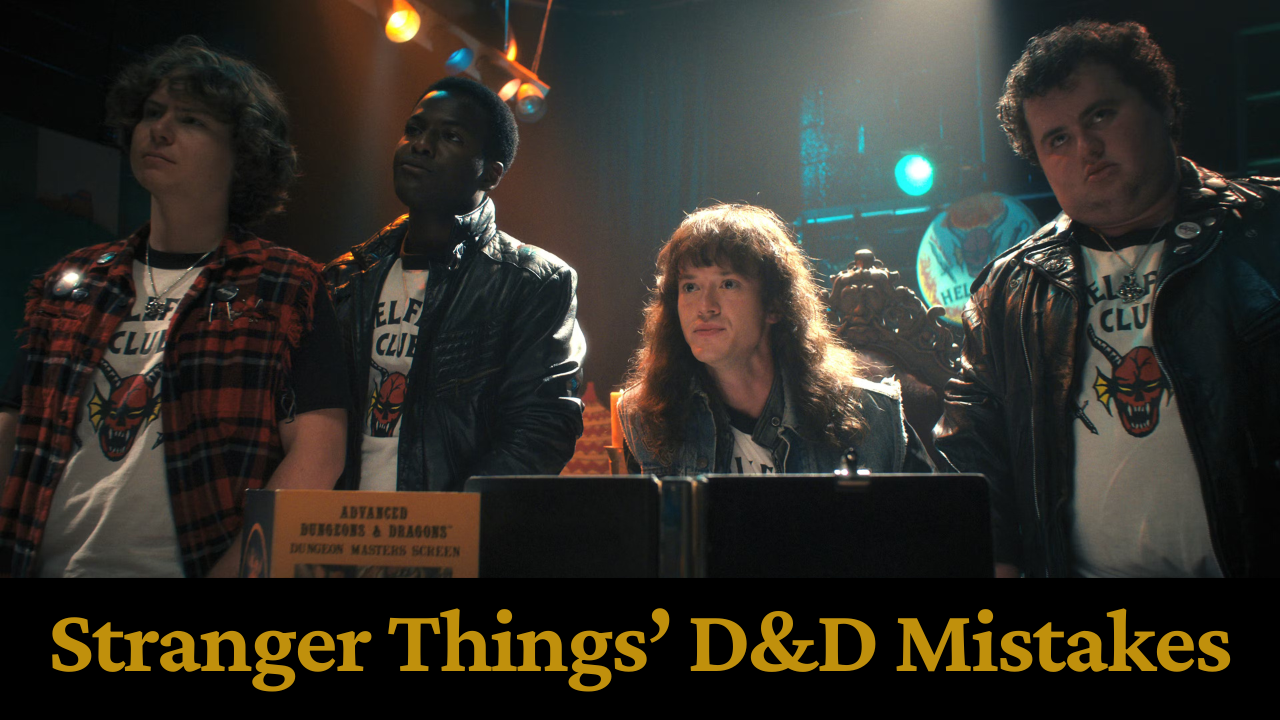
Transcribed content from our recent YouTube video: https://www.youtube.com/watch?v=QQLN8bvlo-Q
Transcription
If you’re like me, you just watched Stranger Things Season 5, and it was amazing. Personally, I felt like it really hit similarly to the first season – they did a great job.
But you're watching Stranger Things, getting hyped about seeing D&D represented in mainstream media, when suddenly Mike declares he's casting a spell, as a paladin... at first level. And you're sitting there thinking, "Wait, that's not how that works."
Well, you're not alone. Today we're diving deep into three quick, but glaring D&D mistakes – or, perhaps intentional and fun D&D alternations – that Stranger Things has made throughout its run. I love Stranger Things, so this is by no means a criticism of the show.
If anything, some of these mistakes just makes me like it more. Because, let’s get real – most D&D games fudge something in the rules anyways. It’s part of the fun. And no one really wants to be a rules lawyer all the time.
What's up, dice rollers! Welcome back to Eternity TTRPG where we explore everything that makes tabletop RPGs amazing. I'm your host, and today we're taking a critical but loving look at how Stranger Things – arguably the biggest mainstream representation of D&D we've ever had – got some pretty fundamental (and sometimes funny) things wrong about our favorite hobby.
Now, before we dive in, let me be clear: I absolutely love that Stranger Things brought D&D into the spotlight. The show has introduced countless people to our hobby, and that's incredible.
As D&D enthusiasts, we can appreciate the show while also having some fun pointing out where the Duffer Brothers maybe should have consulted their Player's Handbook a bit more carefully.
So grab your dice, settle in, and let's explore three quick strange things that Stranger Things got wrong about D&D.
Mistake #1: The Demogorgon Campaign Confusion
I’m gonna call this “Mistake #1,” by the way, and you’ll find out why in just a minute.
But let's start with this big one from Season 1. In the very first episode, we see the boys playing D&D, and Will's character encounters the Demogorgon. Now, the show treats this like it's some kind of final boss encounter, but here's the problem: a Demogorgon in D&D is a CR 26 creature. Basically, a Lv.26 monster. That's endgame content for level 20 characters.
These kids are clearly playing low-level characters – probably somewhere between levels 1-5 based on their abilities and the campaign Mike’s describing. A real Demogorgon would obliterate their entire party in a single round without breaking a sweat. It would be like sending a group of mall security guards to fight Godzilla.
What the show probably meant to use was a lesser demon or maybe just called it a "demogorgon" as a generic monster name. But for D&D players, it's like watching someone try to drive a car with a boat steering wheel – technically it's transportation equipment, but it's completely wrong for the situation.
Is this really a mistake though? I’d say yes, technically. But also, we all know how kids get when playing games. Mike was probably like, “hey, you know what would be cool for my party of Lv.5 adventurers? Give them something that inspires them. Like this CR26 literal god.” It’s the type of move that every DM has done at some point – just go way, wayyy overboard. And again, that’s part of the fun with games like D&D.
Mistake #2: The Paladin Spell Situation
This one is really funny to me because it happens multiple times throughout the series. Mike's primarily the dungeon master for his group. But when he plays, his character is consistently referred to as a paladin, and we see him attempting to cast spells at what appears to be first level.
Here's the issue: in every edition of D&D that would have been available when Stranger Things is set – we're talking late 70s to early 80s – paladins don't get spells until much higher levels. In AD&D (Advanced dungeons and dragons), paladins don't get their first spell until 9th level. Even in modern 5th Edition, paladins don't get spells until 2nd level.
But the show has Mike casting spells right from the start. It's a small detail, but it shows a fundamental misunderstanding of how the class works. It would be like showing a wizard swinging a two-handed sword as their primary weapon – technically possible in some circumstances, but it misses the point of the class – for that level, at least – entirely.
It’s another “mistake” though that many groups would make, probably especially kids. You want to play a character who can do cool things, at any level. So maybe this was another intentional move on the Duffer brothers’ part, showing not just the rules for D&D, but how people actually play.
Mistake #3: The Dice Rolling Drama
This one’s more about dramatic license. Throughout the series, we see characters making single dice rolls for incredibly complex situations, and the entire outcome hinges on that one roll.
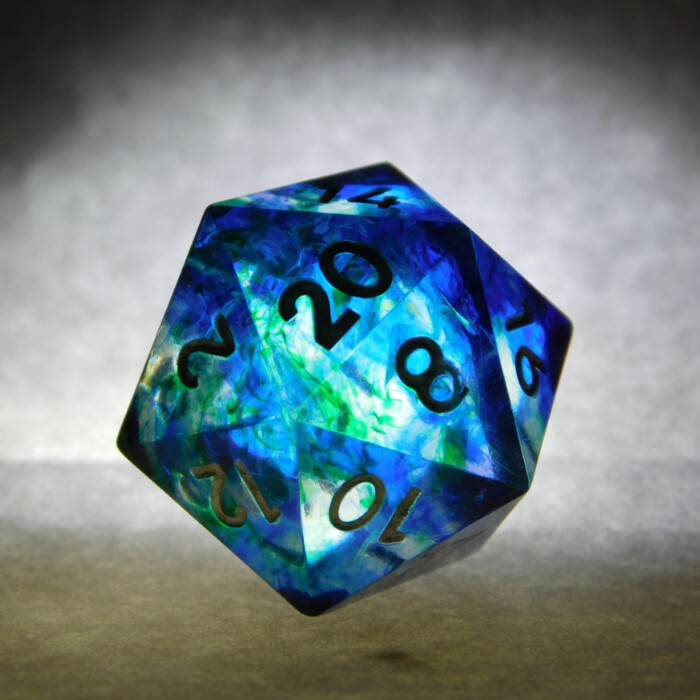
Real D&D involves a lot more dice rolling and a lot more back-and-forth between players and the DM. Combat isn't usually resolved with a single dramatic roll – it's a series of attack rolls, damage rolls, saving throws, and tactical decisions. The show makes it look like D&D is just "roll a d20 and see what happens," when the reality, as we all know, is much more nuanced.
The most egregious example is in Season 1 when Will's fate seems to hinge entirely on a single d20 roll. While dramatic moments like this can happen in D&D, they're usually the culmination of a longer sequence of events, not the entire encounter.
Of course, filming four kids rolling dozens of dice over and over doesn’t make for great visual episodes, I assume. This one is really more to point out that anyone who isn’t familiar with D&D may be a bit surprised walking into a real gaming session at how many dice really do get rolled.
On platforms like Reddit, the D&D community's reaction to these inaccuracies has been... interesting. Players have been discussing these since the show premiered.
One user pointed out in a popular thread: "I love that Stranger Things brought D&D to the mainstream, but I wish they'd gotten a consultant who actually understood the game mechanics. It's like they researched D&D by reading about it rather than playing it."
Another user noted: "The show gets the emotional core of D&D right – the friendship, the collaborative storytelling, the escapism. But the mechanical details are so wrong that it's distracting for anyone who actually plays."
Now, do these mistakes matter? I would argue they don't – Stranger Things is a TV show, not a D&D tutorial. People may come into the hobby with incorrect assumptions on how things work. But, if more people are getting into the hobby, then that's positive.
And D&D – or let’s at least say tabletop roleplay games – have experienced unprecedented growth partly thanks to Stranger Things, and that's amazing for our community.
So here's what I want to know from you: is there anything else fun or silly that I missed from Stranger Thing’s D&D inaccuracies? I’m sure there has to be more than just these three, so please hit me up in the comments and let me know what you’ve found!
And that wraps up our dive into Stranger Things, for today. Remember, this comes from a place of love – both for the show and for D&D.
If you enjoyed this quick video, make sure to hit that like button and subscribe for more D&D content.
Whether you're fighting demogorgons in the Upside Down or just trying to survive your first dungeon crawl, keep those dice rolling!
Dice, Dungeons, Games & More - Eternity TTRPG


Share This Article

Author - Jacob Tegtman
Dear reader, I hope you enjoyed this article. Tabletop gaming has been a passion of mine since I was 6 years old. I've played just about every game from Dungeons and Dragons to video games like Final Fantasy. These games have inspired me, made me laugh, made me cry, and brought me endless hours of enjoyment.
I started Eternity TTRPG - and the indie tabletop game that goes along with it (Eternity Shop) - to share my love of gaming with others. I believe that in our technology-driven age, tabletop games help bring a sense of magic and community back into our world.
If you love the site, please share it with others! I have lots of gaming-related material for you to peruse and use in your own gaming sessions. If you have any questions about the site or want to contribute, just send me a message using the "Contact" page, which you can find in the site's footer.