Interview with TTRPG Renaissance Man: Mildra the Monk
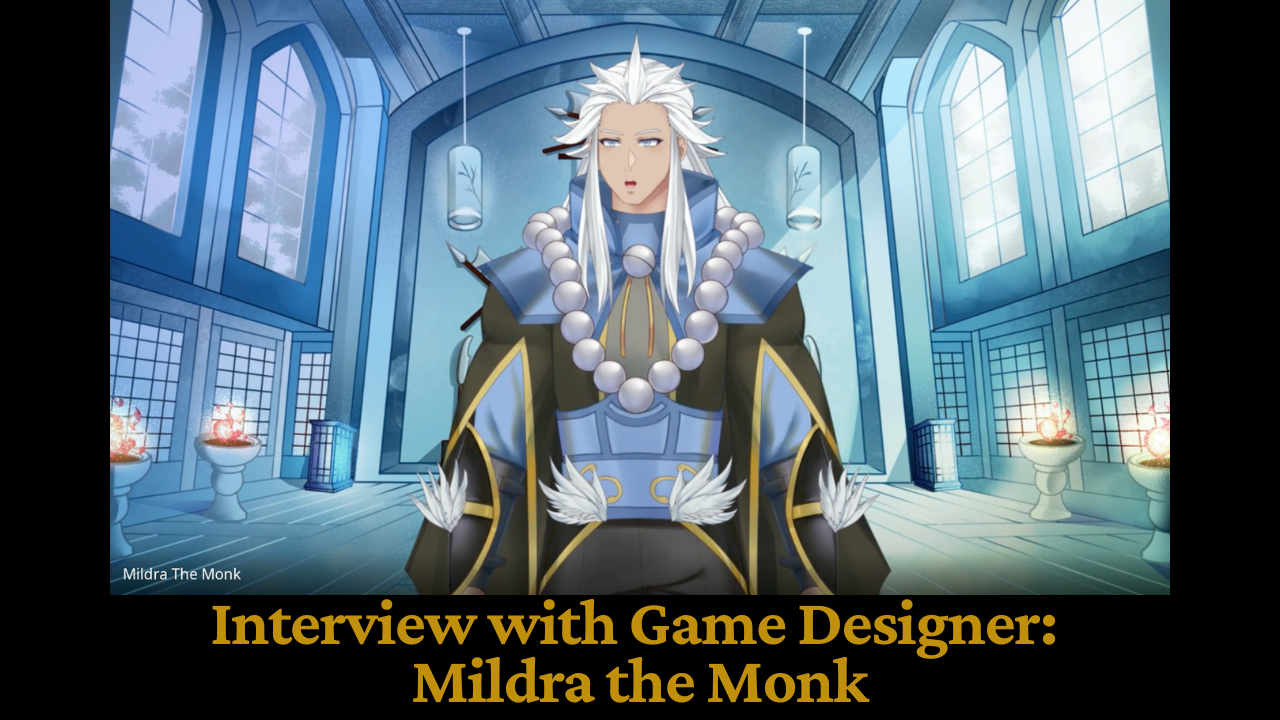
An anime-style character with white hair

Transcribed content from our recent YouTube video: https://www.youtube.com/watch?v=si26EW5kj4Q


Transcription

Summary

Final Fantasy Legend Edition TTRPG discussion covered the game's high customization and free distribution via mythos inspiration and iterative research.

Final Fantasy Legend Edition Origin

Legend Edition is a medium-complexity TTRPG developed over 4 years to emulate the entire Final Fantasy mythos, avoiding a focus only on the SNES era. The core goal was to create a neutral sandbox emphasizing high customization that supports high fantasy, steampunk, and futuristic settings.


Design Philosophy and Research

The game is distributed for free to continue the tradition of high-quality, free fan-created content within the TTRPG community. Extensive research was conducted on the IP, including cut content and Ultimania books, which led to the design pillars of iteration and experimentation.


Customization and Unique Features

Character creation allows hybrid archetypes via the selection of 3 classes from over 50 available options with variable progression speeds. Unique Legend Edition features include row-based combat and active defenses, creating a tactical risk-reward system.


Details

  • Introduction to Final Fantasy Legend Edition Project: Jacob Tegtman welcomed Mildra The Monk, the lead designer and spearhead of the Final Fantasy Legend Edition project, to the Eternity TTRPG channel for their first interview of this kind. Mildra The Monk expressed appreciation for being hosted and agreed to begin by discussing their background and the nature of the project (00:00:00).
  • Mildra The Monk's Background and TTRPG Contributions: Mildra The Monk introduced themself as a content creator who has reviewed games, run playtests, and conducted over a thousand interviews in the last five years. They cover third-party D\&D material, indie games, and fan games such as Naruto 5e and Dungeons of the Dragoning, the latter of which started as an April Fool's joke that combined five different RPGs (00:01:03). Most recently, they served as the lead designer and project lead for the Final Fantasy Legend Edition TTRPG (00:02:26).
  • Running a Final Fantasy Legend Edition One-Shot: Mildra The Monk mentioned they had been running a one-shot using the Legend Edition for the past few weeks with rotating party members and ran one for Jacob Tegtman as they were planning content on the game (00:02:26). They noted that a community member has been developing a work-in-progress Roll20 sheet for the game, which had recently received a significant update (00:03:26).
  • Virtual Tabletop Support for Legend Edition: When addressing the question of virtual tabletop support, Mildra The Monk stated that they have not done any real coding in at least ten years and lack the skill set to build a custom sheet from scratch for platforms like Roll20 or Foundry. They acknowledged the community's support, noting that people are using their own time to support the game with tools like the Roll20 sheet (00:03:26).
  • Summary of Final Fantasy Legend Edition: Legend Edition is a medium-complexity TTRPG that took about four years to create, aimed at emulating the Final Fantasy mythos. The project originated from Mildra The Monk's pet peeve that previous tabletop versions of Final Fantasy heavily skewed toward the SNES era (IV, V, and VI), neglecting entries like VII, XIV, and XVI which appeal to newer generations of fans (00:04:21). The goal of Legend Edition is to use the recurring Final Fantasy mythos as a neutral sandbox for tables to build campaigns in any direction, prioritizing customization (00:06:43).
  • Game Design Flexibility and High Customization: The game was designed to be equally viable in high fantasy settings, like Final Fantasy III or IV, as it is in steampunk settings, such as Final Fantasy VI or XIV, and futuristic entries, such as Final Fantasy VIII or XIII. Jacob Tegtman noted that playing the game demonstrated that the number of classes and intricate character details allow players to create characters fitting any Final Fantasy experience they desire (00:06:43).
  • Reasoning Behind Free Distribution of Legend Edition: Mildra The Monk explained that the game is available for free because they came up as a tabletop player seeing high-quality fan games that were just as good as paid games, and they wanted to pass along that torch to the community (00:09:44). They expressed the desire for someone to take their work, hack it, and put up their own version, continuing the chain of free content (00:11:02).
  • Research and Design Philosophy for Legend Edition: A major focus of the project was capturing the soul of Final Fantasy, which involved extensive research, including reviewing existing games, cut content from games, behind-the-scenes interviews, and Ultimania books (00:11:02). The core philosophy derived from this research was "iteration and experimentation," which led to the game's foundational design pillars (00:12:16).
  • The Inspiration to Focus on Final Fantasy: Mildra The Monk is a devoted Final Fantasy fan, but other factors drove the project, including a desire to carry on the lineage of prior Final Fantasy TTRPG fan projects like the mid-90s Returners project (00:12:16). A core motivation was bridging the gap between video games and tabletop gaming, using Final Fantasy because its consistent mythology allows for adaptation that goes beyond merely replicating the video games (00:14:29).
  • Avoiding the Trap of Literal IP Adaptation: Mildra The Monk highlighted a common problem with tabletop adaptations of existing IPs, where designers attempt to adapt the source material wholesale, citing the early TSR run of Indiana Jones as an example where they only allowed players to play as movie characters. Instead, people generally prefer to create their own character within the world, such as being a student at Xavier Academy rather than playing as the X-Men (00:15:49).
  • Emulating the Mythos Over One Game: Mildra The Monk emphasized that designers should emulate the overall mythos of a franchise rather than hyperfocusing on one game or one era (00:17:00). For Final Fantasy, this is supported by recurring elements such as job names, play styles, spell names, summons, and abilities that maintain a consistent theme (00:18:09).
  • Classes, Character Creation, and Flexibility: The customization in Legend Edition is demonstrated by the character creation system where players select three classes with different progression speeds, allowing for a unique hybrid character from over 50 classes (00:21:27). This approach is a compromise that provides the strong thematic elements of the job system without restricting player choices, such as customizing weapon lists to be setting-agnostic and avoid favoring one style of fantasy (00:20:06) (00:22:24).
  • Key Design Pillars of Final Fantasy Legend Edition: Mildra The Monk outlined the three major pillars of the game's design: "mythos not setting," "customization is king," and the **phase structure** (00:24:24). The phase structure involves four acts—preparation, exploration, encounter, and downtime—which is loosely inspired by the Asian four-act format (kishōtenketsu) and the Town-Field-Dungeon trinity pioneered by Dragon Quest (00:25:34).
  • The Research Process as a Favorite Part of the Project: Mildra The Monk stated that the research phase was one of their favorite parts, which allowed them to discover early concepts for the video games that were eventually cut (00:27:50). Examples included the early name for Materia being "spheres," which was later revisited for Final Fantasy X, and a puzzle tattoo mechanic for Final Fantasy X's sphere grid, which was cut (00:28:33).
  • Inspirations and Creative Liberties in Design: The research led to design inspirations such as an unused Chocobo Lancer concept art from Final Fantasy XI resulting in the Chocobo Knight class in Legend Edition, addressing the long-desired idea of Chocobo cavalry (00:29:32). The team took certain liberties, like creating the speed-based Dervish to serve as an answer to the Berserker class, and the Ravager as a spell-spamming class, drawing from inspirations like Final Fantasy XIII (00:31:48).
  • Development of the Yo-kai Class: The Yo-kai class began as an idea for a controllable summon, similar to the Aeons in Final Fantasy X, but was changed to avoid replicating one game (00:31:48). The final concept for the Yo-kai, as avatars for Eidolons, was inspired by the design of Yoko in Bravely Second and the concept of the rider or shioal spiritualist in Voodoo (00:32:43).
  • Impact of Extensive Research on Project Quality: Jacob Tegtman acknowledged that the depth of research, spanning Final Fantasy lore, mythology, and diverse concepts like Voodoo, enabled Mildra The Monk to create over 50 classes, each with up to seven tiers of abilities, amounting to hundreds of unique mechanics that synergize well (00:33:58). Mildra The Monk affirmed that this extensive research, modeled after the preparation of Star Trek producer Harve Bennett before producing *Wrath of Khan*, was a necessary baseline (00:36:10).
  • Historical Context of Final Fantasy Combat System: Mildra The Monk highlighted Hiroyuki Itto, the pioneer of the job system and the Active Time Battle (ATB) system, noting that he cited American football and Formula 1 as inspirations for ATB (00:39:09). Mildra The Monk asserted that the shift toward action-based combat, seen in games like Final Fantasy XV and XVI, was an evolution building on foundations laid decades ago by Itto, not a radical shift (00:40:15).
  • Snapshot of Unique Legend Edition Features: For those unfamiliar with Legend Edition, Mildra The Monk listed key differentiators, including high customizability in the job system, easy creation of hybrid archetypes, fewer but more impactful skills, and multiple character creation/advancement methods (00:41:59). Jacob Tegtman added the unique row-based combat and active defenses, such as parrying and evading, which create a tactical, risk-reward philosophy in the design (00:43:17).
  • Future Vision and Upcoming Projects for Mildra The Monk: Immediate future plans include overseeing support elements like new Excel and HTML solo-play sheets, as well as writing world book guides, which are lighter books focused on emulating individual Final Fantasy entries like FFIII or FFVIII (00:45:13). They are also considering TTRPGs based on 2D fighting games, aiming for a defined setting like a fighting game version of Night City, and they intend to create a fantasy-themed mech game and a Wuxia-themed RPG (00:46:24).
  • Ongoing Efforts to Promote the TTRPG Community: Mildra The Monk is continuing their mission to showcase the totality of tabletop role-playing games by highlighting the international scene, including content from Brazil, Germany, and Sweden (00:50:01) (00:52:17). They mentioned forthcoming streams covering the Spanish Anima Universe, Sword World, and *We's Blade*, a game compared to *Panzer Dragoon* (00:51:15).
  • Availability and Support for Mildra The Monk: Mildra The Monk can be found streaming regularly on YouTube and Twitch, on Twitter where they highlight artists and indie games, and in their personal Discord (00:55:07). While Legend Edition remains free, they have set up support mechanisms like Ko-fi for those who wish to leave a tip (00:56:19).

Share This Article

Jacob Tegtman Eternity TTRPG Creator

Author - Jacob Tegtman

Dear reader, I hope you enjoyed this article. Tabletop gaming has been a passion of mine since I was 6 years old. I've played just about every game from Dungeons and Dragons to video games like Final Fantasy. These games have inspired me, made me laugh, made me cry, and brought me endless hours of enjoyment.


I started Eternity TTRPG - and the indie tabletop game that goes along with it (Eternity Shop) - to share my love of gaming with others. I believe that in our technology-driven age, tabletop games help bring a sense of magic and community back into our world.


If you love the site, please share it with others! I have lots of gaming-related material for you to peruse and use in your own gaming sessions. If you have any questions about the site or want to contribute, just send me a message using the "Contact" page, which you can find in the site's footer.
A gnarled, dark tree stands in a misty forest under a pale moon.
By Jacob Tegtman March 22, 2026
Transcribed content from our recent YouTube video: https://www.youtube.com/watch?v=AuryVcZdp4Y Transcription There are kind two ends of the spectrum for D&D races. There’s Story-specific races: These come with a strong, built-in narrative that fits specific campaign worlds or settings, that almost tells you how to play them. Then there’s more Flexible races. These are much easier to slot anywhere because they don’t necessarily come with an expected tone or backstory. You can sort of fit them into any campaign with ease – like playing a human. Some D&D player races feel like they’re built for a specific kind of story. Others feel flexible enough to drop into almost any campaign. Gnarlborn from Crooked Moon… sit somewhere in between—and that’s kind of what makes them interesting. They have strong flavor, but they aren’t restrictive for your campaign. They come with built-in lore that gives you instant roleplay direction, but they aren’t so specific that you can only play them in your Crooked Moon campaign. Welcome back to Eternity TTRPG.  As you can already tell, today we’re looking at a lesser-known player option for playable races, which is the Gnarlborn from Crooked Moon. If you’ve seen my other videos on the topic, Crooked Moon has become one of my favorite D&D settings of all-time. We’re going through each of the races presented in Crooked Moon, and today getting to the treant-like Gnarlborn. Starting with the basics, Gnarlborn are – well, born – from the soil of a region called Ardengloom, a forest that’s less “peaceful woodland,” and more “haunted, thinking ecosystem.” The forest itself is filled with these massive trees called Elderwoods—each one housing lingering Fey spirits. Gnarlborn commune with these spirts and Elderwoods, forming an intricate and well-connected forest community. So yeah, you’re playing basically “a tree person.” But you’re also playing something that exists in a constant, low-level conversation with ancient, possibly unreliable spirits. That alone gives you a strong roleplay hook without needing a complicated backstory, as your tie to those spirits, and who/ what they are could gain any level of depth that you’d like, over the course of a campaign – or even a few adventures. Visually, Gnarlborn are humanoid, but like the trees in your yard, everything about them is asymmetrical—branches, moss instead of clothing accents, glowing hollows where a face might be. No two look the same. Some might feel ancient and slow, while others might come across as curious or even a little disconnected—like they’re only partially focused on the present. And since they can live for hundreds—sometimes thousands—of years, you can decide how much that actually affects your character. Are they wise because of their age, or are they just... slow? Ok, when it comes to core mechanics, let’s talk about what you actually get—because this is where Gnarlborn become very usable. First, we have: Deep Roots You get advantage on checks and saves to avoid being moved or knocked prone. This is simple, but it can be very useful against certain enemies. Next is: Elderwood Whispers After every long rest, you can pick up a new skill, tool proficiency, or even a language. Temporarily. This is probably the most interesting trait the Gnarlborn have. It’s not flashy, but it gives you day-to-day adaptability, which can be nice. It rewards players who like planning ahead—or improvising, based on expected challenges for the day. Third, we have what may be the Gnarlborn’s most *potentially powerful effect, which is: Grasping Branches As a Bonus action, you restrain a creature if they fail a Strength save. Or slow them if they succeed. The main issue here is the saving DC isn’t very high (it’s 8, plus your Constitution modifier, plus your proficiency bonus). But! Even on a successful save, the creature has half speed for a turn. So, grasping branches can be decent battlefield control without requiring you to be a spellcaster. And because this effect recharges on a short rest, you may just actually use it. It’s not overwhelming—but it’s consistently useful. Root Sense gives you tremorsense out to 60 feet. So, the ability to find Invisible enemies, Creatures behind walls, etc. And lastly, you have: Towering Size Which gives you advantage to end being grappled, and – if your group actually tracks carrying capacity, you can in fact carry more stuff. Nothing flashy—but admittedly, very practical. Playing a Gnarlborn definitely isn’t for every player. They don’t provide anything to spike damage, or even do anything unpredictable, really. But you are resisting disruption, controlling space, and adapting between sessions. They fit really well in parties that need consistency rather than specialization. From the roleplaying side, Gnarlborn also work really well in campaigns that lean into: Fey themes, Haunted environments, or Long timelines with ancient histories since they naturally connect to all of those. Gnarlborn feel connected to something bigger: whether that’s the Elderwoods, nature, fey-touched spirits, or an ancient grove deep in the dark woods. So, if you were to play a Gnarlborn, what direction would you take your character? Would you pick them for their subtle combat control, or more to explore their connection with the wilds? Whether you’ve played them in a campaign already, or you have ideas for what you might like to try, let me know in the comments. Thanks for watching, and I’ll catch you in my next Crooked Moon race guide.
A spirited fantasy character plays a violin in a dusty town
By Jacob Tegtman March 17, 2026
Transcribed content from our recent YouTube video: https://www.youtube.com/watch?v=soOa4Uhr2iM Transcription In Chernabos, survival is more than a question of strength. It’s a question of timing… instinct… and a little bit of luck. Some creatures are shaped by that world. The Ashborn from Crooked Moon are made from it. Welcome back to Eternity TTRPG. No matter how many times I revisit Crooked Moon, or how much time I spend away from it, I always find myself pulled back to this awesome source book. There are so many fun and unique pieces of this Halloween-like world, that I just love exploring. Today we’re continuing our look at the Crooked Moon races, and this time we’re stepping into the ash fields of Chernabos—To take a closer look at the Ashborn. If you haven’t seen them, I’ve already covered two Crooked Moon monstrous races, including the Harvestborn, which are my personal favorite. At this point, I’m pretty confident I’ll actually just be creating a 5-10min video that dives into each of the Crooked Moon races, separately. So, be sure to check back to find those. So, diving right into the Ashborn. Ashborn are small, fiend-touched humanoids, usually standing between two and three feet tall. They carry a distinct, almost devilish appearance—horns, muted red or gray skin, and sharp, expressive features. And most notably—A scorpion-like tail, tipped with venom. They’re comfortable in harsh places, and they tend to carry themselves with a quiet confidence. There’s a sense, when dealing with an Ashborn, that they’re already accounting for how things might go wrong… either, how they’ll respond if things were to go wrong... or how they’ll actually cause things to “go wrong,” themselves, and then benefit from the chaos. Ashborn actually don’t have a lineage in the usual sense. Instead, they form in the wake of volcanic fury—drawn together from sulfur, ash, and something entirely fiendish at its core. They emerge completely aware, capable, and already adapted to a land that would kill any other race – like, most humans, for example - in minutes. As I’d mentioned briefly, Ashborn are small—rarely more than three feet tall. Their features reflect their origin: horned silhouettes, skin in muted reds and greys, and eyes that tend to catch the light in uncomfortable ways. And then of course, there’s the tail. A scorpion’s stinger, carried as naturally as a hand. Most Ashborn carry themselves with a kind of deliberate composure. Even in harsh environments, like with most Crooked Moon races, there’s a sense of presentation—care in how they dress, how they speak, and how they’re seen. To me, it seems that they like to exercise control, even small amounts, and they have a bit of perfectionism to them. Chernabos, the land of the Ashborn, is not a forgiving place. The ground is unstable—split by lava flows and sudden fissures. The air carries ash and sulfur, thick enough to choke. And resources—such as water, shelter, and again, even breathable air—are never guaranteed. Clearly, the Ashborn don’t really need the kinds of things that humans need to survive. However, this kind of dangerous land also tends to favor a certain kind of thinking. Adapting to the environment, Ashborn tend to make quick decisions, have constant awareness, and perhaps their tendency to be a bit perfect in their presentation, they’re probably overall willing to act before they have perfect information... all in the name of survival. Ashborn are shaped by their environment from the moment they come into being. They develop habits that keep them flexible: And this is where their relationship with luck comes in. To an Ashborn, luck isn’t really about chance—it’s more about preparation meets opportunity. Or put another way, it’s about timing: · knowing when to move. · knowing when to speak. · And of course, when to take a risk that others would avoid. Mechanically, when it comes to actually playing your Ashborn, you’ll find that their cultural and personality traits of leaning into subtle control and well-timed disruption really come through. First, you have: Ashen Legacy You start with Minor Illusion, and later gain access to Charm Person and Invisibility. It’s a toolkit designed around Distraction, influence, and the ability to step out of sight when needed. They have Darkvision with the standard 60 feet, which is expected, given where they come from. As a reaction, Fiendish Fortune Allows you cause an attack that would’ve otherwise hit you, to miss, once per short or long rest. Additionally, you redirect some of that damage as force damage, equal to your proficiency bonus. Then we’re onto the Ashborn’s tail, with Scorpion Sting. Their tail grants a natural attack, with added poison. They can deal this extra damage a number of times equal to their Proficiency Bonus. When it comes to roleplaying, you can imagine how many fun directions you could take a halfling-sized devilish imp, with attitude. They fit great as risk-takers, performers, negotiators who are comfortable lying outright to someone’s face, wanderers who pity others for their inability to survive without shelter and water. They could easily be thieves, political statesmen/ stateswomen, or really anyone who enjoys a bit of mischief – and maybe on occasion, a bit of cruelty. I think what makes this race so fun though is that it leans into the devil ish side of things, but they’re still only 3-feet tall. So, they’re a bit more mischievous probably, than menacing. More lighthearted, than truly evil. But, those distinctions are entirely up to you to make. So! The Ashborn fit neatly into almost any kind of story, with their natural rogueish charm, and devilish antics. But I’m curious— How would you play your Ashborn? Or, if you’ve already had a campaign or adventures with one, let me know how that turned out for you! Let me know in the comments. And if you want to keep exploring the Crooked Moon races with me, there’s more on the way. So be sure to subscribe, and check in on future videos. Thanks for watching!
A fantasy illustration of adventurers battling a large dragon
By Jacob Tegtman March 13, 2026
Transcribed content from our recent YouTube video: https://www.youtube.com/watch?v=3N3isve9svc Transcription Wizards of the Coast just brought back a piece of D&D history… and longtime players are doing a double take. After nearly a decade gone, D&D Encounters is officially returning to local game stores . If you’ve never heard of it, D&D Encounters was a weekly organized play program where people could drop into their local game store and play a short, one-session Dungeons & Dragons adventure —no long campaign commitment required. It was basically D&D’s version of Friday Night Magic . Show up. Grab a character. Roll some dice. But the program disappeared back in 2016. And now Wizards of the Coast is bringing it back… which raises a few interesting questions. Is this just a nostalgic revival to bring new players into the hobby? Or is something bigger happening behind the scenes? Let’s break down everything we know. Welcome back to Eternity TT RPG , your party’s source for the latest Dungeons & Dragons news, updates, and community info . And today we’re talking about the surprising return of the classic organized play program . Back in 2010 , during the D&D 4th Edition era , Wizards of the Coast launched something called D&D Encounters . The idea was simple. Local game stores would host weekly D&D sessions where anyone could drop in and play a single short adventure . Each session even revolved around a 60–90 minute encounter , meaning you didn’t need a full campaign commitment. It was perfect for: • brand new players • busy schedules • or anyone who just wanted to roll some dice after work. And Wizards supported stores with exclusive materials , including: • adventure booklets • posters and maps • character sheets • and sometimes even custom miniatures . But in 2016 , the program disappeared. It was replaced by Adventurers League , which shifted organized play toward longer, interconnected campaigns instead of single-session adventures . At that time, D&D Encounters didn’t really fail. Wizards shut it down in 2016 when they reorganized everything under Adventurers League. But now that organized play has gotten complicated again—and new players struggle to get started—Wizards might be bringing back the exact entry point that they removed.” Which, speaking of, on the topic of the D&D Adventurers League. It’s still technically a thing , but its status is also a bit… complicated. · It still exists and people still play it. · But official support from Wizards of the Coast has been much lighter in recent years on that front, as well. So that program itself hasn’t been shut down. But the catch is that support has slowed. · There have been fewer new official adventures produced recently. · Wizards has been experimenting with other organized play initiatives , like we’re talking about today, and seasonal events. · Much of the Adventurer’s League infrastructure is now community-run or maintained through Discord and fan sites . That’s why the return of D&D Encounters is raising eyebrows — some fans wonder if Wizards is shifting toward shorter, store-focused events rather than the larger shared campaign model. Right now speculation in the community is that: · D&D Encounters will serve as an easy entry point for new players, which Wizards of the Coast is likely keen to acquire. · Meanwhile the Adventurers League will remain with ongoing campaign play for long-term, dedicated players But – and as with many things – Wizards hasn’t officially clarified their long-term plan yet. Ok, so all of that background aside, let’s fast forward to 2026 . D&D Encounters is coming back. The announcement happened during this year’s GAMA Expo , one of the tabletop industry’s biggest trade shows. And this new version of it sounds very similar to the original concept. Short… Accessible… Single-session adventures designed for drop-in play. Which honestly makes a lot of sense. D&D has exploded in popularity, but getting new players into their first game is still one of the biggest barriers . A weekly store event could potentially solve that problem. At least in theory, and I’ll get back around to this in a minute. But the basic thought is that new players can show up. Grab a pre-generated character, so they don’t need to worry about min-maxing or even understanding character creation rules. Roll initiative. Boom—you’re playing D&D. So, now the problem with that. This is the same concept that Wizards of the Coast uses with like Magic: the Gathering. I don’t know what your local game store’s like, but when’s the last time you saw a new player come to drop in at your weekly league night? Or even starter deck tournaments, for other games or events? In my experience, the in-person player base is slowly dwindling for most games. And, I think that’s actually pretty sad. D&D is clearly a social game, and I think you can something from the overall experience without in-person play. Not that I mind digital play, and I realize digital also comes with its own advantages. But, the bottom line is that I’m not really sure just opening a weekly D&D Encounters night at local game stores will actually pull in a lot of new players to the game. Ok, so a little bit more framework into this. The new D&D Encounters program will also tie into something that Wizards recently introduced, called D&D Seasons . These are three-month themed releases built around a particular concept. For example, the upcoming three sets will be: • Horror themed adventures • Magic-heavy campaigns • and finally, Champion focused stories D&D Encounters will help kick these seasons off by providing stores with Opening Weekend Play Kits , we think, based around these themes. The kits released for reach segment of the year will launch alongside major D&D book releases . These kits will most likely include: • prewritten encounters • promotional materials • store support tools • and possibly exclusive content. Wizards also mentioned weekly play support , though they haven’t revealed exactly what that includes yet. And they’re planning coordinated community events tied to each release. Basically… They’re trying to turn D&D launches into mini events at local game stores . So why is Wizards of the Coast bring back D&D Encounters now? A big part of it seems to be Wizards refocusing on local game stores . Over the past few years, a lot of D&D play has moved online. Between: • D&D Beyond • Virtual tabletops • and streaming games Many players never step into a physical store anymore. Traditionally, stores have been the lifeblood of tabletop gaming communities . I’m not so sure that’s true anymore. There seems to be a BIG shift away from many traditional models, in the tabletop gaming space. However, D&D Encounters does give stores something extremely valuable: consistent weekly events that make it easy for new players to come in the door. According to Wizards leadership, this move is part of a broader push toward a franchise-style model for D&D releases , led by VP Dan Ayoub . Instead of one-off books… They want ongoing seasonal engagement . Whether or not Wizards is really in-touch still with the D&D community, and this is an accurate call, remains to be seen. But, you can see based on what they think is happening, how they would feel that D&D Encounters would fit that model. So, of course that brings up another pretty big question., which is: w hat happens to the D&D Adventurers League? Because, as I’ve mentioned, the organized play program has been… pretty quiet lately. Like, for a while. There hasn’t been much new official content in recent years, in fact. And Wizards hasn’t said whether D&D Encounters will replace , supplement , or revive parts of the Adventurers League. So, right now, there’s no official answer. But many fans are speculating that D&D Encounters might become the easier entry point , while Adventurers League remains the deeper campaign system. But my impressions at the moment are that unless D&D Encounters really takes off, and creates a need for the Adventurers League to grow, then I don’t think it will be getting any more support from here than what it’s been getting. So, here’s the thing. D&D’s a great game. For many of us, it was the first TTRPG we heard of, and got us into the hobby. It’s... no longer the best TTRPG out there, and hasn’t been for some time. I created a whole multi-article series on this, comparing the top games, on the Eternity TTRPG site – and even that list needs updating. But I think for most of us, we’d love to see the hobby grow. If you’ve ever played TTRPGs in person, around a real table , you know that the dice rolling, the Miniatures clattering, and watching someone dramatically failing a persuasion check – in person, are all magical moments. Short low-commitment sessions like D&D Encounters is offering may be one of the best ways to introduce new players. And that is exactly what D&D Encounters is designed for. If Wizards executes this well… It could become a gateway program that brings the next generation of players into the hobby . Do I want to be pessimistic about this new program working the way Wizards intends? No. Am I though..? Yeah. I think new players will continue to find the hobby, but I think D&D will continue to lose market share. For new players who get into the hobby specifically through D&D, I think this D&D Encounters program will only be generating a very small percentage of those new people. Will I try out a D&D Encounters session at my local game store? ...maybe. Like many of you, I’ll probably wait to see what the buzz is around it first, to see if I might enjoy dropping in. But I do hope that is amazing, and that everything Wizards of the Coast is trying to do with it actually provides what their main audience has been asking for. So what do you think? Is the return of D&D Encounters exactly what local game stores, and the tabletop roleplay game community needs… Or is this a sign that Adventurers League and the overall organized play may be fading out in one final effort ? Let me know in the comments. And if you want more weekly D&D news, community info, and tabletop updates , make sure you like the video and subscribe. Because the dice never stop rolling here.
Show More