Fateweaving in The Crooked Moon — Personalizing Story
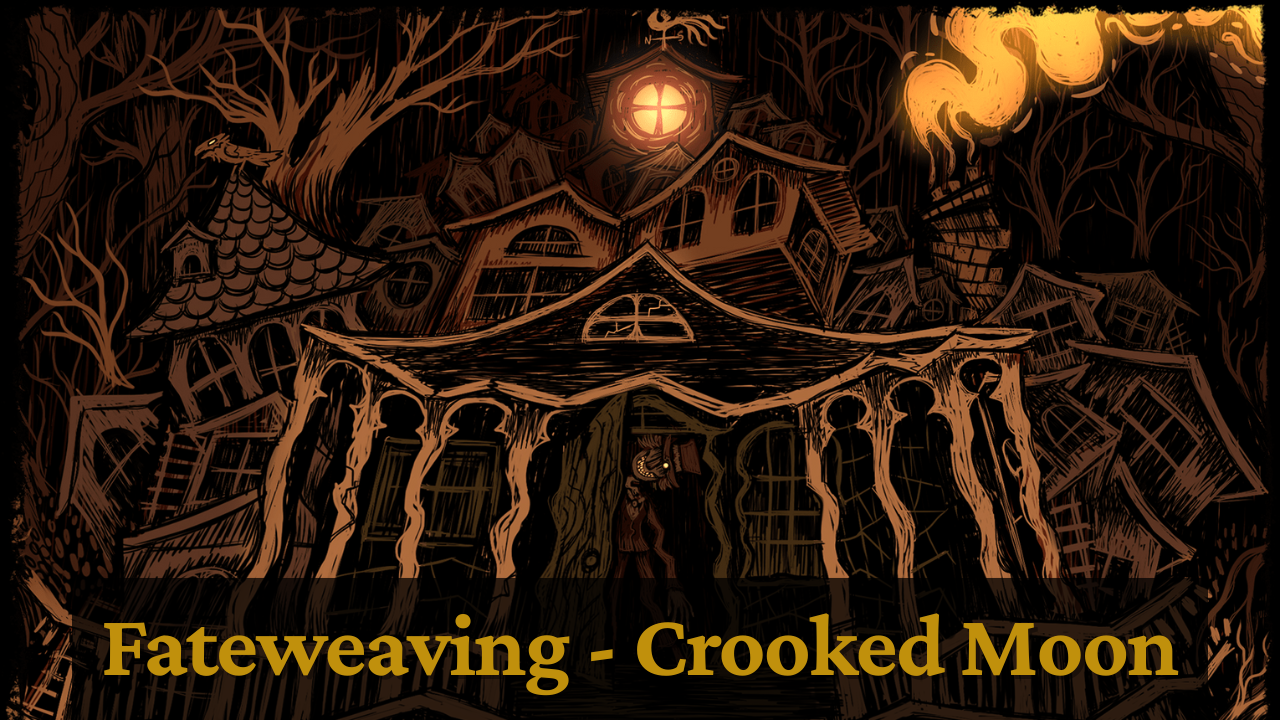
Transcribed content from our recent YouTube video: https://www.youtube.com/watch?v=Kl3c6djcgbo
Transcription
Imagine your character in a folk-horror saga — not just another adventurer, but someone with a personal fate, a hidden thread that drags them deeper into shadows and tragedy… or redemption.
That’s exactly what Fateweaving brings to Druskenvald in The Crooked Moon.
The Crooked Moon isn’t just another D&D book. It’s a 600-plus-page folk-horror campaign that plops players into a sun-starved realm of nightmares, rituals, and haunted rails.
Welcome back to Eternity TTRPG, your home for deep-dive D&D news breakdowns, world-building insights, and tools to level up your tabletop storytelling. Whether you’re a forever-DM, a lore-monster, or someone who appreciates a well-crafted adventure, we tackle the big ideas behind the games you love.
And today, as with many videos I’ve created over the past several months, The Crooked Moon gives us plenty to sink our teeth into.
What sets Crooked Moon’s System apart from the standard “roll dice, then fight monsters” is the optional system called Fateweaving — a way to bind each character’s past, motivations, and desires directly into the core of the campaign.
Fateweaving gives each character a Thread of Fate — one of 13 possible personal arcs. At character creation (or early on), each player picks a Thread that defines a personal goal: lost memories, cursed lineage, spiritual duty, monstrous ambition — you name it.
Then, throughout the campaign’s story, the GM weaves in six Narrative Touchpoints specific to that Thread. These form a full character arc, culminating in a personal climax and catharsis that runs parallel to the main story – they’re something much greater than just “side quests.”
The first touchpoint, Incitement, ties a character’s personal quest to the campaign’s opening (often aboard the spectral Ghostlight Express or within the Crooked House).
As the story progresses, the character meets allies or NPCs connected to their fate, uncovers secrets, faces a personal trial, then pushes through to their own climax — all while the main horror unfolds.
In the end, during the epilogue, each character receives Catharsis — the emotional and narrative payoff for their arc.
This means every player is actively living their own horror-tale inside the larger one of your full campaign.
You might ask: why bother with all this Fate Weaving stuff? It does add potential complexity to your campaign, after all. So why not just run a normal campaign?
It’s because Fateweaving transforms The Crooked Moon – or, any campaign you’re running –into a deeply personal story, for the players.
It gives each character agency and meaning — their choices and their backstories matter.
It increases emotional engagement for players: horror, hope, tragedy — when stakes are personal, every failure and every success resonates.
It helps GMs balance player spotlight: with distinct Threads, you can weave in scenes tailored to each player without derailing the main plot.
For players who love roleplay and character development — this is the sweet spot.
Let’s pick an example Fateweaving Thread — say the Thread of Deliverance – and run through it really quick, just to give you an idea for how this works.
The character begins lost, ejected from the spectral train, given only a broken compass. (this is the “Incitement” step)
Later, at a trading post, a shady merchant hints he knows of strange artifacts. (this then, is the “Connection” step)
On a creepy riverboat, the character recovers the first piece of a broken family heirloom. (with the “Discovery” step)
In a haunted cemetery sanctuary, they wrestle the second piece from a statue’s grasp. (the “Confrontation” step)
After the final boss — the Crooked Queen — they reclaim the last piece, reforge the heirloom, and choose either to become a ferryman of souls… or walk away free. (culminating in the “Climax + Catharsis” step)
Suddenly, your campaign isn’t just “we stopped the big bad.” It’s the players’ story. Their redemption. Their choices. And in this case – even their soul.
If you want to try out Crooked Moon’s Fateweaving system, here’s some very easy ways to get started:
Let your players pick Threads early in the campaign – or, if you’re already running one, let them pick at your next session – then collaborate to weave their backstories into the world you’re running.
Keep the Touchpoints flexible: treat them as narrative prompts — adapt to what your players do rather than forcing them.
Be generous with spotlight time: Fateweaving only works if each character actually plays their arc, and gets to express their character through each important moment.
Use Touchpoint rewards to drive engagement: use boons, stat bonuses, and narrative closure — they reinforce the importance of the arc.
Don’t be afraid to deviate: mix endings, merge threads, or create custom ones — Crooked Moon’s Fateweaving system is meant as building blocks for you, not a cage you have to live in.
If you run your next horror campaign in Druskenvald — or any other world where Crooked Moon’s spooky setting fits — consider using Fateweaving. It’s not just good for story… it’s the kind of DM fuel that turns players into protagonists, and campaigns into personal sagas.
That’s it for today! If you enjoyed this breakdown, don’t forget to hit like, subscribe, and ring the bell for more RPG-craft content. And hey — maybe share in the comments which Threads of Fate you’d gravitate toward first. Thanks for watching.
Dice, Dungeons, Games & More - Eternity TTRPG


Share This Article

Author - Jacob Tegtman
Dear reader, I hope you enjoyed this article. Tabletop gaming has been a passion of mine since I was 6 years old. I've played just about every game from Dungeons and Dragons to video games like Final Fantasy. These games have inspired me, made me laugh, made me cry, and brought me endless hours of enjoyment.
I started Eternity TTRPG - and the indie tabletop game that goes along with it (Eternity Shop) - to share my love of gaming with others. I believe that in our technology-driven age, tabletop games help bring a sense of magic and community back into our world.
If you love the site, please share it with others! I have lots of gaming-related material for you to peruse and use in your own gaming sessions. If you have any questions about the site or want to contribute, just send me a message using the "Contact" page, which you can find in the site's footer.